📌 *Key Takeaways*
- Building an ASOS-like app can cost from around $35,000 for an MVP to $250,000+ for a sophisticated marketplace.
- Search, product discovery, sizing, payments, order tracking and returns form the foundation of a fashion shopping app.
- Marketplace commissions, product sales, advertising, memberships and seller services can create multiple revenue streams.
- AI-powered recommendations, visual search and personalised styling can make a fashion app more competitive.
- Starting with a specific fashion niche can be more practical than trying to compete with established platforms across every category.
Introduction
Online fashion shopping has changed dramatically. Customers no longer want to browse a few products and place an order. They expect personalised recommendations, accurate sizing, fast delivery, flexible returns, multiple payment options and a shopping experience that feels tailored to them.
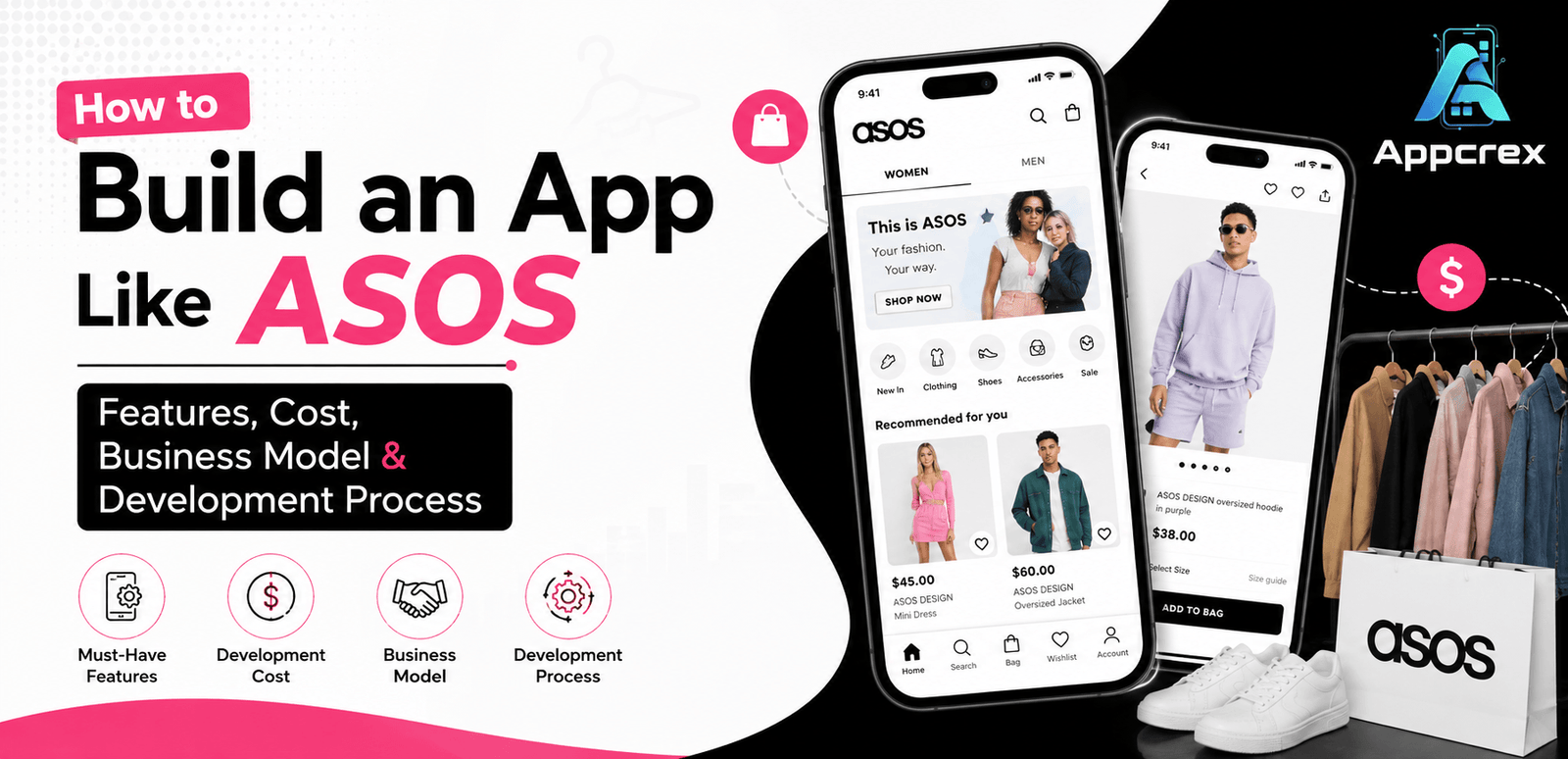
ASOS is a strong example of this shift. Its platform combines fashion discovery, product search, personalised shopping experiences, payments, delivery, returns and marketplace capabilities in one digital ecosystem.
For entrepreneurs, this makes the ASOS model interesting to study.
But building an app like ASOS does not mean copying its screens or creating another online clothing store. The bigger opportunity is to build a fashion eCommerce platform that makes discovering, choosing and buying products easier.
So, how much does it cost to build an app like ASOS? What features are required? How does the business model work? And which technologies can make the platform scalable?
Let’s explore the complete process.
Just Read : Hire App Developers in the UK: Complete Guide to Hiring Mobile App Developers
What Is an ASOS-Like Fashion App?
An ASOS-style app is essentially a large-scale fashion marketplace and eCommerce platform.
Customers can browse products from different brands and categories, compare items, check sizes, add products to a wishlist, place orders and track deliveries.
A modern platform can also include:
- Brand stores
- Personalised recommendations
- Fashion inspiration
- Product reviews
- Size recommendations
- Secure payments
- Multiple delivery options
- Returns management
- Loyalty programmes
- AI-powered discovery
This means the product is much more than a shopping cart.
It becomes a digital fashion discovery platform.
How Much Does It Cost to Build an App Like ASOS?
The cost depends on the scale of the platform.
A focused fashion shopping MVP can be developed for considerably less than a marketplace supporting thousands of products, multiple brands, advanced recommendation systems and sophisticated logistics.
| Development Level | Estimated Cost | Approx. Timeline |
|---|---|---|
| Basic Fashion Shopping MVP | $35,000–$60,000 | 3–5 months |
| Advanced Fashion eCommerce App | $60,000–$120,000 | 5–8 months |
| ASOS-Like Marketplace | $120,000–$250,000+ | 8–14 months |
| Enterprise Fashion Ecosystem | $250,000–$400,000+ | 14–20+ months |
These are approximate development ranges.
Your actual investment can vary based on:
- Number of apps
- Product catalogue size
- Marketplace functionality
- UI/UX complexity
- AI features
- Payment integrations
- ERP integration
- Inventory management
- Logistics integrations
- Third-party APIs
- Cloud infrastructure
- Security requirements
- Development team location
If you’re launching a startup, you don’t need to build the complete ASOS ecosystem on day one.
A carefully planned MVP can validate the idea before you invest heavily in advanced functionality.
Why Build an App Like ASOS?
Fashion is particularly suitable for mobile commerce because shopping is highly visual.
Users want to see:
- Product images
- Colours
- Sizes
- Styling ideas
- Reviews
- Similar products
- New arrivals
A mobile app can also learn from customer behaviour.
For example, if someone repeatedly looks at trainers and casual jackets, the app can start highlighting similar products.
This creates an opportunity to combine eCommerce + personalisation + AI.
Instead of building a generic fashion store, you could target a specific market such as:
- Sustainable fashion
- Luxury fashion
- Streetwear
- Modest fashion
- Sportswear
- Men’s fashion
- Women’s fashion
- Kids’ fashion
- Designer clothing
- Affordable fashion
- Second-hand fashion
A focused marketplace can often establish its identity faster than a platform trying to sell everything.
Also Read : How Can You Hire the Best NFT Marketplace Development Company?
Core Features of an ASOS-Like App
1. User Registration and Login
The onboarding process should be quick.
Users can register through:
- Mobile number
- OTP
- Apple
After registration, customers can manage:
- Personal information
- Addresses
- Orders
- Wishlists
- Payment methods
- Preferences
You can also ask users about their preferred styles during onboarding to improve recommendations.
2. Fashion-Focused Home Screen
The home screen should feel dynamic rather than static.
It can display:
- New arrivals
- Trending products
- Recommended products
- Seasonal collections
- Popular brands
- Limited-time offers
- Recently viewed products
- Personalised categories
For example:
“Because you liked these sneakers…”
This makes the experience feel more personal.
3. Product Search
Search is one of the most important features in a large fashion catalogue.
Users should be able to search for:
- Product names
- Brands
- Categories
- Colours
- Styles
An advanced search system can understand more natural queries.
For example:
“Black oversized hoodie under £50.”
The platform can translate this into product filters and return relevant results.
4. Advanced Filters
Fashion customers often have specific preferences.
Filters can include:
- Size
- Colour
- Brand
- Price
- Category
- Material
- Fit
- Style
- Rating
- Discount
- Availability
For a large catalogue, fast filtering is essential.
Users shouldn’t have to scroll through hundreds of irrelevant products.
5. Product Details
Every product needs a comprehensive product page.
It can include:
- Product images
- Multiple angles
- Videos
- Product description
- Price
- Discount
- Available colours
- Available sizes
- Material
- Care instructions
- Reviews
- Delivery information
- Return information
A strong product page answers most questions before the customer reaches checkout.
6. Size Guide
Fashion eCommerce has one major challenge:
Customers cannot physically try the product before buying it.
A detailed size guide can reduce uncertainty.
You can provide:
- UK sizes
- EU sizes
- US sizes
- Body measurements
- Brand-specific sizing
- Fit information
An advanced platform can introduce an AI-powered size recommendation system.
Also Read : AI Training App Development Guide: How Enterprises Can Upskill Employees with AI
7. AI Size Recommendation
Instead of simply showing a size chart, the app could ask:
- Height
- Weight range
- Usual size
- Preferred fit
- Previous purchases
The AI model can then recommend a likely suitable size.
For example:
“Based on your previous purchases and this brand’s sizing, we recommend Medium.”
This can potentially improve customer confidence and reduce avoidable returns.
8. Wishlist
Users should be able to save products they aren’t ready to buy.
Wishlist functionality can support:
- Save product
- Remove product
- Move to cart
- Price-drop notifications
- Back-in-stock alerts
Wishlists also provide valuable behavioural data for personalised marketing.
9. Shopping Cart
The cart should show:
- Product
- Size
- Colour
- Quantity
- Price
- Discount
- Delivery cost
- Estimated total
Customers should be able to update quantities and remove products easily.
Also Read : How Much Does It Cost to Build a Shopping App in 2026? Complete Development Guide
10. Secure Checkout
A smooth checkout process is essential.
It should include:
- Delivery address
- Delivery option
- Payment method
- Order review
- Confirmation
Reducing unnecessary checkout steps can help lower cart abandonment.
11. Multiple Payment Options
Depending on your target market, you can support:
- Credit cards
- Debit cards
- Apple Pay
- Google Pay
- Digital wallets
- Buy Now, Pay Later services
- Other local payment methods
Payment providers should be selected according to the countries in which you operate.
12. Order Tracking
After purchasing, customers want visibility.
The app can display:
Order Confirmed → Processing → Packed → Shipped → Out for Delivery → Delivered
Tracking can be connected with logistics partners through APIs.
Customers can receive notifications whenever the status changes.
13. Returns and Refunds
Fashion has a higher return consideration than many other eCommerce categories.
A strong returns system can allow users to:
- Select an order
- Choose the item
- Select a return reason
- Choose return method
- Generate a return label
- Track the return
- Check refund status
This should be connected with your backend and order-management system.
14. Product Reviews
Customers can leave:
- Star ratings
- Written reviews
- Fit feedback
- Product photos
A useful fashion-specific feature is:
“How did it fit?”
For example:
- Smaller than expected
- True to size
- Larger than expected
This information can help future customers make better decisions.
15. Visual Search
Imagine a customer sees a jacket on social media.
Instead of searching manually, they upload the image.
The system can identify visually similar products.
This is where computer vision can make a fashion shopping app significantly more useful.
The results could show:
Similar jackets
Similar colours
Similar styles
Lower-priced alternatives
16. Personalised Recommendations
Personalisation can become one of the strongest features of the platform.
The recommendation engine can analyse:
- Browsing history
- Purchase history
- Wishlist
- Product interactions
- Preferred brands
- Price range
- Size
- Colours
It can then generate personalised suggestions.
Instead of:
“Popular Products”
the customer could see:
“Picked for You.”
17. AI Fashion Assistant
You can take personalisation further with an AI shopping assistant.
A customer could ask:
“I need an outfit for a summer wedding under £200.”
The assistant can suggest:
- Dress
- Shoes
- Bag
- Accessories
It could also explain why the products match.
This can turn the app from a catalogue into an interactive fashion advisor.
18. Push Notifications
Notifications can be used for:
- Order updates
- Price drops
- New arrivals
- Back-in-stock alerts
- Wishlist changes
- Personalised recommendations
- Limited-time offers
Notifications should be personalised instead of sending the same message to every user.
19. Loyalty Programme
A loyalty system can encourage repeat purchases.
You can reward customers for:
- Purchases
- Referrals
- Reviews
- Birthday activity
- Engagement
Rewards could include:
- Discounts
- Free delivery
- Early access
- Exclusive products
20. Brand Marketplace
If you’re building a marketplace rather than a single-brand store, individual brands need their own management tools.
Brands should be able to:
- Add products
- Manage inventory
- Update prices
- Upload images
- View orders
- Manage promotions
- Check sales
- Analyse performance
This allows the platform to scale beyond your own inventory.
Seller Dashboard
A marketplace requires a strong seller system.
Sellers can manage:
Product Catalogue
Add and update products.
Inventory
Monitor available sizes and colours.
Orders
Track order processing.
Promotions
Create discounts and campaigns.
Analytics
View sales, conversion and product performance.
The easier your platform is for sellers to use, the easier it becomes to expand your catalogue.
Admin Dashboard
The admin panel controls the complete ecosystem.
It can include:
- User management
- Seller management
- Brand management
- Product approval
- Order management
- Payment monitoring
- Refund management
- Promotions
- Reviews
- Customer support
- Analytics
- Reports
- Content management
Admins can also monitor suspicious transactions and unusual account activity.
How Does an ASOS-Like App Make Money?
There are several ways to monetise a fashion platform.
1. Product Sales
The most straightforward model is earning revenue from product sales.
The platform can sell its own inventory or operate as a marketplace.
2. Marketplace Commission
If third-party brands sell through your platform, you can charge a percentage of each transaction.
This creates a scalable marketplace model.
3. Featured Products
Brands can pay to promote selected products.
Examples include:
- Sponsored products
- Homepage placements
- Featured collections
- Search promotion
4. Advertising
Fashion brands can advertise directly to your customer base.
Advertising products can include:
- Display campaigns
- Sponsored searches
- Brand campaigns
- Seasonal promotions
5. Membership
A premium membership programme can provide:
- Free or discounted delivery
- Exclusive offers
- Early access
- Special events
- Personalised services
Recurring membership revenue can complement product sales.
6. Brand Services
A marketplace can charge sellers for advanced services such as:
- Analytics
- Promotional tools
- Premium seller accounts
- Data insights
- Enhanced product placement
How to Build an App Like ASOS?
Step 1: Select Your Fashion Niche
Start with a clear market.
For example:
Affordable streetwear in the UK.
That’s much easier to position than:
“An app selling every type of fashion product.”
Step 2: Research Customers
Understand what your customers actually struggle with.
Ask:
- Is product discovery difficult?
- Are sizes inconsistent?
- Are returns frustrating?
- Are products too expensive?
- Is delivery too slow?
- Is finding sustainable fashion difficult?
Your product should solve a real problem.
Step 3: Plan the MVP
Your first release could include:
Customer App
- Registration
- Product catalogue
- Search
- Filters
- Product details
- Wishlist
- Cart
- Checkout
- Payment
- Order tracking
- Reviews
Seller Dashboard
- Product management
- Inventory
- Orders
- Basic analytics
Admin
- Users
- Products
- Sellers
- Orders
- Payments
- Promotions
That’s enough to test the business.
Step 4: Design the User Experience
Fashion apps need strong visual design.
The UI/UX should focus on:
- Large product images
- Simple navigation
- Fast search
- Easy filtering
- Clear product information
- Minimal checkout friction
The app should look premium without making it difficult to use.
Step 5: Develop the Platform
Development can be divided into:
- Mobile frontend
- Backend
- Database
- APIs
- Seller dashboard
- Admin panel
- Payment integration
- Search
- Notifications
For a startup, cross-platform development can reduce initial development time and cost.
Step 6: Test With Real Users
Before a full launch, test the app with a small audience.
Measure:
- Search usage
- Product views
- Add-to-cart rate
- Checkout completion
- Cart abandonment
- Return requests
- Repeat purchases
These metrics help identify where users are dropping out.
Step 7: Add AI and Advanced Features
Once the core shopping experience works, introduce:
- AI recommendations
- Visual search
- AI styling assistant
- Size prediction
- Personalised home feed
- Demand forecasting
- Automated customer support
This staged approach prevents the initial product from becoming unnecessarily complicated.
Recommended Technology Stack
A large fashion marketplace needs a scalable technology architecture.
Mobile Development
Possible options include:
- Flutter
- React Native
- Swift
- Kotlin
Backend
Common choices:
- Node.js
- Python
- Java
- .NET
Database
Depending on requirements:
- PostgreSQL
- MySQL
- MongoDB
- Redis
Search
Large catalogues benefit from specialised search infrastructure.
Options include:
- Elasticsearch
- OpenSearch
- Algolia
Cloud
Potential cloud platforms include:
- AWS
- Microsoft Azure
- Google Cloud
AI
AI services can support:
- Product recommendations
- Visual search
- Natural-language search
- Size prediction
- Customer support
- Fashion assistance
Also Read : Cross-Platform App Development Cost: Complete Pricing Guide (2026)
How Long Does It Take to Build an App Like ASOS?
Development time depends on the scope.
| Stage | Estimated Time |
|---|---|
| Market Research | 2–4 weeks |
| UI/UX Design | 4–7 weeks |
| Customer App | 8–14 weeks |
| Seller Dashboard | 5–8 weeks |
| Backend Development | 10–16 weeks |
| Admin Panel | 4–7 weeks |
| Payment & Logistics Integration | 3–6 weeks |
| AI Features | 5–10 weeks |
| Testing | 4–7 weeks |
| Launch | 1–3 weeks |
A focused MVP can potentially launch within 4–6 months.
A sophisticated ASOS-like marketplace with AI, multiple sellers, advanced search and extensive integrations may require 8–14 months or longer.
How to Make Your Fashion App Stand Out
The fashion market is competitive.
So simply offering clothing products isn’t enough.
Here are some stronger differentiation strategies.
Build Around Personalisation
Show each customer a different shopping experience.
Solve the Size Problem
Use better sizing information and AI recommendations.
Make Discovery More Visual
Add image search, style matching and outfit suggestions.
Focus on a Niche
Become the best platform for a specific customer group.
Use AI as a Shopping Assistant
Instead of forcing customers to browse hundreds of products, let them explain what they’re looking for.
Build Strong Brand Communities
Fashion is not only commerce. It’s also identity and lifestyle.
You can add:
- Creator collections
- Style feeds
- User-generated content
- Influencer recommendations
- Outfit inspiration
This can make the app feel more like a fashion destination than a traditional online store.
Why Choose a Mobile App Development Company UK?
If your target customers are in Britain, working with a Mobile App Development Company UK can help you build the product around UK eCommerce expectations and customer behaviour.
A development partner can support:
- Fashion eCommerce app development
- Marketplace app development
- iOS development
- Android development
- Cross-platform development
- Payment integration
- AI integration
- Product search
- Recommendation engines
- Logistics APIs
- Seller dashboards
- Admin panels
- Cloud deployment
- Maintenance and support
The development team should understand both the technical side and the marketplace workflow.
Why Choose AppCrex?
AppCrex helps startups and businesses build custom eCommerce and marketplace platforms.
Our services include:
- Fashion eCommerce App Development
- eCommerce Marketplace Development
- Clothing App Development
- Multi-Vendor Marketplace Development
- iOS App Development
- Android App Development
- Cross-Platform App Development
- AI App Development
- Product Recommendation Systems
- Payment Gateway Integration
- API Integration
- Logistics Integration
- Admin Dashboard Development
- Seller Dashboard Development
- UI/UX Design
- App Maintenance & Support
Whether you want to launch a niche fashion marketplace or a large multi-brand shopping platform, the product can be designed around your business model and growth strategy.
Final Thoughts
Building an app like ASOS is a much bigger project than creating a standard online clothing store.
You need to think about the entire customer journey:
Discover → Explore → Choose → Buy → Receive → Return → Shop Again
The first version doesn’t need every advanced feature.
A well-built MVP with strong search, product discovery, payments, order management and a smooth shopping experience can be enough to validate the concept.
As the platform grows, you can introduce AI-powered recommendations, visual search, size prediction, personalised feeds and virtual styling.
The estimated development cost can range from around $35,000 for a basic fashion shopping MVP to $250,000+ for a sophisticated ASOS-like marketplace, depending on the scope.
The most important thing is not to copy ASOS feature by feature.
Instead, understand why customers use platforms like ASOS and identify what you can do better.
Maybe that’s better personalisation.
Maybe it’s easier sizing.
Maybe it’s sustainable fashion.
Maybe it’s a better shopping experience for a specific UK audience.
That’s where a new fashion app can create its own space.
FAQs
Q. How much does it cost to build an app like ASOS?
A basic fashion eCommerce MVP may cost around $35,000–$60,000, while a feature-rich ASOS-like marketplace can cost $120,000–$250,000+.
Q. How long does it take to develop an ASOS-like app?
A focused MVP can take around 4–6 months. A larger marketplace with advanced AI, seller tools and integrations can take 8–14 months or longer.
Q. What are the most important features of a fashion shopping app?
Product search, filters, product details, size guides, wishlist, cart, checkout, payments, order tracking, reviews and returns are core features.
Q. Can AI be integrated into a fashion eCommerce app?
Yes. AI can support personalised recommendations, visual search, size recommendations, outfit suggestions, conversational search and customer support.
Q. How does an ASOS-like app make money?
Revenue can come from product sales, marketplace commissions, advertising, featured products, memberships and seller services.
Q. Can I build a multi-vendor fashion marketplace?
Yes. A multi-vendor platform can allow multiple brands or sellers to upload products and manage inventory through dedicated dashboards.
Q. Can I launch a fashion app specifically for the UK?
Yes. You can build a UK-focused platform around a particular city, fashion category, customer group or business model.
Q. Can AppCrex build an ASOS-like fashion app?
Yes. AppCrex can develop custom fashion eCommerce and marketplace platforms with customer apps, seller dashboards, admin panels, payments, AI features and third-party integrations.