📌 Key Takeaways
- A Skyscanner-like app is primarily a travel search and comparison platform powered by multiple data integrations.
- A flight comparison MVP can cost around $40,000–$65,000, while an advanced platform may exceed $120,000.
- Flight APIs, search infrastructure and backend scalability are critical parts of development.
- Price alerts, flexible dates, AI recommendations and smart search can create a stronger user experience.
- Starting with a specific audience or travel niche can be more effective than trying to compete with a global platform immediately.
Introduction
Planning a trip usually starts with one simple question: “Where can I find the best flight at the right price?”
A few years ago, travellers would visit airline websites one by one to compare fares. Today, travel comparison platforms have made that process much easier. Skyscanner is one of the best-known examples, allowing travellers to compare flights, hotels and car rental options from different providers.
For businesses, the interesting part isn’t simply the flight-search interface. The real opportunity is building a platform that brings together travel data, comparison, personalisation, booking partners and real-time pricing in one place.
If you’re considering launching a similar travel platform, this guide explains what goes into it—from features and technology to development cost, monetisation and the actual development process.
What Is a Skyscanner-Like App?
A Skyscanner-style platform is primarily a travel search and comparison marketplace.
Instead of selling every flight directly, the platform can collect flight information from airlines, online travel agencies and other travel providers and present the available options to users.
A typical customer journey looks like this:
Search destination → Compare flights → Filter results → Select an option → Continue to provider → Complete booking
Depending on your business model, you can also keep the booking process inside your own platform.
A broader travel app can eventually include:
- Flights
- Hotels
- Car rentals
- Airport transfers
- Travel insurance
- Activities
- Vacation packages
This creates opportunities to generate revenue from several parts of the travel journey.
Just Read : AI App Development in the UK: Use Cases, Cost, Features & Development Guide
How Much Does It Cost to Build an App Like Skyscanner?
The cost depends heavily on how much of the travel ecosystem you want to build.
A basic flight comparison MVP is very different from an enterprise platform with hundreds of API integrations, real-time fare updates, AI recommendations and direct booking.
| Platform Type | Estimated Cost | Development Time |
|---|---|---|
| Basic Flight Search MVP | $40,000–$65,000 | 3–5 months |
| Advanced Flight Comparison App | $65,000–$120,000 | 5–8 months |
| Full Skyscanner-Like Platform | $120,000–$250,000+ | 8–14 months |
| Enterprise Travel Marketplace | $250,000–$400,000+ | 14–20+ months |
These are broad development estimates rather than fixed project quotations.
The final price can change based on:
- Number of APIs
- Flight data providers
- Booking integrations
- Mobile platforms
- Backend architecture
- Search complexity
- AI features
- Currency and language support
- Payment systems
- Admin functionality
- Cloud infrastructure
- Security requirements
For most startups, beginning with a flight comparison MVP is more practical than trying to build a complete travel ecosystem immediately.
Just Read : Hire App Developers in the UK: Complete Guide to Hiring Mobile App Developers
Why Build an App Like Skyscanner?
Travel customers have a lot of choices, but finding the right option can still be frustrating.
Travellers often compare:
- Price
- Airline
- Departure time
- Arrival time
- Number of stops
- Baggage
- Duration
- Airport
- Cancellation conditions
A well-designed comparison platform simplifies this process.
There is also room to specialise.
For example, you could create a platform focused on:
- Budget flights
- Business travel
- Student travel
- Family travel
- Last-minute flights
- Luxury travel
- Weekend trips
- Flights from the UK
- Flights between the UK and Europe
- Flights between the UK and Asia
The goal doesn’t have to be “another Skyscanner.”
It can be:
“A better flight discovery platform for a particular type of traveller.”
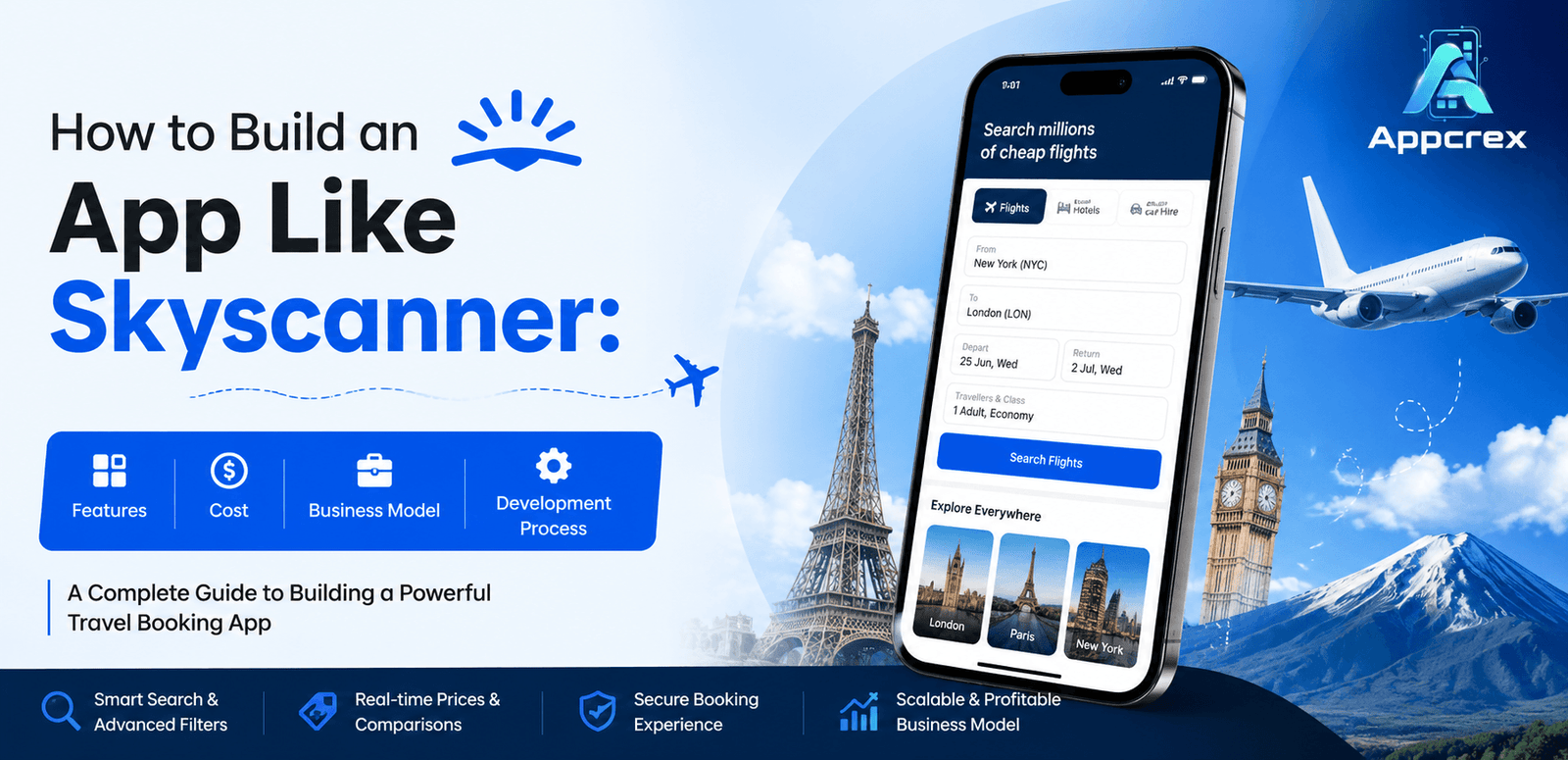
Essential Features of a Skyscanner-Like App
1. User Registration
Registration should be optional for basic searches.
Users can sign up using:
- Mobile number
- Apple
Registered users can access:
- Saved searches
- Favourite destinations
- Price alerts
- Travel history
- Personalised recommendations
Keeping basic flight search accessible without forcing registration can reduce friction.
2. Flight Search
This is the foundation of the platform.
Users should be able to enter:
- Departure city
- Destination
- Departure date
- Return date
- Number of travellers
- Cabin class
You can support:
- One-way
- Round-trip
- Multi-city
For example:
London → Dubai
London → New York
Manchester → Barcelona
The system then requests relevant data from connected flight providers.
3. Flexible Date Search
Not every traveller has fixed dates.
Someone may ask:
“When is the cheapest time to fly to Paris?”
A flexible-date feature can show fare differences across several days or weeks.
This makes the platform more useful than a basic booking form.
4. Everywhere Search
One of the most interesting features for travel discovery is allowing users to search without a fixed destination.
For example:
London → Everywhere
The system can display destinations based on:
- Cheapest fare
- Travel date
- Flight duration
- Popularity
This can encourage users to discover trips they weren’t originally planning.
5. Price Comparison
Once flight data is collected, the platform needs to present it clearly.
Users can compare:
- Airline
- Price
- Duration
- Stops
- Departure time
- Arrival time
- Booking provider
The interface should make it easy to answer:
Which option offers the best value?
Not simply:
Which one is cheapest?
6. Advanced Filters
Flight results can become overwhelming.
Filters can include:
- Maximum price
- Airline
- Number of stops
- Departure time
- Arrival time
- Flight duration
- Airport
- Baggage
- Cabin class
Users should be able to apply several filters simultaneously.
7. Sorting
Useful sorting options include:
- Cheapest
- Fastest
- Best
- Earliest departure
- Latest departure
- Shortest duration
An intelligent Best option can combine price, duration and convenience.
Also Read : What Is an MVP in App Development? A Complete Guide
8. Flight Details
The flight detail screen should clearly display:
- Airline
- Flight number
- Departure airport
- Arrival airport
- Departure time
- Arrival time
- Duration
- Stops
- Baggage
- Fare conditions
- Booking provider
Transparency is especially important in travel because low headline prices sometimes exclude additional fees or baggage.
9. Price Alerts
This can be one of the most valuable retention features.
A user can create an alert:
London → Dubai
Travel date: December
Notify me if the price falls below £350.
The system monitors available fares and sends a notification when the selected conditions are met.
10. Fare Calendar
A calendar can show approximate prices for different dates.
For example:
| Date | Starting Fare |
|---|---|
| Monday | £320 |
| Tuesday | £285 |
| Wednesday | £301 |
| Thursday | £275 |
| Friday | £340 |
This helps customers adjust their plans to save money.
11. Hotel Search
Once flight comparison is working, hotels are a natural expansion.
Users can search hotels based on:
- Location
- Dates
- Guests
- Price
- Rating
- Amenities
You can connect hotel inventory through suitable travel APIs and providers.
12. Car Rental
A broader platform can also provide car rental comparison.
Customers can search:
- Pickup location
- Drop-off location
- Dates
- Vehicle type
- Price
This creates another monetisation opportunity.
13. Travel Packages
You can eventually combine:
Flight + Hotel + Car
into one travel package.
This can increase the average transaction value while making trip planning easier.
14. Travel Inspiration
Travel isn’t always destination-first.
Sometimes users simply want ideas.
You could create sections such as:
- Best weekend destinations
- Cheapest European cities
- Family destinations
- Summer travel ideas
- Winter destinations
- City breaks
- Beach holidays
Content and search can work together to bring users into the platform.
15. AI Travel Assistant
AI can make the travel search experience more conversational.
Instead of entering multiple filters, a customer could write:
“Find me a cheap weekend trip from London to somewhere warm in October.”
The AI can understand:
- Origin
- Approximate dates
- Weather preference
- Budget
- Trip duration
and return suitable options.
16. Personalised Recommendations
AI can learn from:
- Previous searches
- Saved destinations
- Price ranges
- Travel dates
- Preferred airlines
- Booking history
It can then recommend destinations or flights.
For example:
“You usually travel from London on weekends. These three European destinations currently have lower-than-usual fares.”
17. Currency Conversion
International travellers often want prices in their preferred currency.
The app can support:
- GBP
- EUR
- USD
- CAD
- AUD
- INR
- AED
The currency system should use reliable exchange-rate data rather than manually maintained values.
18. Multiple Languages
If you’re targeting an international audience, multilingual support can be added.
Possible languages include:
- English
- French
- German
- Spanish
- Italian
- Arabic
- Hindi
Translation should cover the complete customer journey rather than just the home page.
19. Push Notifications
Notifications can be used for:
- Price drops
- Flight changes
- Search reminders
- Booking updates
- Travel deals
- Personalised recommendations
Price alerts are particularly relevant for a flight comparison platform.
20. Reviews and Travel Information
The platform can eventually include user-generated content.
Travellers could share:
- Airline reviews
- Airport experiences
- Destination tips
- Hotel reviews
- Travel recommendations
This can increase engagement and create additional search traffic.
The Most Important Part: Travel APIs
Unlike a standard eCommerce application, a flight comparison platform depends heavily on external data.
You may need integrations for:
- Flight schedules
- Fare information
- Availability
- Airline details
- Airport information
- Hotel inventory
- Car rentals
- Booking
- Payments
The exact providers depend on your target market and business model.
API integration can become one of the most technically challenging parts of the project because travel data changes frequently.
How Does a Skyscanner-Like App Make Money?
A travel comparison platform can use several revenue models.
1. Commission
The platform can earn a commission when users complete a booking through an airline, OTA or travel partner.
This is one of the most natural models for a comparison marketplace.
2. Cost Per Click
Travel providers can pay when users click from your platform to their booking page.
This can work particularly well for comparison platforms.
3. Advertising
Airlines, hotels and tourism brands can purchase advertising.
Examples include:
- Sponsored destinations
- Featured hotels
- Banner campaigns
- Travel promotions
4. Affiliate Revenue
The platform can earn affiliate commissions from:
- Flights
- Hotels
- Car rentals
- Travel insurance
- Activities
This allows the platform to monetise users across different parts of the travel journey.
5. Premium Travel Services
You can eventually offer paid services such as:
- Premium alerts
- Advanced fare tracking
- Business travel tools
- Concierge services
- Personalised trip planning
Also Read : How to Build an App Like ASOS: Features, Cost, Business Model & Development Process
How to Build an App Like Skyscanner?
Step 1: Choose Your Business Model
Before development, decide whether your platform will be:
Comparison-only
Users search and then continue to an external provider.
Booking platform
Users complete bookings inside your platform.
Hybrid
Some partners use direct booking while others redirect users externally.
This decision affects architecture, integrations and development cost.
Step 2: Define Your Target Audience
Don’t start with everyone.
Choose a specific customer segment.
For example:
UK travellers looking for affordable European weekend trips.
This makes it easier to define features and marketing.
Step 3: Select Data and Booking Partners
Identify the APIs and providers required for your launch.
You’ll need to consider:
- Coverage
- Pricing
- Reliability
- API limits
- Booking capabilities
- Geographic availability
- Commercial terms
This step should happen before major development begins.
Step 4: Design the Search Experience
Flight search needs to feel fast.
The UI should make it easy to:
- Enter the trip
- Search
- Compare
- Filter
- Select
- Book
Don’t overload users with unnecessary information.
Step 5: Develop the MVP
A practical MVP can include:
Customer App
- Flight search
- Results
- Filters
- Sorting
- Flight details
- Price alerts
- Favourite searches
- Redirect/booking
- Notifications
Admin Panel
- Users
- Searches
- Partners
- Content
- Alerts
- Analytics
You can add hotels and car rentals later.
Step 6: Integrate APIs
The development team connects:
- Flight APIs
- Hotel APIs
- Maps
- Payment systems
- Notification services
- Analytics
The backend should normalise information from different providers so users receive consistent results.
Also Read : What Is API Integration? A Complete Guide to Benefits, Types & Best Practices (2026)
Step 7: Add AI
Once you have enough customer interaction data, AI can support:
- Recommendations
- Smart search
- Price predictions
- Travel assistants
- Personalised deals
AI should improve the travel experience rather than simply being added as a marketing feature.
Step 8: Test Real Search Scenarios
Testing should include:
- Domestic flights
- International flights
- One-way trips
- Round trips
- Multi-city journeys
- Multiple currencies
- Different time zones
- Fare changes
- API failures
- Payment failures
Travel platforms need extensive testing because several external systems may be involved in a single customer journey.
Technology Stack for a Skyscanner-Like App
Mobile Development
You can use:
- Flutter
- React Native
- Swift
- Kotlin
For startups, cross-platform development can be useful when launching both iOS and Android versions.
Backend
Possible technologies include:
- Node.js
- Python
- Java
- .NET
The backend should be designed to handle large volumes of searches and external API requests.
Database
Common options include:
- PostgreSQL
- MySQL
- MongoDB
- Redis
Redis can be particularly useful for caching frequently requested information.
Search Infrastructure
For large travel catalogues, specialised search technology may be useful.
Examples include:
- Elasticsearch
- OpenSearch
- Algolia
Cloud Infrastructure
Possible platforms include:
- AWS
- Microsoft Azure
- Google Cloud
Cloud infrastructure allows the platform to scale during high-demand periods.
How Long Does It Take to Develop a Skyscanner-Like App?
The timeline depends on the scope.
| Development Stage | Estimated Time |
|---|---|
| Market Research | 2–4 weeks |
| UI/UX Design | 4–6 weeks |
| Mobile App | 8–12 weeks |
| Backend | 10–16 weeks |
| Flight API Integration | 4–8 weeks |
| Admin Panel | 4–6 weeks |
| Notifications & Alerts | 2–4 weeks |
| Testing | 4–7 weeks |
| Deployment | 1–3 weeks |
A focused MVP can take approximately 4–6 months.
A large travel marketplace with flights, hotels, cars, AI, direct booking and multiple international integrations can take 8–14 months or longer.
How to Make Your Travel App Different?
Competing directly with a major travel platform is difficult.
The better strategy is differentiation.
1. Focus on a Region
Build the best comparison platform for a specific market.
2. Focus on Budget Travellers
Make finding genuinely affordable trips the core experience.
3. Build AI Into Search
Let users explain what they want naturally.
4. Add Better Price Intelligence
Show whether today’s price is high, average or unusually low.
5. Create Destination Discovery
Help users find places they haven’t considered.
6. Build Around a Community
Allow travellers to share experiences and recommendations.
7. Target Business Travellers
Provide corporate travel management, policy controls and expense features.
The strongest competitive advantage comes from solving a specific problem better—not from having the longest list of features.
Why Choose a Mobile App Development Company UK?
If your target market is Britain, partnering with a Mobile App Development Company UK can help you build a travel platform around your intended UK audience and business model.
A professional development team can help with:
- Travel app development
- Flight booking app development
- Travel marketplace development
- API integration
- Flight search systems
- Hotel API integration
- Payment integration
- GPS and map services
- AI travel assistants
- Price alert systems
- Admin dashboards
- Cloud infrastructure
- App maintenance
For a comparison platform, API architecture and backend scalability are just as important as the mobile interface.
Why Choose AppCrex?
AppCrex can help startups and businesses develop custom travel and booking platforms.
Our services include:
- Travel App Development
- Flight Booking App Development
- Hotel Booking App Development
- Travel Marketplace Development
- iOS App Development
- Android App Development
- Cross-Platform App Development
- AI App Development
- API Integration
- Payment Gateway Integration
- Real-Time Notifications
- Admin Dashboard Development
- Cloud Backend Development
- UI/UX Design
- App Maintenance & Support
Whether you’re planning a flight comparison platform, travel booking marketplace or AI-powered travel assistant, the product can be built around your target audience and commercial model.
Final Thoughts
Building an app like Skyscanner isn’t just a matter of creating a flight search screen.
The real product is the technology behind that search.
You need reliable travel data, fast APIs, accurate fare comparison, intelligent filtering, scalable infrastructure and a smooth booking journey.
For a startup, the smartest approach is usually to start small.
Launch with flight search and comparison.
Then validate the market.
Once users are coming back, you can introduce:
Price Alerts → Hotels → Car Rentals → AI Recommendations → Travel Assistant → Complete Travel Marketplace
A basic MVP may cost around $40,000–$65,000, while a sophisticated travel marketplace can exceed $250,000 depending on integrations and functionality.
Most importantly, don’t try to win by copying Skyscanner feature for feature.
Find a specific group of travellers and give them a faster, smarter or more personalised way to plan their trips.
That’s where a new travel app can create a real competitive advantage.
FAQs
Q. How much does it cost to build an app like Skyscanner?
A basic flight comparison MVP can cost approximately $40,000–$65,000, while a full-featured platform can cost $120,000–$250,000+.
Q. How long does it take to develop a Skyscanner-like app?
A focused MVP may take around 4–6 months. A large travel marketplace can take 8–14 months or longer.
Q. What are the main features of a flight comparison app?
Flight search, price comparison, filters, sorting, flight details, flexible dates, price alerts, user accounts and booking or provider redirection are core features.
Q. Do I need flight APIs to build this type of app?
Yes. A flight comparison platform generally requires access to reliable flight schedules, fares and availability through appropriate travel data providers or APIs.
Q. Can AI be added to a travel app?
Yes. AI can support natural-language search, destination recommendations, price intelligence, personalised deals and AI travel assistants.
Q. Can I add hotel and car booking later?
Yes. Many travel platforms can begin with flights and gradually expand into hotels, car rentals, activities and other travel services.
Q. How does a flight comparison app make money?
Potential revenue sources include commissions, cost-per-click partnerships, affiliate revenue, advertising and premium travel services.
Q. Can I build a Skyscanner-like app for the UK?
Yes. You can create a UK-focused travel platform targeting specific travellers, routes, destinations or travel categories.
Q. Can AppCrex develop a travel comparison app?
Yes. AppCrex can develop custom travel platforms with mobile apps, backend systems, API integrations, booking functionality, AI features and admin dashboards.