📌 Key Takeaways
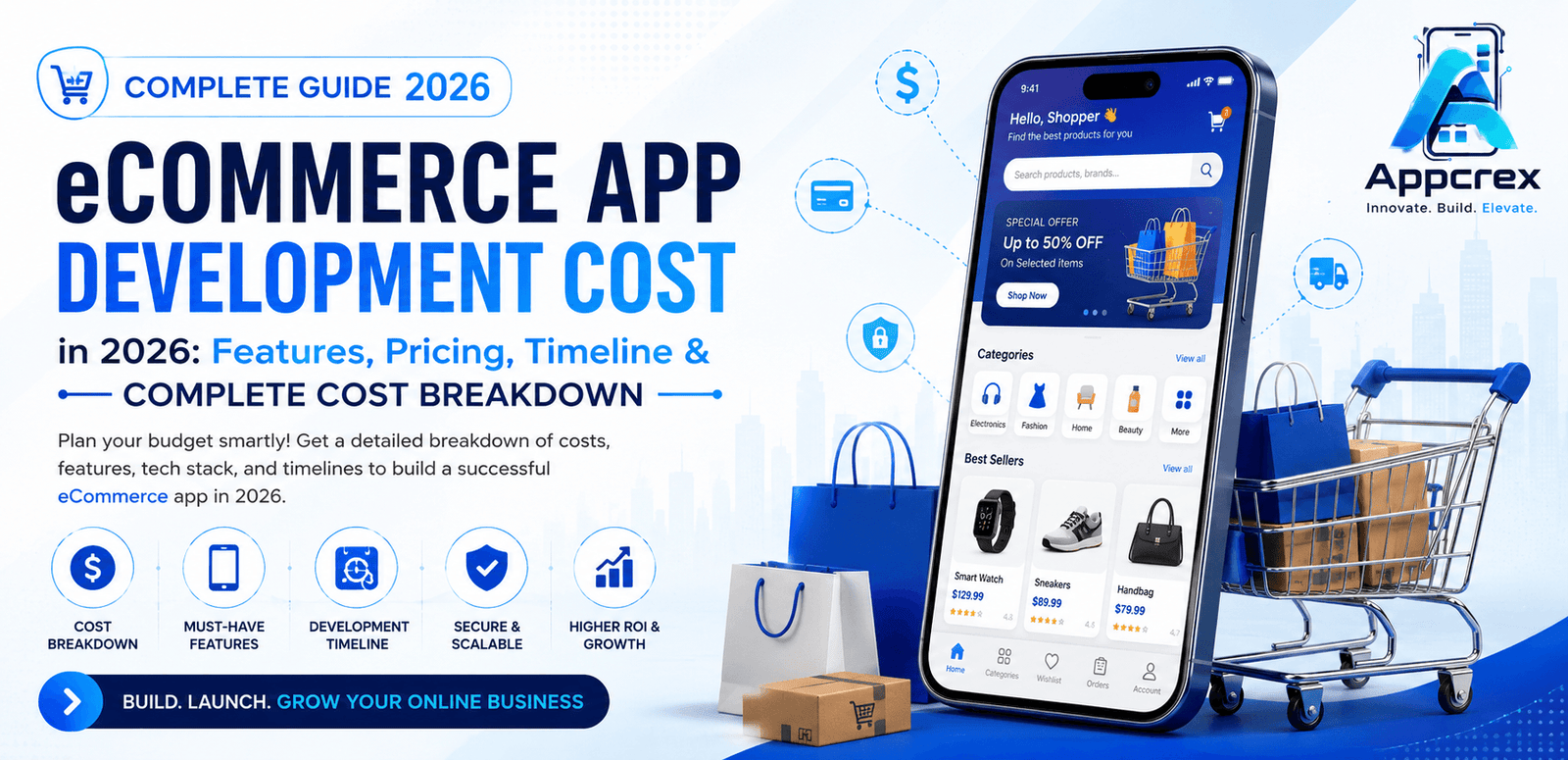
- eCommerce app costs range from $15,000 to $500,000+ depending on features and complexity.
- Core features like product catalogs, payments, and order tracking are essential for success.
- React Native development can reduce costs and speed up time-to-market.
- AI, AR, and marketplace features significantly increase development budgets.
- Starting with an MVP helps validate your idea and control initial costs.
Introduction
The eCommerce industry has experienced tremendous growth over the past decade, and 2026 is expected to be another milestone year for online businesses. Consumers increasingly prefer shopping through mobile applications because they offer convenience, personalized experiences, secure payment methods, and faster purchasing journeys. As a result, businesses of all sizes—from startups to global enterprises—are investing in eCommerce app development to capture a larger share of the digital marketplace.
Whether you’re planning to launch a fashion store, grocery delivery platform, electronics marketplace, or a multi-vendor shopping application like Amazon, understanding the development cost is essential before starting your project. Building an eCommerce app involves much more than creating product pages and integrating payment gateways. Factors such as app complexity, platform selection, UI/UX design, security, scalability, third-party integrations, and advanced technologies like AI significantly influence the overall budget.
At AppCrex, we help businesses build high-performance eCommerce applications that drive customer engagement and revenue growth. In this guide, we’ll break down everything you need to know about eCommerce app development costs in 2026, including features, pricing, timelines, and strategies to optimize your investment.
Why Businesses Need an eCommerce App in 2026
The shift toward mobile commerce continues to accelerate. Customers expect seamless shopping experiences that allow them to browse products, compare prices, make purchases, and track orders from their smartphones.
An eCommerce app provides businesses with several advantages over traditional websites.
1. Better Customer Engagement
Mobile applications create direct communication channels between businesses and customers. Push notifications, personalized offers, and loyalty programs help keep users engaged and encourage repeat purchases.
2. Higher Conversion Rates
Compared to mobile websites, apps generally deliver higher conversion rates because they offer faster navigation, saved payment information, and smoother checkout experiences.
3. Improved Customer Retention
Features such as wishlists, reward programs, and personalized recommendations encourage users to return and make additional purchases.
4. Stronger Brand Presence
Having a dedicated eCommerce application increases brand visibility and creates a more professional shopping experience.
5. Valuable Customer Insights
Businesses can analyze customer behavior, preferences, and purchasing patterns to improve marketing strategies and product offerings.
For companies looking to compete in today’s digital economy, investing in eCommerce app development is no longer optional—it’s a strategic necessity.
Types of eCommerce Apps and Their Development Costs
The type of eCommerce platform you choose has a major impact on development costs.
1. Single Vendor eCommerce App
A single vendor app allows one business to sell products directly to customers.
Examples include:
- Fashion stores
- Electronics retailers
- Beauty brands
- Furniture stores
Estimated Cost
$15,000 – $60,000
Development Timeline
2–5 Months
2. Multi-Vendor Marketplace
A marketplace enables multiple sellers to register, list products, and sell through a single platform.
Examples include:
- Amazon
- Etsy
- eBay
- Alibaba
Estimated Cost
$80,000 – $500,000+
Development Timeline
6–18 Months
3. Grocery Delivery App
These apps require inventory management, real-time tracking, and delivery logistics.
Estimated Cost
$30,000 – $150,000
Development Timeline
4–10 Months
4. B2B eCommerce Platform
Designed for wholesalers, distributors, and manufacturers.
Estimated Cost
$50,000 – $200,000+
5. Subscription-Based Commerce App
Ideal for businesses offering recurring deliveries and membership services.
Estimated Cost
$30,000 – $120,000
Essential Features and Their Development Costs
Every successful eCommerce application requires a strong foundation of core features.
1. User Registration and Authentication
A secure onboarding process is essential.
Features include:
- Email registration
- Mobile verification
- Social login
- OTP authentication
- Password recovery
Cost
$1,000 – $3,000
2. User Profile Management
Customers should be able to manage personal information, addresses, and order history.
Cost
$1,500 – $4,000
3. Product Catalog
A well-organized catalog helps users browse products efficiently.
Features include:
- Categories
- Product details
- Product images
- Product videos
- Product variations
Cost
$3,000 – $10,000
4. Search and Filters
Search functionality directly impacts user experience.
Features include:
- Keyword search
- Voice search
- Price filters
- Category filters
- Brand filters
Cost
$2,000 – $8,000
5. Shopping Cart
The shopping cart is one of the most critical components.
Features include:
- Add to cart
- Remove products
- Save for later
- Coupon application
Cost
$2,000 – $5,000
6. Payment Gateway Integration
Customers expect multiple payment options.
Common integrations include:
- Stripe
- PayPal
- Razorpay
- Apple Pay
- Google Pay
- UPI
Cost
$2,000 – $7,000
Also Read : Why Does Your Business Need Payment Gateway Integration Services?
7. Order Management
Users should be able to track orders from purchase to delivery.
Cost
$3,000 – $8,000
8. Reviews and Ratings
Customer reviews help build trust and improve conversions.
Cost
$1,500 – $4,000
9. Push Notifications
Used for promotions, order updates, and customer engagement.
Cost
$1,000 – $3,000
Also Read : Push Notification Guide: Benefits, Types & Best Practices (2026)
Advanced Features That Increase Development Cost
Modern eCommerce apps increasingly rely on advanced technologies.
1. AI-Powered Product Recommendations
Artificial Intelligence helps personalize the shopping experience by suggesting relevant products.
Benefits include:
- Increased conversions
- Higher average order value
- Improved customer satisfaction
Cost
$5,000 – $25,000
2. AI Chatbots
Chatbots provide instant customer support and product recommendations.
Cost
$5,000 – $20,000
3. Voice Search
Voice commerce is becoming increasingly popular among mobile shoppers.
Cost
$5,000 – $15,000
4. Augmented Reality (AR)
AR allows customers to visualize products before purchasing.
Examples include:
- Virtual try-ons
- Furniture placement previews
- Beauty product simulations
Cost
$15,000 – $60,000+
5. Multi-Vendor Marketplace Features
Additional seller functionality significantly increases complexity.
Features include:
- Seller onboarding
- Vendor dashboards
- Commission management
- Vendor analytics
Cost
$20,000 – $100,000+
6. Loyalty Programs
Reward systems help improve retention and repeat purchases.
Cost
$3,000 – $10,000
Platform Selection and Cost Impact
Choosing the right platform affects both development costs and long-term maintenance.
1. Android App Development
Android offers access to a large user base.
Development Cost:
$10,000 – $80,000+
2. iOS App Development
iOS users often have higher purchasing power.
Development Cost:
$10,000 – $80,000+
3. Cross-Platform Development
Cross-platform frameworks reduce costs by using a single codebase.
React Native App Development
React Native is one of the most popular technologies for eCommerce apps.
Benefits include:
- Faster development
- Lower costs
- Native-like performance
- Single codebase
Flutter App Development
Flutter offers excellent UI flexibility and performance.
Businesses can reduce development costs by 30–40% using cross-platform technologies compared to native development.
UI/UX Design Costs
Design plays a crucial role in customer engagement and conversions.
1. Basic Design
$2,000 – $5,000
2. Custom UI/UX Design
$5,000 – $20,000
3. Enterprise Design Systems
$20,000 – $50,000+
A professionally designed interface improves usability and increases customer satisfaction.
Backend Development Costs
The backend powers the entire eCommerce ecosystem.
Backend responsibilities include:
- User management
- Product management
- Order processing
- Payment handling
- Analytics
Popular technologies:
- Node.js
- Python
- Laravel
- .NET
Estimated Cost
$5,000 – $40,000+
Third-Party Integration Costs
Modern eCommerce apps depend on external services.
Common integrations include:
- Payment gateways
- Shipping providers
- CRM systems
- ERP software
- Analytics tools
- Marketing automation platforms
Estimated Cost
$1,000 – $20,000+
Security Costs
Security should never be overlooked.
Essential security measures include:
- SSL certificates
- PCI DSS compliance
- Two-factor authentication
- Data encryption
- Secure APIs
Estimated Cost
$2,000 – $15,000+
Cloud Infrastructure Costs
Cloud infrastructure ensures scalability and reliability.
Popular providers include:
- AWS
- Microsoft Azure
- Google Cloud
Monthly costs vary based on usage.
Estimated Monthly Cost
$100 – $10,000+
Development Timeline Breakdown
| App Type | Timeline |
|---|---|
| Basic eCommerce App | 2–4 Months |
| Medium Complexity App | 4–8 Months |
| Enterprise App | 8–12 Months |
| Marketplace App | 10–18 Months |
Hidden Costs of eCommerce App Development
Many businesses focus solely on development costs and overlook additional expenses.
These may include:
- App Store fees
- Maintenance
- Hosting
- Marketing
- Customer support
- Security updates
- Feature enhancements
Annual maintenance typically costs around 15–25% of the original development budget.
How to Reduce eCommerce App Development Costs
Start with an MVP
Launch a Minimum Viable Product first and add advanced features later.
Use React Native
A single codebase reduces development and maintenance costs.
Prioritize Essential Features
Focus on revenue-generating functionality first.
Use Trusted Third-Party Services
Integrate proven solutions rather than building everything from scratch.
Plan for Scalability
Building a scalable architecture from the beginning reduces future redevelopment costs.
Also Read : What Is an MVP in App Development? A Complete Guide
Why Choose AppCrex for eCommerce App Development?
AppCrex is a trusted eCommerce App Development Company delivering scalable, secure, and feature-rich commerce solutions.
Our services include:
- Custom eCommerce App Development
- React Native App Development
- Flutter App Development
- Marketplace Development
- AI Integration Services
- Payment Gateway Integration
- Multi-Vendor Platforms
- Enterprise Commerce Solutions
Our team combines innovative technologies, modern design practices, and industry expertise to build shopping experiences that drive growth and customer satisfaction.
Conclusion
The cost of eCommerce app development in 2026 depends on your business model, feature requirements, platform selection, and scalability goals. A simple shopping application may cost between $15,000 and $35,000, while advanced marketplace platforms with AI, AR, and multi-vendor capabilities can exceed $500,000.
The key to success is not simply minimizing costs but investing in a platform that delivers exceptional user experiences and supports long-term business growth. By partnering with an experienced eCommerce App Development Company like AppCrex, businesses can create future-ready applications that attract customers, increase conversions, and maximize revenue.
FAQs
How much does it cost to build an eCommerce app in 2026?
Development costs typically range from $15,000 to $500,000+, depending on complexity and features.
Is React Native good for eCommerce app development?
Yes. React Native offers faster development, lower costs, and excellent performance across Android and iOS.
How long does eCommerce app development take?
A basic app can take 2–4 months, while marketplace platforms may require 10–18 months.
What are the must-have features of an eCommerce app?
Product catalog, search, shopping cart, payment integration, order tracking, reviews, and notifications.
Why should I choose AppCrex for eCommerce app development?
AppCrex provides end-to-end development services, modern technologies, AI integrations, and scalable solutions tailored to your business needs.