📌 Key Takeaways
- Pharmacy delivery apps allow customers to order medicines online and receive doorstep delivery.
- Features like e-prescriptions, medicine reminders, order tracking, and secure payments improve patient convenience.
- AI, telemedicine, and healthcare integrations are transforming modern pharmacy applications.
- Development costs vary based on app complexity, compliance requirements, and third-party integrations.
- The growing digital healthcare market makes pharmacy delivery apps a valuable investment opportunity in 2026.
Introduction
The healthcare industry is experiencing a major digital transformation, and one of the fastest-growing segments is online pharmacy and medicine delivery app. Consumers today expect healthcare services to be as convenient as food delivery, ride-sharing, and online shopping. As a result, pharmacy delivery applications have become an essential part of modern healthcare ecosystems.
Patients no longer want to stand in long queues at local pharmacies or visit multiple stores to find prescribed medications. Instead, they prefer ordering medicines online and receiving them directly at their doorstep. This shift in consumer behavior has created enormous opportunities for healthcare startups, pharmacy chains, hospitals, and healthcare entrepreneurs.
Leading platforms such as PharmEasy, NetMeds, Tata 1mg, Capsule, Walgreens, and CVS Pharmacy have transformed the pharmaceutical industry by offering seamless digital experiences.
According to market research, the global ePharmacy market is expected to exceed billions of dollars by 2030, driven by increasing internet penetration, smartphone adoption, telemedicine growth, and rising demand for healthcare accessibility.
For businesses looking to enter this rapidly growing market, investing in pharmacy delivery app development can provide significant revenue opportunities while improving patient care and healthcare accessibility.
In this comprehensive guide, we’ll explore everything you need to know about pharmacy delivery app development, including business models, features, technology stack, development process, costs, challenges, and future trends.
What is a Pharmacy Delivery App?
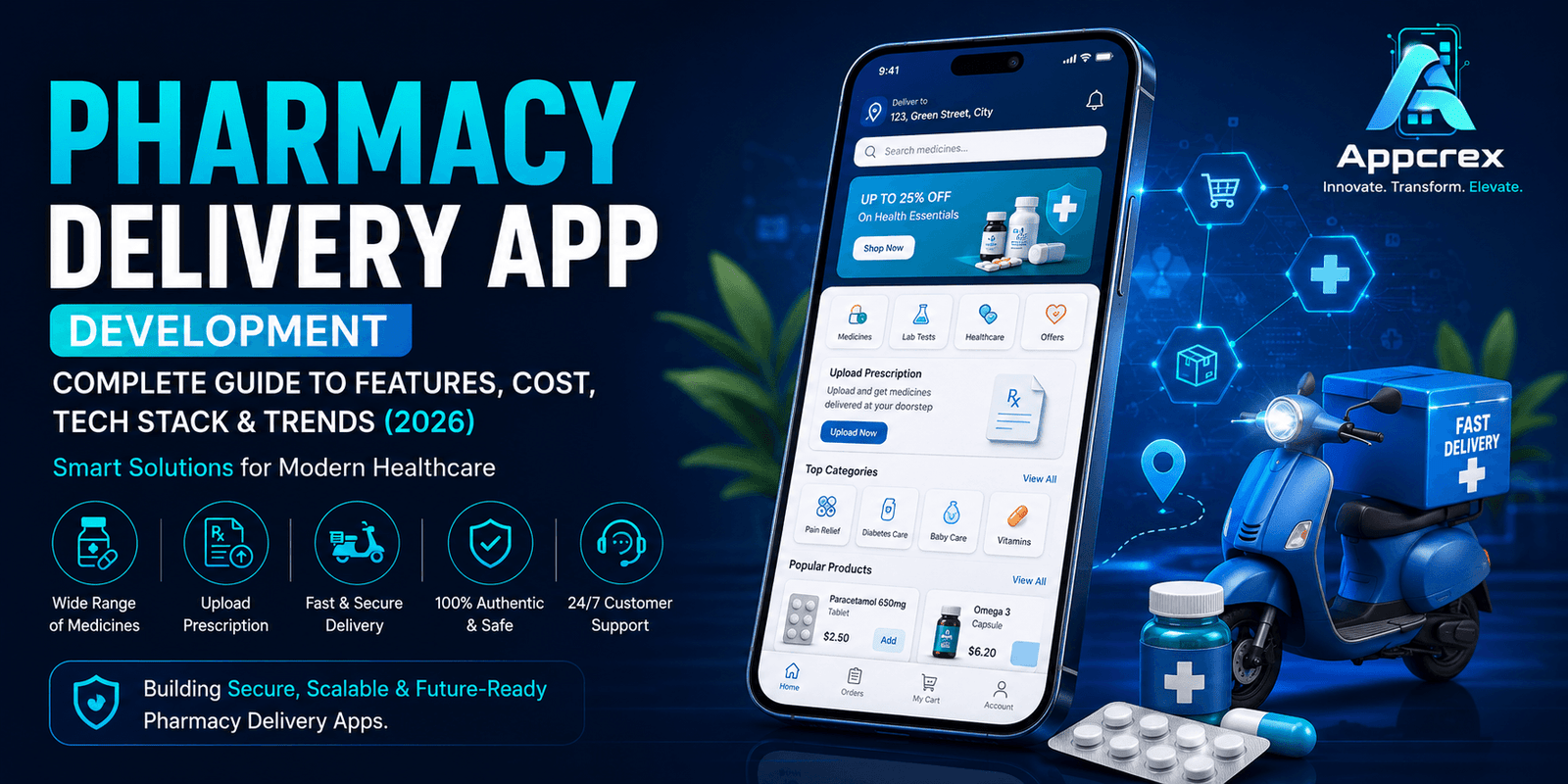
A Pharmacy Delivery App is a healthcare application that enables users to purchase prescription and over-the-counter medicines online through smartphones or web platforms.
The application typically connects:
- Patients
- Pharmacies
- Doctors
- Delivery Partners
- Healthcare Providers
Users can browse medicines, upload prescriptions, make payments, and track deliveries from a single platform.
Modern pharmacy apps often integrate with telemedicine services, allowing patients to consult doctors online and receive digital prescriptions instantly.
These platforms improve accessibility, convenience, and efficiency for both customers and healthcare providers.
Why Pharmacy Delivery Apps Are Booming in 2026
Several factors are contributing to the explosive growth of online pharmacy services.
Increased Smartphone Adoption
Smartphones have become the primary platform for healthcare interactions.
Consumers increasingly prefer:
- Online Consultations
- Medicine Ordering
- Health Monitoring
- Appointment Scheduling
through mobile applications.
Growing Telemedicine Market
Telemedicine has become mainstream worldwide.
Patients can now:
- Consult doctors online
- Receive e-prescriptions
- Order medications instantly
without visiting healthcare facilities.
Aging Population
The elderly population often requires regular medication management.
Pharmacy delivery services eliminate transportation challenges and improve medication adherence.
Convenience and Accessibility
Customers enjoy:
- Home Delivery
- Digital Payments
- Prescription Storage
- Medicine Reminders
all from one platform.
Pandemic-Driven Adoption
The COVID-19 pandemic accelerated digital healthcare adoption, creating long-term behavioral changes in how patients access healthcare services.
Types of Pharmacy Delivery Apps
Before starting development, businesses must choose the right business model.
Standalone Pharmacy App
Developed for a single pharmacy or pharmacy chain.
Examples include:
- CVS Pharmacy
- Walgreens
Benefits
- Complete Brand Control
- Direct Customer Relationships
- Higher Profit Margins
Challenges
- Limited Inventory
- Restricted Geographic Coverage
Marketplace Pharmacy App
A multi-vendor platform connecting customers with multiple pharmacies.
Examples:
- PharmEasy
- Tata 1mg
- NetMeds
Benefits
- Wider Product Availability
- Larger Customer Base
- Scalability
Challenges
- Complex Vendor Management
- Operational Complexity
Subscription-Based Pharmacy App
Users subscribe for recurring medicine deliveries.
Ideal for:
- Diabetes Patients
- Hypertension Patients
- Chronic Disease Management
Benefits
- Predictable Revenue
- Higher Customer Retention
Hospital-Integrated Pharmacy Platform
Connected directly to healthcare providers and hospital systems.
Features
- EHR Integration
- Digital Prescriptions
- Patient Management
Benefits
- Improved Care Coordination
- Better Patient Outcomes
Essential Features of a Pharmacy Delivery App
The success of a pharmacy application largely depends on its features and user experience.
User Registration & Authentication
Secure registration options include:
- Email Login
- Mobile Number Login
- OTP Verification
- Social Login
- Biometric Authentication
User Profile Management
Users should be able to:
- Manage Addresses
- Store Prescriptions
- View Order History
- Track Health Records
Medicine Search & Discovery
A powerful search engine is essential.
Search filters include:
- Medicine Name
- Generic Name
- Brand
- Category
- Availability
Prescription Upload
Users can upload prescriptions using:
- Camera
- Gallery Images
- PDF Documents
The system should automatically verify image quality and readability.
Medicine Catalog
Display:
- Product Information
- Dosage Details
- Side Effects
- Pricing
- Availability
Shopping Cart
Customers can:
- Add Medicines
- Save Items
- Apply Coupons
- Review Orders
Secure Payment Gateway
Support multiple payment methods:
- Credit Cards
- Debit Cards
- UPI
- Apple Pay
- Google Pay
- PayPal
Real-Time Order Tracking
Allow users to monitor delivery status from dispatch to doorstep delivery.
Push Notifications
Important alerts include:
- Order Updates
- Refill Reminders
- Discounts
- Prescription Expiry Alerts
Ratings & Reviews
Users can review:
- Medicines
- Pharmacies
- Delivery Services
Also Read : Push Notification Guide: Benefits, Types & Best Practices (2026)
Advanced Features for Modern Pharmacy Delivery Apps
As competition in the digital healthcare market continues to increase, modern pharmacy applications must offer more than basic medicine ordering capabilities. Advanced features help improve user engagement, increase customer retention, and create a better overall healthcare experience.
AI-Powered Medicine Recommendations
Artificial Intelligence can analyze customer behavior, prescription history, and purchasing patterns to recommend relevant healthcare products.
Benefits include:
- Personalized recommendations
- Increased sales opportunities
- Better customer experience
- Improved medication adherence
For example, if a customer regularly purchases diabetes medication, the app can recommend glucose monitors, testing strips, or health supplements.
AI Chatbot Support
AI chatbots have become a critical component of modern healthcare applications.
They can assist users by:
- Answering common questions
- Helping users find medicines
- Explaining dosage instructions
- Providing order updates
- Scheduling consultations
Unlike traditional customer support, AI chatbots are available 24/7 and can handle thousands of conversations simultaneously.
Also Read : AI Chatbot Development Company: Complete Guide to Features, Benefits, Cost & Trends (2026)
Smart Prescription Management
Prescription management is one of the most valuable features for users who require long-term medications.
The system can:
- Store digital prescriptions
- Notify users about prescription expiration
- Track refill schedules
- Automatically reorder medications
This feature significantly improves medication adherence and customer retention.
Voice Search and Voice Ordering
Voice technology is rapidly becoming a major trend in healthcare applications.
Users can:
- Search medicines using voice commands
- Reorder medications verbally
- Ask health-related questions
Voice AI improves accessibility for elderly users and individuals with disabilities.
Telemedicine Integration
One of the most significant innovations in healthcare technology is the integration of telemedicine and pharmacy services.
A typical workflow includes:
- Patient books online consultation.
- Doctor provides e-prescription.
- Prescription is transferred automatically.
- Patient confirms order.
- Pharmacy prepares medication.
- Delivery partner completes delivery.
This creates a seamless healthcare ecosystem.
AI in Pharmacy Delivery App Development
Artificial Intelligence is revolutionizing the pharmacy industry.
AI can improve operational efficiency while enhancing patient experiences.
AI-Based Drug Recommendations
Machine learning algorithms analyze:
- Prescription history
- Health conditions
- Customer preferences
to recommend suitable healthcare products.
Predictive Analytics
AI systems can forecast:
- Medication demand
- Inventory requirements
- Seasonal trends
- Customer purchasing patterns
This helps pharmacies reduce inventory shortages and overstock situations.
Intelligent Inventory Management
AI-powered inventory systems automatically monitor stock levels and predict future demand.
Benefits include:
- Reduced wastage
- Better inventory planning
- Improved profitability
Fraud Detection
AI algorithms can identify suspicious prescription activity and payment fraud.
This helps protect both customers and pharmacies.
Personalized Healthcare Experiences
AI can deliver personalized:
- Medicine recommendations
- Health reminders
- Wellness suggestions
- Preventive healthcare tips
based on user behavior and health history.
User Panels in a Pharmacy Delivery App
A successful pharmacy delivery platform requires multiple interfaces for different stakeholders.
Customer Panel
The customer app is the primary interface users interact with.
Features include:
- Registration & Login
- Medicine Search
- Prescription Upload
- Online Payments
- Order Tracking
- Medicine Reminders
- Customer Support
The user experience should be simple, intuitive, and secure.
Pharmacy Panel
Pharmacists require dedicated tools to manage operations efficiently.
Functions include:
- Inventory Management
- Order Processing
- Prescription Verification
- Stock Monitoring
- Revenue Tracking
This panel helps streamline daily pharmacy operations.
Delivery Partner Panel
Delivery personnel need tools to manage deliveries effectively.
Features include:
- Delivery Assignment
- Route Navigation
- Order Status Updates
- Delivery Confirmation
- Earnings Tracking
Real-time GPS integration improves delivery efficiency.
Admin Panel
The admin dashboard controls the entire ecosystem.
Capabilities include:
- User Management
- Pharmacy Management
- Revenue Analytics
- Marketing Tools
- Customer Support Monitoring
- Compliance Reporting
The admin panel provides complete operational visibility.
Pharmacy Delivery App Development Process
Developing a successful pharmacy application requires a structured approach.
Step 1: Market Research
Before development begins, businesses should analyze:
- Market demand
- Competitor offerings
- Customer pain points
- Regulatory requirements
Research helps identify opportunities and define product strategy.
Step 2: Define Business Goals
Establish clear objectives such as:
- Customer acquisition
- Revenue generation
- Market expansion
- Healthcare accessibility
Well-defined goals guide the development process.
Step 3: Select the Business Model
Choose between:
- Single Pharmacy Model
- Marketplace Model
- Subscription Model
- Hospital-Integrated Platform
Each model has different technical and operational requirements.
Step 4: UI/UX Design
User experience plays a major role in app adoption.
Design priorities include:
- Easy navigation
- Quick medicine search
- Simplified checkout
- Mobile-first design
Healthcare applications should prioritize accessibility and usability.
Step 5: Backend Development
Backend systems handle:
- User Management
- Prescription Processing
- Order Management
- Payment Processing
- Inventory Tracking
A scalable architecture ensures future growth.
Step 6: API Integration
Modern pharmacy applications require numerous integrations.
Examples include:
- Payment Gateways
- Delivery APIs
- EHR Systems
- Telemedicine Platforms
- SMS Services
- Push Notification Systems
Seamless integrations improve operational efficiency.
Step 7: Security Implementation
Healthcare applications handle highly sensitive information.
Security measures include:
- End-to-End Encryption
- Multi-Factor Authentication
- Role-Based Access Control
- Secure Cloud Storage
Security should be built into every development phase.
Step 8: Testing & Quality Assurance
Comprehensive testing includes:
Functional Testing
Ensures all features work correctly.
Security Testing
Identifies vulnerabilities.
Performance Testing
Measures system performance under load.
Compliance Testing
Validates regulatory requirements.
User Acceptance Testing
Confirms readiness for launch.
Step 9: Deployment
Applications are launched on:
- Apple App Store
- Google Play Store
- Web Platforms
A smooth deployment process minimizes disruptions.
Step 10: Maintenance & Support
Post-launch services include:
- Bug Fixes
- Security Updates
- Feature Enhancements
- Performance Optimization
Ongoing maintenance is critical for long-term success.
Technology Stack for Pharmacy Delivery App Development
Choosing the right technology stack significantly impacts performance, scalability, and development costs.
Mobile App Technologies
React Native
React Native is one of the most popular frameworks for healthcare applications.
Benefits:
- Cross-platform development
- Faster deployment
- Cost efficiency
- Excellent performance
Flutter
Flutter offers:
- Beautiful UI
- Fast development
- Native-like performance
- Single codebase
Many healthcare startups choose Flutter for rapid development.
Native Development
iOS
- Swift
- SwiftUI
Android
- Kotlin
- Java
Native development provides maximum performance and device optimization.
Frontend Technologies
Popular frontend frameworks include:
- React.js
- Angular
- Vue.js
- Next.js
These technologies create responsive and user-friendly interfaces.
Backend Technologies
Node.js
Ideal for real-time applications.
Laravel
Popular for healthcare software development.
Django
Offers excellent security features.
ASP.NET
Suitable for enterprise healthcare systems.
Database Technologies
Healthcare platforms require reliable data storage.
Common options include:
- PostgreSQL
- MySQL
- MongoDB
- Firebase
Database selection depends on project complexity and scalability requirements.
Cloud Infrastructure
Cloud platforms provide scalability and security.
Popular choices include:
- Amazon Web Services (AWS)
- Microsoft Azure
- Google Cloud Platform (GCP)
Cloud infrastructure supports growing user bases while maintaining performance.
Third-Party Integrations
Modern pharmacy apps often integrate:
- Payment Gateways
- EHR Systems
- Telemedicine Platforms
- Delivery Services
- CRM Software
- Marketing Tools
Integrations help create a complete healthcare ecosystem.
Compliance & Security Requirements
Healthcare applications must comply with strict regulations.
HIPAA Compliance
Required for healthcare applications operating in the United States.
Protects patient health information.
GDPR Compliance
Required for European users.
Ensures data privacy and user control.
Data Encryption
Protects sensitive information both in transit and at rest.
Secure Authentication
Includes:
- Biometric Login
- OTP Verification
- MFA Authentication
These security measures protect user accounts and healthcare data.
Cost, Monetization, Challenges, Future Trends & Why Choose AppCrex
Pharmacy Delivery App Development Cost
One of the most common questions businesses ask is:
“How much does it cost to build a pharmacy delivery app?”
The answer depends on several factors, including app complexity, features, integrations, security requirements, compliance standards, development location, and technology stack.
A basic pharmacy app can be developed at a significantly lower cost than a fully-featured marketplace platform with AI, telemedicine integration, and advanced analytics.
Estimated Development Cost
| App Type | Estimated Cost |
|---|---|
| Basic Pharmacy Delivery App | $20,000 – $50,000 |
| Medium Complexity Pharmacy App | $50,000 – $100,000 |
| Marketplace Pharmacy Platform | $100,000 – $250,000 |
| Enterprise Pharmacy Solution | $250,000 – $500,000+ |
| AI-Powered Healthcare Ecosystem | $500,000 – $1M+ |
Factors Affecting Development Cost
UI/UX Design Complexity
Healthcare users expect clean, intuitive, and accessible interfaces.
Advanced user experiences require:
- Custom Design
- Interactive Dashboards
- Personalization Features
- Accessibility Compliance
The more sophisticated the design, the higher the development cost.
Platform Selection
Businesses can choose:
Android App
Lower initial investment.
iOS App
Access to premium healthcare consumers.
Cross-Platform App
React Native and Flutter reduce development costs.
Web Platform
Adds another customer acquisition channel.
Supporting multiple platforms increases overall project costs.
Feature Complexity
Basic features cost less than advanced healthcare functionalities.
Examples of advanced features:
- AI Chatbots
- Voice Search
- Telemedicine
- EHR Integration
- Predictive Analytics
- Medicine Recommendation Engine
Third-Party Integrations
Integrating external services requires additional development effort.
Common integrations include:
- Payment Gateways
- Delivery APIs
- Healthcare Systems
- CRM Platforms
- Cloud Services
Compliance Requirements
Healthcare applications often require:
- HIPAA Compliance
- GDPR Compliance
- Data Encryption
- Audit Logging
Compliance implementation increases development investment but is essential for legal and operational success.
Pharmacy Delivery App Monetization Models
A successful pharmacy app should generate sustainable revenue while providing value to users.
Several monetization strategies can be implemented.
Commission-Based Revenue
The platform charges pharmacies a percentage commission on every order.
Example:
Order Value = $100
Commission = 10%
Revenue = $10
This is the most common model used by marketplace platforms.
Subscription Plans
Users pay monthly or annual fees for premium benefits.
Benefits may include:
- Free Delivery
- Priority Support
- Exclusive Discounts
- Faster Delivery
Subscription models create predictable recurring revenue.
Delivery Charges
Platforms charge customers for medicine delivery services.
Revenue depends on:
- Distance
- Delivery Speed
- Order Size
Express delivery options can generate additional profits.
Featured Pharmacy Listings
Pharmacies can pay for premium placement within search results.
Benefits:
- Higher Visibility
- More Orders
- Better Brand Awareness
This creates an additional advertising revenue stream.
Healthcare Advertising
Healthcare brands may advertise:
- Supplements
- Wellness Products
- Medical Equipment
- Insurance Services
Advertising can become a significant revenue source for large user bases.
Telemedicine Consultation Fees
If the platform includes doctor consultations, businesses can earn revenue from:
- Consultation Charges
- Specialist Appointments
- Follow-Up Sessions
This creates a complete healthcare ecosystem.
Challenges in Pharmacy Delivery App Development
While pharmacy applications offer significant opportunities, businesses should also understand potential challenges.
Regulatory Compliance
Healthcare regulations vary by country and region.
Common regulations include:
- HIPAA
- GDPR
- Australian Privacy Act
- NHS Standards
- Local Pharmacy Regulations
Failure to comply can result in legal penalties.
Prescription Verification
Ensuring prescription authenticity is critical.
Challenges include:
- Fake Prescriptions
- Expired Prescriptions
- Incomplete Documentation
Automated verification systems can help reduce fraud.
Data Security
Healthcare data is highly sensitive.
Applications must protect:
- Patient Records
- Payment Information
- Prescription History
- Personal Information
Security breaches can severely damage trust and reputation.
Inventory Synchronization
Managing inventory across multiple pharmacies can be complex.
Challenges include:
- Stock Accuracy
- Real-Time Updates
- Product Availability
Inventory management systems must be integrated effectively.
Delivery Logistics
Medicine delivery requires reliable logistics management.
Businesses must manage:
- Delivery Partners
- Route Optimization
- Delivery Tracking
- Temperature-Sensitive Medications
Operational efficiency directly impacts customer satisfaction.
Future Trends in Pharmacy Delivery App Development
The future of digital healthcare is incredibly exciting.
Several technologies are transforming pharmacy delivery platforms.
Artificial Intelligence (AI)
AI will become a standard feature in healthcare applications.
Future AI capabilities include:
- Personalized Treatment Recommendations
- Predictive Healthcare Insights
- Intelligent Virtual Assistants
- Automated Prescription Analysis
AI will significantly improve patient experiences.
Generative AI in Healthcare
Generative AI can help patients:
- Understand Prescriptions
- Learn About Medications
- Receive Personalized Guidance
- Access Health Information
Healthcare businesses are increasingly investing in AI-powered solutions.
Voice AI Assistants
Voice-enabled healthcare experiences are growing rapidly.
Patients will be able to:
- Order Medicines
- Schedule Refills
- Receive Medication Reminders
- Ask Health Questions
using voice commands alone.
Internet of Things (IoT)
Connected healthcare devices will play a major role.
Examples include:
- Smart Pill Dispensers
- Wearable Health Devices
- Remote Patient Monitoring Systems
These devices can automatically trigger medication refills.
Blockchain Technology
Blockchain offers enhanced:
- Security
- Transparency
- Traceability
Applications include:
- Prescription Verification
- Drug Supply Chain Management
- Secure Health Records
Drone Delivery
Several healthcare organizations are testing drone-based medicine delivery.
Benefits include:
- Faster Delivery
- Remote Area Accessibility
- Emergency Medical Supply Distribution
Drone delivery could become mainstream over the next decade.
Hyper-Personalized Healthcare
Future pharmacy applications will provide:
- Personalized Medication Plans
- Health Coaching
- Preventive Care Recommendations
- AI-Driven Wellness Insights
This will improve patient outcomes significantly.
Why Choose AppCrex for Pharmacy Delivery App Development?
Choosing the right development partner is crucial to the success of your healthcare platform.
At AppCrex, we specialize in building secure, scalable, and innovative healthcare applications that meet the highest industry standards.
Our Healthcare Development Services
We provide:
- Pharmacy Delivery App Development
- Healthcare App Development
- Telemedicine Solutions
- Hospital Management Systems
- EHR Integration Services
- AI Healthcare Solutions
- Healthcare CRM Development
- Medical Appointment Apps
- Patient Portal Development
- Custom Healthcare Software
Why Businesses Choose AppCrex
Healthcare Industry Expertise
Our team understands healthcare workflows, compliance requirements, and patient needs.
Custom Development Approach
Every solution is tailored to specific business objectives.
AI-Powered Innovation
We integrate advanced technologies including:
- Artificial Intelligence
- Machine Learning
- Generative AI
- Predictive Analytics
Enterprise-Level Security
We build secure healthcare applications with:
- Data Encryption
- Secure Authentication
- Compliance Controls
Scalable Architecture
Our solutions are designed to support future growth and expansion.
End-to-End Development
From strategy to deployment and ongoing support, we handle the entire development lifecycle.
Frequently Asked Questions
Q. How long does it take to develop a pharmacy delivery app?
Development timelines vary based on complexity.
- Basic App: 3–4 Months
- Marketplace Platform: 6–9 Months
- Enterprise Solution: 9–12+ Months
Q. Can pharmacy apps integrate with telemedicine platforms?
Yes. Modern pharmacy applications often integrate with telemedicine systems to provide seamless healthcare experiences.
Q. Is HIPAA compliance required?
If your application handles patient information in the United States, HIPAA compliance is generally required.
Q. What technologies are best for pharmacy app development?
Popular technologies include:
- React Native
- Flutter
- Node.js
- Laravel
- AWS
- PostgreSQL
- Firebase
Q. Can AI improve pharmacy delivery applications?
Absolutely.
AI can support:
- Customer Service
- Inventory Forecasting
- Medicine Recommendations
- Fraud Detection
- Predictive Healthcare Insights
Q. Does AppCrex provide post-launch support?
Yes. We offer:
- Maintenance
- Security Updates
- Feature Enhancements
- Performance Optimization
- Technical Support
Final Thoughts
The digital healthcare revolution is reshaping how patients access medications and healthcare services. Pharmacy delivery applications are no longer optional—they have become an essential component of modern healthcare ecosystems.
By combining medicine ordering, prescription management, telemedicine, AI-powered automation, and secure healthcare workflows, businesses can create highly valuable healthcare solutions that improve patient outcomes and generate long-term revenue.
As technologies such as Artificial Intelligence, Voice AI, IoT, Blockchain, and Predictive Analytics continue to evolve, pharmacy delivery platforms will become even more intelligent, personalized, and efficient.
Whether you’re a healthcare startup, pharmacy chain, hospital, or healthcare entrepreneur, investing in Pharmacy Delivery App Development can help you stay competitive in the rapidly growing digital health market.
At AppCrex, we help businesses build secure, scalable, and future-ready pharmacy delivery applications that drive innovation and business growth. Contact AppCrex today to transform your pharmacy idea into a successful digital healthcare platform.