📌 Key Takeaways
- Mental health apps improve accessibility to therapy, meditation, and emotional wellness support.
- Features such as mood tracking, journaling, AI chatbots, and video consultations drive user engagement.
- HIPAA compliance and robust security measures are essential for protecting patient data.
- Development costs typically range from $15,000 to $120,000+ depending on complexity.
- Working with an experienced mental health app development company ensures long-term success and scalability.
Introduction
Mental health has become a global priority as individuals, healthcare providers, employers, and governments increasingly recognize the importance of emotional and psychological well-being. Rising levels of stress, anxiety, depression, burnout, and other mental health challenges have accelerated the demand for accessible and affordable mental healthcare solutions.
Traditional mental healthcare services often face challenges such as limited accessibility, high treatment costs, long waiting times, and geographical barriers. As a result, digital healthcare technologies are transforming how mental health support is delivered. Mobile applications now enable users to access therapy, meditation, mood tracking, wellness programs, and professional counseling directly from their smartphones.
Popular platforms such as Calm, Headspace, BetterHelp, Talkspace, and Moodfit have demonstrated the growing demand for digital mental wellness solutions. Businesses, healthcare providers, startups, and wellness organizations are increasingly investing in mental health app development to improve patient outcomes while creating sustainable digital healthcare ecosystems.
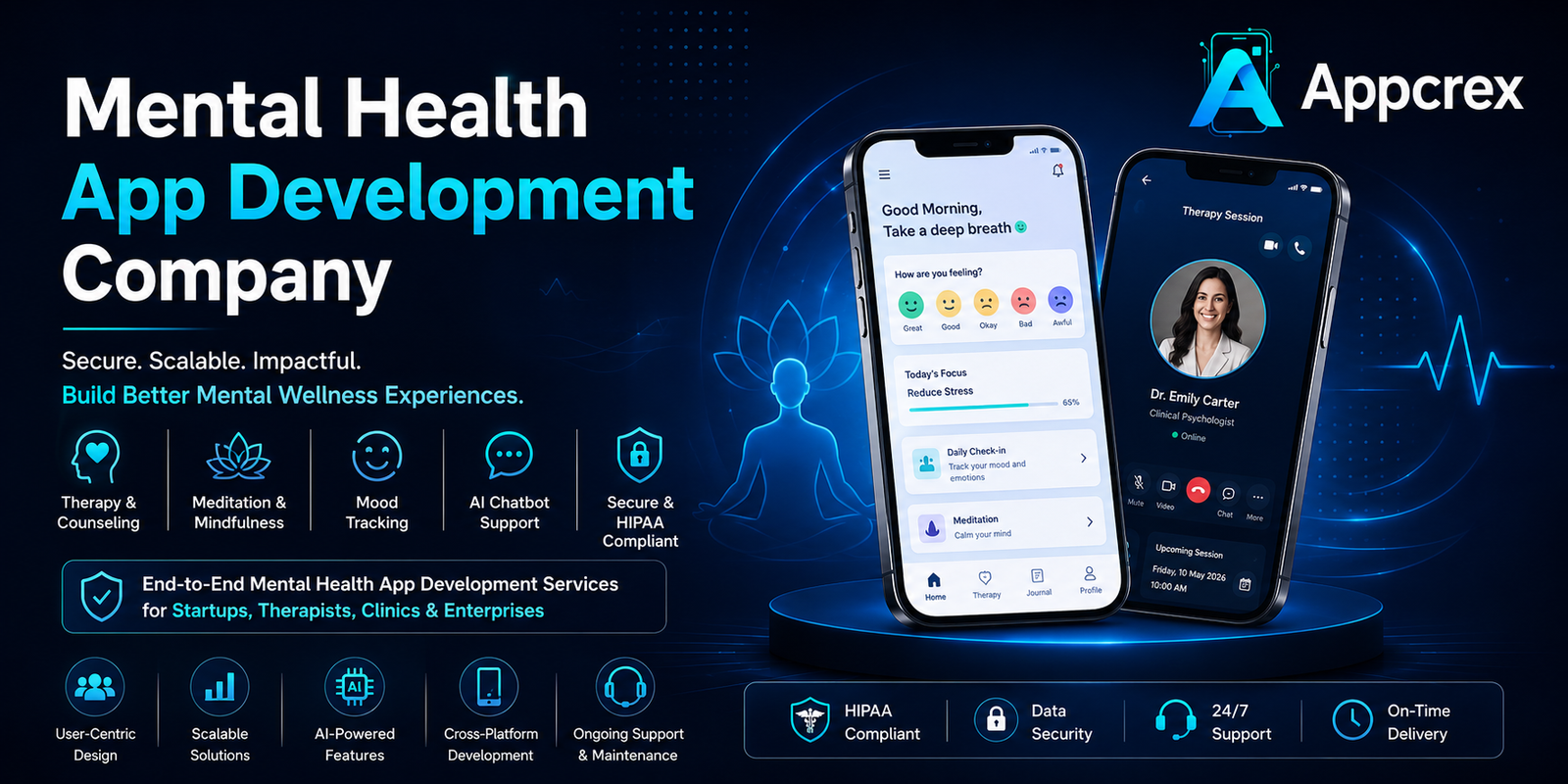
At AppCrex, we provide comprehensive Mental Health App Development Services that help healthcare providers, wellness brands, therapists, and startups build secure, scalable, and HIPAA-compliant applications. Our solutions combine modern technologies, intuitive user experiences, AI-powered features, and healthcare-grade security to create impactful mental wellness platforms.
In this guide, we’ll explore everything you need to know about mental health app development, including features, benefits, development processes, technology stacks, costs, challenges, and future trends.
What is Mental Health App Development?
Mental health app development refers to the process of designing, building, testing, and maintaining digital applications that support emotional, psychological, and behavioral well-being.
These applications help users:
- Access therapy sessions
- Track moods and emotions
- Practice meditation
- Manage stress and anxiety
- Improve sleep quality
- Build healthy habits
- Connect with mental health professionals
- Access self-help resources
Mental health applications can be developed for:
- Patients
- Therapists
- Healthcare Organizations
- Wellness Brands
- Educational Institutions
- Corporate Wellness Programs
Why Invest in Mental Health App Development?
The mental health app market continues to grow rapidly due to increasing awareness and technological advancements.
Growing Demand for Mental Wellness
Mental health awareness has increased significantly over the past decade. More people are actively seeking support and wellness tools to improve their emotional health.
Increased Smartphone Usage
Smartphones have become an essential part of daily life, making mobile healthcare solutions more accessible than ever.
Remote Healthcare Adoption
The rise of telemedicine has accelerated the adoption of digital healthcare services, including mental wellness applications.
Corporate Wellness Initiatives
Organizations increasingly invest in employee mental wellness programs to improve productivity and reduce burnout.
Improved Accessibility
Mental health apps help users access support regardless of location, making care more inclusive and convenient.
Types of Mental Health Applications
Different mental health apps serve different purposes and user groups.
1. Meditation and Mindfulness Apps
These applications help users manage stress and improve focus through guided meditation and relaxation exercises.
Popular Examples
- Calm
- Headspace
- Insight Timer
Features
- Guided Meditation
- Sleep Stories
- Relaxation Techniques
- Breathing Exercises
2. Online Therapy Apps
Therapy apps connect users with licensed mental health professionals through virtual consultations.
Popular Examples
- BetterHelp
- Talkspace
Features
- Video Consultations
- Audio Calls
- Chat-Based Counseling
- Appointment Scheduling
3. Mood Tracking Apps
These apps help users monitor emotional patterns and identify triggers affecting their mental health.
Features
- Mood Logging
- Emotional Analytics
- Progress Reports
- Mental Health Assessments
4. Self-Care Apps
Self-care applications encourage healthy habits and emotional well-being.
Features
- Goal Tracking
- Journaling
- Wellness Activities
- Habit Building
AI-Powered Mental Health Apps
Artificial intelligence helps deliver personalized support and recommendations.
Features
- AI Chatbots
- Emotional Analysis
- Personalized Wellness Plans
- Virtual Assistance
Essential Features of a Mental Health App
Successful mental health applications require a combination of user engagement, security, and healthcare functionality.
User Registration & Authentication
Secure account creation is essential.
Features include:
- Email Registration
- Social Login
- Two-Factor Authentication
- Biometric Login
User Profiles
Users can manage personal preferences and wellness goals.
Features include:
- Personal Information
- Therapy History
- Health Records
- Progress Tracking
Mood Tracking
Mood tracking helps users understand emotional trends.
Capabilities include:
- Daily Mood Entries
- Emotion Tracking
- Trend Analysis
- Wellness Insights
Journaling
Digital journals help users express thoughts and emotions.
Features include:
- Text Journals
- Voice Journals
- Gratitude Journals
- Reflection Notes
Meditation Library
Meditation content encourages stress reduction and mindfulness.
Examples include:
- Guided Sessions
- Sleep Programs
- Relaxation Exercises
- Breathing Techniques
Appointment Scheduling
Users can easily book sessions with mental health professionals.
Features include:
- Calendar Integration
- Automated Reminders
- Session Management
Video Consultation
Virtual therapy sessions improve accessibility.
Features include:
- Secure Video Calls
- Audio Sessions
- Screen Sharing
- Session Recording Controls
AI Mental Health Assistant
AI-powered support provides immediate guidance and assistance.
Capabilities include:
- Emotional Check-Ins
- Personalized Suggestions
- Crisis Escalation
- Resource Recommendations
Push Notifications
Notifications improve user engagement.
Examples include:
- Daily Wellness Reminders
- Therapy Alerts
- Meditation Suggestions
- Goal Tracking Updates
Community Support
Social engagement can enhance emotional well-being.
Features include:
- Support Groups
- Discussion Forums
- Anonymous Communities
- Peer Support Networks
Advanced Features for Mental Health Apps
To stand out in a competitive market, advanced functionality can significantly improve user experience.
AI-Powered Sentiment Analysis
AI can analyze text and voice inputs to identify emotional patterns and provide recommendations.
Wearable Device Integration
Connect with devices such as:
- Apple Watch
- Fitbit
- Garmin
- Samsung Galaxy Watch
This enables tracking of:
- Sleep Quality
- Heart Rate
- Stress Levels
- Activity Patterns
Voice Recognition
Voice journaling improves accessibility and convenience.
Personalized Wellness Plans
AI can generate customized programs based on user behavior and goals.
Crisis Management Tools
Critical support features include:
- Emergency Contacts
- Suicide Prevention Resources
- Crisis Hotlines
- Emergency Alerts
Mental Health App Development Process
At AppCrex, we follow a structured development process to ensure quality and compliance.
1. Discovery & Planning
We analyze:
- Business Objectives
- User Requirements
- Market Opportunities
- Competitor Research
2. UI/UX Design
Mental health apps require calming, intuitive, and user-friendly designs.
Design priorities include:
- Accessibility
- Simplicity
- Emotional Comfort
- User Engagement
3. Development
Our developers build scalable solutions using modern technologies.
Popular technologies include:
- React Native
- Flutter
- Node.js
- Python
- Firebase
4. API Integration
We integrate:
- Video Consultation APIs
- Payment Gateways
- Analytics Platforms
- AI Services
- Healthcare Systems
5. Testing
We perform extensive testing to ensure reliability.
Testing includes:
- Functional Testing
- Security Testing
- Performance Testing
- Compliance Testing
6. Deployment
Applications are launched on:
- Apple App Store
- Google Play Store
- Enterprise Platforms
7. Maintenance & Support
Ongoing support ensures continuous performance improvements.
Services include:
- Bug Fixes
- Feature Updates
- Security Patches
- Performance Optimization
Technology Stack for Mental Health App Development
Frontend Technologies
- React Native
- Flutter
- Swift
- Kotlin
Backend Technologies
- Node.js
- Python
- Java
- .NET
Databases
- PostgreSQL
- MongoDB
- Firebase
Cloud Platforms
- AWS
- Google Cloud
- Microsoft Azure
Video Communication
- Twilio
- Agora
- Vonage
AI Technologies
- OpenAI
- Google AI
- Azure AI
- TensorFlow
HIPAA Compliance & Security Requirements
Mental health applications handle highly sensitive patient data.
Security and compliance must remain top priorities.
HIPAA Compliance
Healthcare applications in the United States must comply with HIPAA regulations.
Requirements include:
- Data Protection
- Secure Storage
- Audit Logs
- Access Controls
GDPR Compliance
For European users, GDPR compliance ensures privacy and transparency.
Data Encryption
Sensitive data should be encrypted both in transit and at rest.
Multi-Factor Authentication
Additional authentication layers improve security.
Role-Based Access Control
Access permissions should be restricted based on user roles.
How Much Does Mental Health App Development Cost?
The cost of development depends on complexity, integrations, compliance requirements, and platform selection.
| App Type | Estimated Cost |
|---|---|
| Basic Mental Health App | $15,000 – $30,000 |
| Medium Complexity App | $30,000 – $60,000 |
| Advanced Mental Health Platform | $60,000 – $120,000+ |
Factors Affecting Development Cost
Features & Functionality
More features require additional development resources.
Platform Selection
Android, iOS, and cross-platform development impact costs differently.
AI Integration
AI-powered functionality increases complexity and development effort.
Security & Compliance
HIPAA and GDPR compliance require additional implementation and testing.
Third-Party Integrations
Payment systems, telehealth APIs, and healthcare platforms affect project scope.
Challenges in Mental Health App Development
User Privacy
Protecting sensitive healthcare information is critical.
User Engagement
Maintaining long-term engagement requires personalization and valuable content.
Regulatory Compliance
Healthcare regulations vary across countries and regions.
Clinical Accuracy
Mental health recommendations should be validated by qualified professionals.
Future Trends in Mental Health App Development
AI-Powered Therapy
Artificial intelligence will continue improving personalized mental wellness support.
Predictive Mental Health Analytics
AI will identify behavioral patterns and potential mental health risks earlier.
Virtual Reality Therapy
VR-based treatments are expected to become increasingly common.
Wearable Technology Integration
Mental health monitoring through wearable devices will continue growing.
Personalized Healthcare Experiences
Advanced AI will deliver highly individualized wellness recommendations.
Why Choose AppCrex as Your Mental Health App Development Company?
At AppCrex, we specialize in creating secure, scalable, and innovative healthcare solutions tailored to modern mental wellness needs.
Our Expertise Includes:
- Mental Health App Development
- Healthcare App Development
- Telemedicine Solutions
- AI-Powered Healthcare Platforms
- HIPAA-Compliant Applications
- React Native App Development
- Flutter App Development
- API Integration Services
Why Clients Choose AppCrex
- Experienced Healthcare Developers
- Agile Development Methodology
- Scalable Architecture
- Strong Security Standards
- Transparent Communication
- Dedicated Support Team
We help healthcare providers, startups, and enterprises transform ideas into successful digital wellness platforms.
Final Thoughts
Mental health app development is revolutionizing how people access emotional and psychological support. As awareness of mental wellness continues to grow, businesses and healthcare organizations have a unique opportunity to deliver impactful digital solutions that improve lives while creating sustainable business value. Whether you’re building a meditation platform, therapy marketplace, mood-tracking app, or AI-powered wellness solution, partnering with an experienced Mental Health App Development Company like AppCrex can help you create a secure, scalable, and future-ready product that meets the evolving needs of modern users.
FAQs
1. What is a mental health app?
A mental health app helps users manage emotional well-being through therapy, meditation, mood tracking, and wellness tools.
2. How much does mental health app development cost?
Costs typically range from $15,000 to $120,000+ depending on complexity and features.
3. Are mental health apps HIPAA compliant?
Yes, healthcare-focused mental health apps should comply with HIPAA and other applicable regulations.
4. Can AI be integrated into mental health apps?
Yes, AI can power chatbots, emotional analysis, recommendations, and personalized wellness plans.
5. Which platform is best for mental health app development?
React Native is often preferred for cost-effective cross-platform development, while Flutter is suitable for highly customized interfaces.