
📌 Key Takeaways
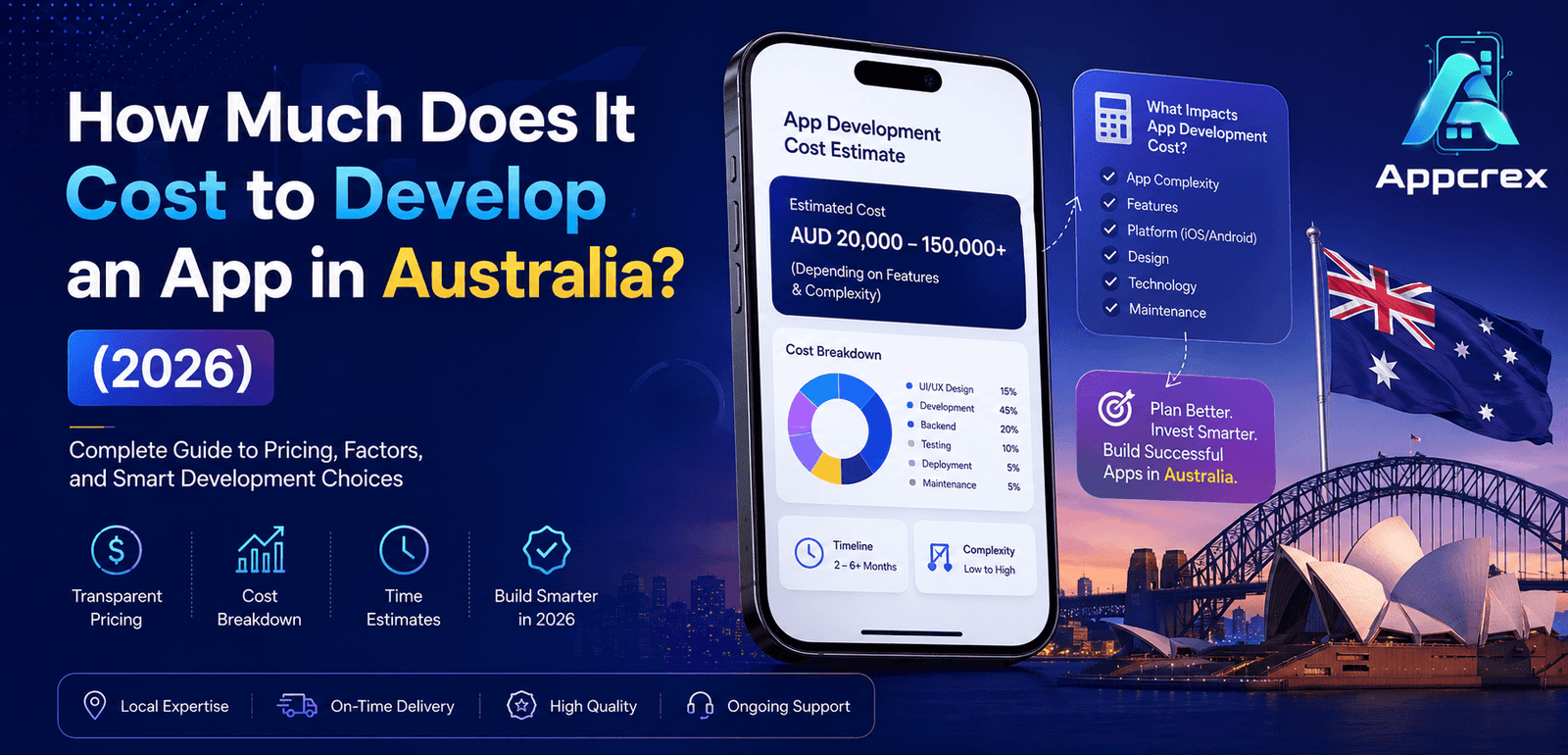
- App development costs in Australia typically range from AUD 20,000 to AUD 300,000+, depending on the app’s complexity, features, and technology stack.
- Key cost factors include UI/UX design, platform choice (iOS, Android, or cross-platform), third-party integrations, AI features, and backend infrastructure.
- Flutter and React Native are cost-effective frameworks that enable faster cross-platform development with a single codebase.
- Launching an MVP first helps businesses validate their idea, reduce initial investment, and accelerate time to market.
- Partnering with an experienced app development company ensures scalable, secure, and high-quality applications that support long-term business growth.
Australia has become one of the fastest-growing digital economies, with businesses across industries investing heavily in mobile applications to improve customer engagement, streamline operations, and generate new revenue streams. From startups in Sydney to enterprises in Melbourne, Brisbane, Perth, and Adelaide, organizations are leveraging mobile technology to stay competitive in an increasingly digital marketplace.
Whether you’re planning to launch an eCommerce platform, healthcare application, fintech solution, food delivery app, logistics platform, or AI-powered mobile app, one of the first questions you’ll ask is:
“How much does it cost to develop an app in Australia?”
The answer isn’t straightforward because every app has different business requirements, features, technologies, and integrations. A simple business app may cost a few tens of thousands of dollars, while a complex enterprise application with Artificial Intelligence, cloud infrastructure, and third-party integrations can require a significantly larger investment.
This guide explains everything you need to know about app development costs in Australia, including pricing factors, development timelines, technology choices, hidden costs, and ways to reduce your overall budget without compromising quality.
Why Are Businesses Investing in Mobile Apps in Australia?
Australia has one of the highest smartphone penetration rates globally. Consumers increasingly rely on mobile applications for shopping, banking, healthcare, education, transportation, entertainment, and communication.
Businesses are investing in mobile applications because they help:
- Improve customer engagement
- Increase online sales
- Build brand loyalty
- Automate business operations
- Offer personalized experiences
- Generate recurring revenue
- Expand into new markets
- Improve customer support
Industries driving app development demand include:
- Healthcare
- FinTech
- Retail & eCommerce
- Logistics
- Education
- Real Estate
- Food Delivery
- Travel & Hospitality
- Construction
- Mining
As digital transformation accelerates, custom mobile applications have become a strategic investment rather than an optional business tool.
Average App Development Cost in Australia
The cost of building an app depends on its complexity, features, design requirements, and the technology used.
Estimated Development Cost
| App Complexity | Estimated Cost (AUD) | Timeline |
|---|---|---|
| Basic App | AUD 20,000–40,000 | 2–4 Months |
| Medium Complexity App | AUD 40,000–80,000 | 4–7 Months |
| Advanced Business App | AUD 80,000–150,000 | 7–10 Months |
| Enterprise or AI App | AUD 150,000–300,000+ | 9–12+ Months |
These estimates include planning, UI/UX design, development, testing, deployment, and initial project management. The final cost will vary based on your specific business requirements.
What Determines App Development Cost?
No two mobile applications are the same. Several factors influence the total project budget.
The biggest cost drivers include:
- Number of features
- UI/UX design complexity
- Android and iOS support
- Native vs cross-platform development
- Backend infrastructure
- Cloud hosting
- API integrations
- AI and machine learning features
- Security requirements
- Maintenance and updates
Understanding these factors early allows you to make informed decisions and prioritize features effectively.
Types of Apps and Their Estimated Cost
Business App
Ideal for companies looking to manage appointments, bookings, customer engagement, or internal workflows.
Estimated Cost: AUD 20,000–45,000
eCommerce App
Includes product catalogs, shopping carts, secure payments, order tracking, and customer accounts.
Estimated Cost: AUD 40,000–90,000
Healthcare App
Healthcare applications often require appointment booking, telemedicine, patient records, secure messaging, and compliance with privacy regulations.
Estimated Cost: AUD 60,000–150,000+
Food Delivery App
Food delivery platforms include restaurant listings, live order tracking, payment gateways, driver management, and customer reviews.
Estimated Cost: AUD 60,000–140,000+
FinTech App
Financial applications require enterprise-grade security, payment processing, identity verification, and regulatory compliance.
Estimated Cost: AUD 80,000–200,000+
AI-Powered App
Applications using Artificial Intelligence may include chatbots, recommendation engines, predictive analytics, voice assistants, or automation.
Estimated Cost: AUD 100,000–300,000+
Why App Complexity Matters?
A simple informational app may only require a handful of screens and basic functionality. In contrast, a ride-sharing, banking, or healthcare platform involves real-time communication, secure databases, advanced user management, and third-party integrations.
For example:
Basic App
Features:
- Login
- User Profile
- Contact Form
- Push Notifications
- Basic CMS
Suitable for:
- Small businesses
- Service providers
- Local brands
Medium Complexity App
Features:
- User Authentication
- Payment Gateway
- Booking System
- Notifications
- Analytics Dashboard
- Admin Panel
Suitable for:
- Startups
- Online marketplaces
- Membership platforms
Advanced App
Features:
- AI Integration
- Live Tracking
- Video Calls
- Chat
- Cloud Infrastructure
- Multi-user Roles
- Real-time Synchronization
- Enterprise Security
Suitable for:
- Healthcare
- Logistics
- FinTech
- Large enterprises
- SaaS businesses
Why Choose Custom App Development?
Many businesses consider off-the-shelf software to save costs, but custom development offers significant long-term advantages.
Benefits include:
- Tailored functionality
- Better scalability
- Improved performance
- Stronger security
- Easier integration with existing systems
- Unique branding
- Long-term flexibility
- Full ownership of the product
While custom development may require a higher initial investment, it often provides better ROI by aligning the application with your specific business goals.
Planning Your Budget
Before starting development, it’s helpful to define:
- Your target audience
- Business objectives
- Core features
- Preferred platforms (iOS, Android, or both)
- Technology preferences
- Launch timeline
- Future scalability requirements
Starting with a Minimum Viable Product (MVP) is a common strategy that allows businesses to validate their idea, gather user feedback, and expand the application over time.
Factors That Affect App Development Cost in Australia
The cost of developing a mobile application in Australia depends on much more than the number of screens or the type of app. Every feature, design choice, integration, and technology decision directly impacts the final budget.
Understanding these cost factors will help you plan your project more effectively, prioritize essential features, and avoid unexpected expenses during development.
1. App Complexity
The biggest factor influencing development cost is the complexity of your application.
A simple informational app requires fewer development hours than a marketplace, fintech platform, or AI-powered application.
Basic Apps
Typical features include:
- User Registration
- Login
- User Profile
- Contact Form
- Push Notifications
- Basic Admin Panel
Estimated Cost: AUD 20,000–40,000
Medium Complexity Apps
These apps include more advanced business functionality.
Features may include:
- Payment Gateway
- Booking System
- Chat
- Ratings & Reviews
- Maps Integration
- Analytics Dashboard
- Notifications
- CMS
Estimated Cost: AUD 40,000–80,000
Advanced Enterprise Apps
Enterprise applications involve complex architecture and integrations.
Examples include:
- AI Features
- Real-Time Tracking
- Video Calling
- IoT Integration
- Multi-Tenant Architecture
- Machine Learning
- Enterprise Dashboards
- Advanced Security
Estimated Cost: AUD 80,000–300,000+
2. Platform Selection
The platforms you choose will directly affect development costs.
Android App
Developing only for Android generally reduces the initial budget.
Best for:
- Businesses targeting Android users
- MVP launches
iOS App
iOS development is ideal for businesses targeting Apple users or premium customer segments.
Android + iOS
Developing separate native applications increases both cost and development time.
Cross-Platform Development
Technologies like Flutter and React Native allow developers to build one codebase for both Android and iOS.
Benefits include:
- Lower development cost
- Faster launch
- Easier maintenance
- Consistent user experience
Cross-platform development is a popular choice for startups and SMEs in Australia.
3. UI/UX Design
A well-designed app improves usability, engagement, and customer satisfaction, but it also requires additional design effort.
Design activities include:
- User Research
- Wireframes
- Interactive Prototypes
- UI Design
- User Testing
- Responsive Layouts
A custom UI/UX design can significantly enhance your app’s success in competitive markets.
4. Number of Features
Every feature requires planning, development, testing, and maintenance.
Common features include:
- User Authentication
- Social Login
- Push Notifications
- Search & Filters
- In-App Chat
- Booking System
- Payments
- Reviews & Ratings
- GPS Tracking
- Video Streaming
- AI Chatbot
- Admin Dashboard
- Reports & Analytics
The more advanced the functionality, the higher the development effort.
5. Backend Development
The backend is responsible for managing business logic, user data, APIs, and application performance.
Backend development typically includes:
- User Authentication
- Database Management
- APIs
- Notifications
- Cloud Storage
- Security
- Reporting
A robust backend ensures your app remains reliable as your user base grows.
6. Third-Party Integrations
Many apps rely on external services to deliver key functionality.
Popular integrations include:
Payment Gateways
- Stripe
- PayPal
- Apple Pay
- Google Pay
- Google Maps
- Mapbox
Communication
- Twilio
- Firebase Cloud Messaging
- SendGrid
Analytics
- Google Analytics
- Firebase Analytics
Social Login
- Apple
Each integration requires implementation, testing, and ongoing maintenance.
7. AI & Machine Learning Features
Artificial Intelligence is becoming increasingly popular in mobile applications.
Examples include:
- AI Chatbots
- Recommendation Engines
- Voice Assistants
- Image Recognition
- Predictive Analytics
- Content Generation
- Workflow Automation
While AI features increase development costs, they can significantly improve user experience and operational efficiency.
8. Cloud Infrastructure
Cloud hosting ensures your application remains scalable and available.
Popular cloud providers include:
- Amazon Web Services (AWS)
- Microsoft Azure
- Google Cloud Platform (GCP)
Cloud services may include:
- Databases
- File Storage
- Auto Scaling
- Load Balancers
- Monitoring
- Backups
Cloud infrastructure typically involves ongoing operational costs after launch.
9. Security Requirements
Security is essential, especially for applications handling sensitive customer data.
Key security features include:
- SSL Encryption
- Multi-Factor Authentication (MFA)
- Role-Based Access Control
- Secure APIs
- Data Encryption
- Audit Logs
- Regular Security Testing
Investing in security helps protect your business and build user trust.
10. Development Team
The size and expertise of your development team also affect the total project cost.
A typical team may include:
- Project Manager
- Business Analyst
- UI/UX Designer
- Frontend Developer
- Backend Developer
- Mobile App Developer
- QA Engineer
- DevOps Engineer
Larger or more complex projects often require a broader team with specialized expertise.
App Development Cost by Industry
Different industries require different levels of functionality, compliance, and integrations.
| Industry | Estimated Cost (AUD) |
|---|---|
| eCommerce | 40,000–90,000 |
| Healthcare | 60,000–150,000+ |
| Food Delivery | 60,000–140,000+ |
| FinTech | 80,000–200,000+ |
| Education | 40,000–120,000 |
| Logistics | 70,000–180,000 |
| Real Estate | 50,000–120,000 |
| Fitness | 35,000–80,000 |
| Social Media | 80,000–200,000+ |
| AI Applications | 100,000–300,000+ |
These estimates provide a general idea and may vary based on your project’s requirements.
Also Read : End-to-End App Development Company: The Complete Guide to Building Successful Mobile Apps
Hidden Costs to Consider
Many businesses focus only on development costs and overlook ongoing expenses.
Additional costs may include:
- App Store submission fees
- Google Play registration
- Cloud hosting
- Third-party API subscriptions
- Maintenance and updates
- Security monitoring
- Bug fixes
- Feature enhancements
- Customer support
- App Store Optimization (ASO)
Planning for these recurring costs helps ensure long-term success.
Tips to Optimize Your Budget
You can reduce development costs without sacrificing quality by:
- Starting with an MVP
- Prioritizing essential features
- Choosing cross-platform development
- Reusing reliable third-party services
- Planning integrations early
- Using Agile development for iterative releases
These strategies help control costs while allowing your application to evolve based on user feedback.
App Development Cost by Australian City, Technology Stack & Development Timeline
Australia is home to a thriving technology ecosystem, with cities like Sydney, Melbourne, Brisbane, Perth, Adelaide, and the Gold Coast attracting startups, SMEs, and enterprises investing in digital transformation. While the overall development process remains similar, app development costs can vary depending on the city, agency experience, project complexity, and business requirements.
In this section, we’ll explore regional pricing, compare development approaches, and discuss the best technology stack for building a high-performance mobile application.
App Development Cost by Australian City
The location of your development partner can influence pricing due to differences in operating costs, talent availability, and market demand.
Sydney
Sydney is Australia’s largest technology and startup hub. It is home to many enterprise organizations, fintech companies, and venture-backed startups.
Average Cost
| Project Type | Estimated Cost (AUD) |
|---|---|
| Basic App | 25,000–45,000 |
| Medium App | 45,000–90,000 |
| Enterprise App | 90,000–250,000+ |
Sydney agencies often specialize in enterprise-grade and highly scalable applications.
Melbourne
Melbourne has a strong startup ecosystem and a growing demand for healthcare, education, retail, and SaaS applications.
Average Cost
| Project Type | Estimated Cost (AUD) |
|---|---|
| Basic App | 20,000–40,000 |
| Medium App | 40,000–80,000 |
| Enterprise App | 80,000–220,000+ |
Melbourne offers an excellent balance between innovation and development costs.
Brisbane
Brisbane has become a popular destination for startups and growing businesses seeking cost-effective digital solutions.
Average Cost
| Project Type | Estimated Cost (AUD) |
|---|---|
| Basic App | 20,000–38,000 |
| Medium App | 38,000–75,000 |
| Enterprise App | 75,000–180,000+ |
Perth
Perth businesses increasingly invest in applications for mining, logistics, healthcare, and construction industries.
Average Cost
| Project Type | Estimated Cost (AUD) |
|---|---|
| Basic App | 20,000–40,000 |
| Medium App | 40,000–80,000 |
| Enterprise App | 80,000–200,000+ |
Adelaide
Adelaide is emerging as a growing technology hub with strong government and education sector demand.
Average Cost
| Project Type | Estimated Cost (AUD) |
|---|---|
| Basic App | 18,000–35,000 |
| Medium App | 35,000–70,000 |
| Enterprise App | 70,000–180,000+ |
Gold Coast
The Gold Coast has a rapidly growing startup and tourism ecosystem, making it a promising market for mobile app development.
Average Cost
| Project Type | Estimated Cost (AUD) |
|---|---|
| Basic App | 18,000–35,000 |
| Medium App | 35,000–70,000 |
| Enterprise App | 70,000–170,000+ |
Native vs Cross-Platform App Development Cost
One of the biggest decisions you’ll make is choosing the right development approach.
Native App Development
Native apps are developed separately for Android and iOS using platform-specific technologies.
Android
- Kotlin
- Java
iOS
- Swift
- Objective-C
Advantages
- Best performance
- Native user experience
- Maximum security
- Better hardware integration
Disadvantages
- Higher cost
- Longer development time
- Separate codebases
Best for: Banking, Healthcare, Enterprise, FinTech, and high-performance applications.
Flutter App Development
Flutter allows developers to build Android and iOS applications from a single codebase.
Advantages
- Faster development
- Lower cost
- Excellent UI
- Native-like performance
- Easy maintenance
Best For
- Startups
- SMEs
- MVPs
- eCommerce
- Food Delivery
- Healthcare
- Education
Flutter is an excellent choice for businesses that want to launch quickly while keeping development costs under control.
React Native App Development
React Native is another popular cross-platform framework used for developing mobile applications.
Advantages
- Reusable code
- Fast development
- Strong community support
- Cost-effective
Best For
- Business apps
- Social apps
- Marketplace apps
- Booking apps
Cost Comparison
| Development Type | Estimated Cost | Development Time |
|---|---|---|
| Native Android | High | Medium |
| Native iOS | High | Medium |
| Flutter | Medium | Fast |
| React Native | Medium | Fast |
For many Australian startups and SMEs, Flutter and React Native provide an excellent balance between quality, speed, and cost.
Recommended Technology Stack
Selecting the right technology stack is essential for building a secure, scalable, and future-ready application.
Frontend
- Flutter
- React Native
- Swift
- Kotlin
Backend
- Node.js
- Laravel
- Django
- ASP.NET Core
Database
- PostgreSQL
- MySQL
- MongoDB
Cloud
- Amazon Web Services (AWS)
- Microsoft Azure
- Google Cloud Platform
Payments
- Stripe
- PayPal
- Apple Pay
- Google Pay
Notifications
- Firebase Cloud Messaging
- OneSignal
Analytics
- Firebase Analytics
- Google Analytics
Security
- OAuth 2.0
- JWT Authentication
- SSL Encryption
- Multi-Factor Authentication (MFA)
App Development Timeline
The development timeline depends on your project’s size and complexity.
Discovery & Planning
Duration: 2–3 Weeks
Activities include:
- Requirement gathering
- Market research
- Project planning
UI/UX Design
Duration: 3–5 Weeks
Activities include:
- Wireframes
- Prototypes
- User interface design
- User experience testing
Development
Duration: 10–24 Weeks
Activities include:
- Frontend development
- Backend development
- API integration
- Database setup
Testing
Duration: 3–5 Weeks
Testing includes:
- Functional testing
- Performance testing
- Security testing
- User acceptance testing (UAT)
Deployment
Duration: 1–2 Weeks
Activities include:
- App Store submission
- Google Play Store submission
- Production deployment
- Final quality checks
Total Development Time
| App Type | Estimated Timeline |
|---|---|
| Basic App | 2–4 Months |
| Medium Complexity | 4–7 Months |
| Enterprise App | 7–10 Months |
| AI-Powered App | 9–12+ Months |
How to Choose the Right App Development Company in Australia?
Choosing the right development partner is just as important as defining your app idea. Before hiring a company, evaluate their:
- Portfolio and case studies
- Experience in your industry
- Client reviews and testimonials
- Technology expertise
- UI/UX design capabilities
- Communication process
- Agile development methodology
- Post-launch support
- Security practices
- Pricing transparency
A reliable development company should also help you validate your idea, recommend the right technology stack, and provide ongoing maintenance after launch.
Why Many Australian Businesses Choose AppCrex?
AppCrex helps startups, SMEs, and enterprises build secure, scalable, and high-performing mobile applications tailored to their business goals.
Our expertise includes:
- Android App Development
- iOS App Development
- Flutter App Development
- React Native App Development
- AI App Development
- Custom Software Development
- SaaS Development
- Enterprise Applications
- UI/UX Design
- Cloud Integration
- App Maintenance & Support
We follow Agile development practices, maintain transparent communication, and focus on delivering solutions that support long-term business growth.
Building a successful mobile app involves more than the initial development budget. Many businesses focus only on the upfront investment and overlook ongoing operational expenses such as hosting, maintenance, updates, and third-party services. Understanding these costs in advance helps you plan a realistic budget and avoid unexpected expenses after launch.
Also Read : AI Integration Services: Complete Guide to Benefits, Use Cases, Cost & Implementation (2026)
Hidden Costs of App Development in Australia
1. App Maintenance
Launching your app is only the beginning. Regular maintenance keeps it secure, compatible with the latest operating systems, and free from bugs.
Maintenance typically includes:
- Bug fixes
- Performance improvements
- Security updates
- Feature enhancements
- OS compatibility updates
Estimated Annual Cost: 15–20% of the initial development cost
2. Cloud Hosting
Most modern applications rely on cloud platforms such as AWS, Microsoft Azure, or Google Cloud.
Cloud costs depend on:
- Number of users
- Storage requirements
- API requests
- Bandwidth
- Server resources
3. Third-Party API Costs
Many apps integrate external services that charge monthly or usage-based fees.
Examples include:
- Google Maps API
- Stripe
- Twilio
- Firebase
- OpenAI APIs
- SendGrid
These recurring costs should be factored into your long-term budget.
4. App Store Fees
Publishing your application requires developer accounts.
Typical costs include:
- Apple Developer Program
- Google Play Developer Account
Additionally, payment processors may charge transaction fees for in-app purchases or subscriptions.
5. Marketing & User Acquisition
Even the best app needs promotion to attract users.
Marketing activities may include:
- App Store Optimization (ASO)
- SEO
- Google Ads
- Social Media Advertising
- Influencer Marketing
- Content Marketing
- Email Campaigns
A dedicated marketing budget can significantly improve your app’s visibility and downloads.
6. Security & Compliance
Industries such as healthcare, fintech, and education often require additional security measures and compliance standards.
These may include:
- Data encryption
- Penetration testing
- Compliance audits
- Secure backups
- Identity verification
Investing in security protects both your business and your users.
How to Reduce App Development Costs?
You don’t have to compromise quality to stay within budget. Here are practical strategies to optimize your investment.
Start with an MVP
Launch a Minimum Viable Product (MVP) with essential features, gather user feedback, and expand your app in future releases.
Prioritize Core Features
Focus on features that solve your users’ primary problems. Advanced functionality can be added later.
Choose Cross-Platform Development
Frameworks like Flutter and React Native allow you to build one application for both Android and iOS, reducing development time and costs.
Reuse Trusted Integrations
Instead of building every feature from scratch, integrate reliable third-party services for payments, notifications, authentication, and analytics.
Plan for Scalability
Building a scalable architecture from the beginning helps avoid expensive redesigns as your user base grows.
Why Choose AppCrex for App Development in Australia?
AppCrex helps startups, SMEs, and enterprises turn ideas into scalable, secure, and high-performing mobile applications.
Our Services
- Custom Mobile App Development
- Android App Development
- iOS App Development
- Flutter App Development
- React Native App Development
- AI App Development
- SaaS Development
- Enterprise Software Development
- UI/UX Design
- Cloud Integration
- API Development
- App Maintenance & Support
Why Businesses Trust AppCrex?
- Experienced development team
- Transparent pricing
- Agile development methodology
- Modern technology stack
- AI and automation expertise
- Enterprise-grade security
- On-time project delivery
- Dedicated post-launch support
Whether you’re building an MVP or an enterprise platform, we work closely with you to deliver a solution aligned with your business goals.
Frequently Asked Questions
1. How much does it cost to develop an app in Australia?
The cost generally ranges from AUD 20,000 for a basic app to AUD 300,000+ for a large-scale enterprise or AI-powered application, depending on complexity and features.
2. How long does it take to build a mobile app?
A simple app typically takes 2–4 months, while complex applications may require 6–12 months or more.
3. Is Flutter more affordable than native app development?
Yes. Flutter enables a single codebase for Android and iOS, often reducing development time and overall costs compared to building separate native apps.
4. What factors influence app development costs?
Key factors include app complexity, feature set, UI/UX design, platform selection, integrations, security requirements, AI functionality, and ongoing maintenance.
5. Can I start with an MVP?
Yes. Building an MVP is a cost-effective way to validate your idea, collect user feedback, and scale the product over time.
6. Which industries invest most in app development in Australia?
High-demand industries include healthcare, fintech, eCommerce, logistics, education, real estate, travel, and food delivery.
7. How much does app maintenance cost?
Most businesses should budget 15–20% of the initial development cost per year for updates, bug fixes, security patches, and performance improvements.
8. Why should I hire a professional app development company?
An experienced development company provides technical expertise, scalable architecture, quality assurance, and ongoing support, reducing project risks and improving long-term success.
Final Thoughts
Australia’s digital economy continues to grow, creating opportunities for businesses that invest in innovative mobile applications. Whether you’re launching a startup, modernizing an existing business, or building an enterprise solution, understanding development costs is the first step toward making informed decisions.
The total cost of app development depends on your business objectives, feature requirements, technology stack, and long-term growth strategy. By starting with a clear roadmap, prioritizing essential features, and partnering with an experienced development company, you can build a high-quality application that delivers lasting value.
Ready to Build Your Mobile App?
If you’re looking for a trusted App Development Company in Australia, AppCrex is here to help. We specialize in custom mobile app development, AI-powered applications, cross-platform solutions, and enterprise software tailored to your business needs.
From idea validation and UI/UX design to development, deployment, and ongoing support, our team delivers scalable, secure, and future-ready digital solutions.
Contact AppCrex today for a free consultation and receive a customized estimate for your mobile app project in Australia.