📌 Key Takeaways
- Energy management software helps UAE businesses monitor and optimize energy consumption.
- IoT integration enables real-time monitoring of meters, equipment, buildings, solar systems, and other assets.
- AI can add forecasting, anomaly detection, predictive maintenance, and optimization capabilities.
- The estimated development cost can range from $20,000 to $200,000+ depending on complexity.
- UAE investment in smart infrastructure, energy efficiency, renewable energy, and digital energy systems creates strong opportunities for customized energy-management platforms.
Introduction
The UAE is moving quickly toward smarter, more efficient, and more sustainable energy systems. For businesses, this shift is creating a growing need for software that can monitor energy consumption, identify wastage, automate operations, integrate renewable sources, and turn energy data into actionable insights.
An Energy Management Software Development Company in UAE can help organizations build customized platforms for buildings, factories, hotels, commercial facilities, solar installations, utilities, and large infrastructure projects.
The opportunity is particularly relevant in the UAE because energy efficiency, smart infrastructure, renewable energy, and digital monitoring are becoming increasingly connected. The UAE Energy Strategy 2050 includes measures around building efficiency, retrofitting, distributed renewable generation, and reducing building-sector energy consumption.
At AppCrex, we help businesses design and develop energy management platforms that combine IoT, cloud computing, AI, analytics, automation, dashboards, and mobile technology into one connected system.
Just Read : Hire Mobile App Developers in UAE: Complete Guide for Businesses (2026)
What Is Energy Management Software?
Energy management software is a digital platform that collects and analyzes energy-related data from different sources and helps businesses understand how energy is being consumed.
Instead of relying on separate meters, spreadsheets, manual reports, and disconnected monitoring systems, organizations can bring their energy data into a centralized platform.
A typical system can monitor:
- Electricity consumption
- Solar energy generation
- HVAC performance
- Lighting systems
- Building equipment
- Industrial machinery
- Battery storage
- Water consumption
- Energy costs
- Carbon emissions
- Peak demand
- Equipment performance
The software can then use this information to identify unusual consumption, forecast demand, recommend efficiency improvements, and automate selected energy-related operations.
This is becoming especially important for UAE organizations operating large buildings and infrastructure. In March 2026, the UAE Ministry of Energy and Infrastructure announced an initiative covering 60 federal government buildings, with expected savings of up to 27% in energy and water consumption during its first phase.
Why Businesses in the UAE Need Energy Management Software
Energy management isn’t simply about seeing how many kilowatt-hours a building consumed last month.
For large organizations, energy data can influence operating costs, maintenance decisions, sustainability initiatives, asset performance, and long-term infrastructure planning.
The UAE’s direction toward smart and sustainable infrastructure makes this particularly relevant.
The Ministry of Energy and Infrastructure’s recent microgrid project, for example, combines clean-energy generation, energy storage, and advanced digital energy management. Its pilot reportedly reduced annual energy consumption by approximately 362,000 kWh and delivered annual financial savings of nearly AED 110,000.
The UAE has also developed digital energy and infrastructure platforms using big data, AI, simulation, predictive analytics, and digital twins to improve energy and resource management.
For businesses, this creates several opportunities:
Lower operational costs: Identify where energy is being wasted.
Better visibility: Monitor multiple properties, facilities, or assets from one dashboard.
Predictive maintenance: Detect abnormal equipment behavior before it becomes a major problem.
Renewable integration: Track solar generation, storage, consumption, and grid interaction.
Sustainability reporting: Measure energy usage and emissions more consistently.
Smarter decisions: Use historical and real-time data rather than assumptions.
Types of Energy Management Software We Develop
The right platform depends heavily on the business model and energy infrastructure.
Building Energy Management Software
Designed for:
- Offices
- Shopping malls
- Hotels
- Hospitals
- Residential communities
- Universities
- Government buildings
- Commercial properties
The platform can monitor HVAC, lighting, elevators, meters, temperature, occupancy, and other building systems.
Industrial Energy Management Software
Manufacturing companies can monitor energy consumption across machinery, production lines, plants, and individual facilities.
The system can help identify energy-intensive processes and compare consumption against production output.
Solar Energy Management Software
Solar operators can monitor:
- Solar generation
- Inverter performance
- Panel output
- Battery storage
- Grid consumption
- Energy exported
- Historical performance
Smart Grid & Microgrid Management Software
More advanced platforms can connect generation, storage, loads, and grid infrastructure.
This type of software can provide real-time visibility and support intelligent energy distribution and resilience strategies.
Energy Monitoring SaaS Platform
An energy management SaaS platform can allow multiple businesses or property owners to subscribe to the service.
Each customer can have its own:
- Dashboard
- Properties
- Meters
- Users
- Reports
- Alerts
- Billing
- Energy data
This model can be particularly attractive for energy consultants, facility-management companies, and technology providers.
Key Features of Energy Management Software
A successful platform should not just collect energy data. It should help users understand what is happening, why it is happening, and what they can do about it.
Real-Time Energy Monitoring
Users can see electricity consumption in real time through interactive dashboards.
Data can be displayed by:
- Building
- Floor
- Department
- Device
- Equipment
- Location
- Time period
This gives facility managers a much clearer picture of where energy is being consumed.
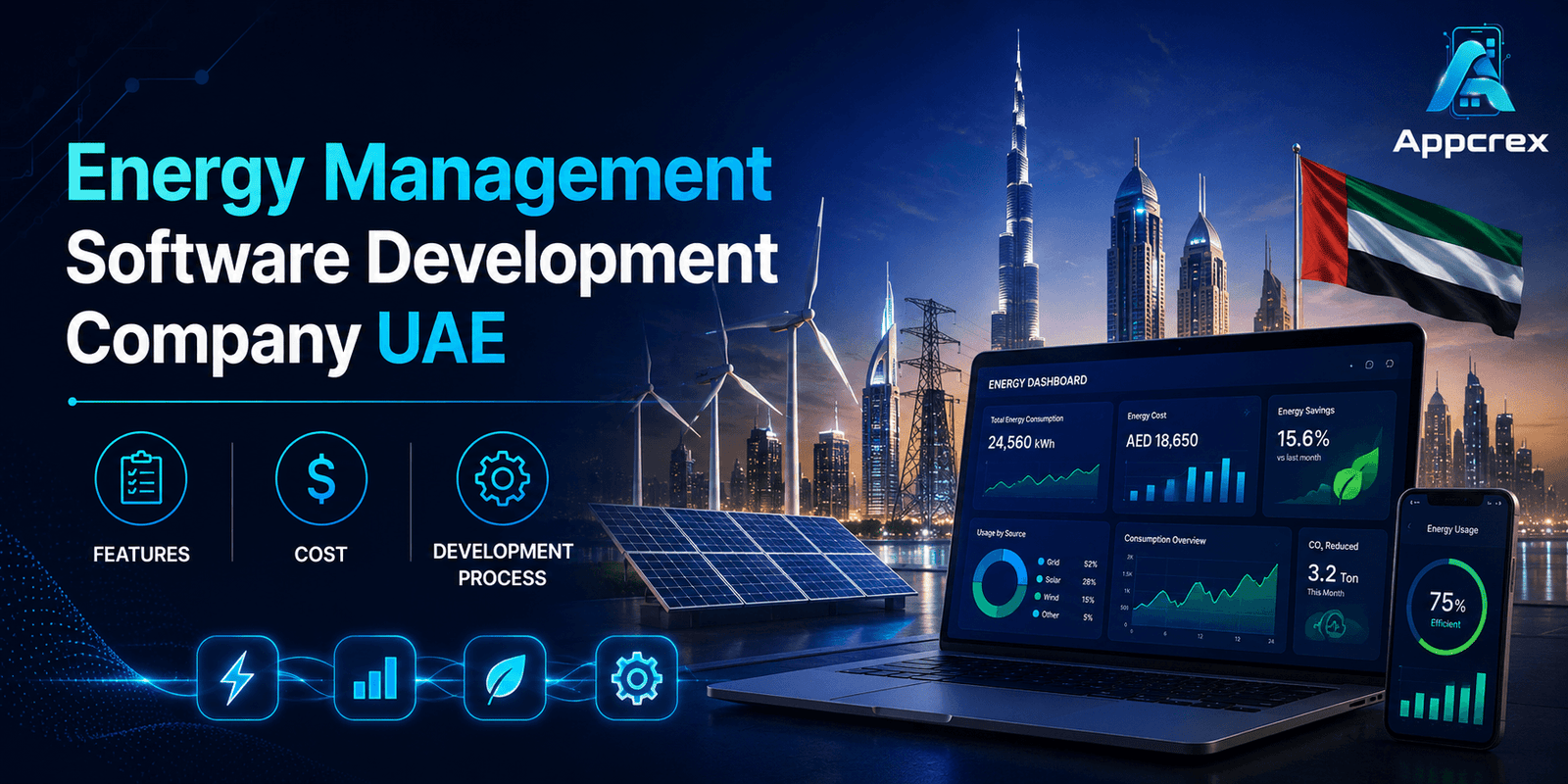
Smart Energy Dashboard
The dashboard becomes the central control point of the platform.
It can display:
- Current consumption
- Daily consumption
- Monthly consumption
- Energy costs
- Peak demand
- Solar generation
- Carbon emissions
- Equipment status
- Energy-saving opportunities
Charts and visual indicators make complex energy data easier to understand.
IoT Meter Integration
IoT devices and smart meters can continuously send information to the software.
The platform can connect with:
- Smart electricity meters
- Temperature sensors
- Motion sensors
- HVAC controllers
- Solar inverters
- Battery systems
- Building automation systems
- Industrial equipment
This creates a continuous data pipeline between physical infrastructure and the software platform.
Energy Consumption Analytics
Historical data can be analyzed to identify patterns.
For example, the software might identify that a commercial building consistently consumes unusually high energy during certain hours.
Management can then investigate the cause and introduce corrective measures.
AI-Based Energy Forecasting
AI can analyze historical consumption, weather, occupancy, operating schedules, and other relevant data to forecast future demand.
This can help organizations plan energy usage more efficiently.
Automated Alerts
The system can send alerts when predefined conditions occur.
Examples include:
- Unusual energy consumption
- Sudden consumption spikes
- Equipment malfunction
- Meter offline
- Excessive peak demand
- Solar generation drop
- Battery issue
- Temperature anomaly
Alerts can be delivered through push notifications, email, SMS, or the platform itself.
Energy Cost Tracking
The platform can estimate or track energy costs based on configured tariffs and consumption.
Businesses can compare:
Energy consumed → Energy rate → Estimated cost
This gives management a financial perspective alongside the technical data.
Carbon Emission Monitoring
Organizations can track estimated carbon emissions associated with their energy consumption.
This can support internal sustainability programs and reporting.
Solar & Renewable Energy Integration
The platform can integrate renewable-energy systems and compare:
Energy generated vs. energy consumed
This can provide visibility into solar performance and renewable contribution.
Battery & Energy Storage Monitoring
For systems with battery storage, the software can monitor:
- State of charge
- Charging
- Discharging
- Battery health
- Available capacity
- Energy flows
Equipment Performance Monitoring
Energy consumption can also act as a signal for equipment health.
If a machine suddenly starts consuming significantly more energy than its normal operating range, the platform can flag it for investigation.
Also Read : AI Training App Development Guide: How Enterprises Can Upskill Employees with AI
AI-Powered Anomaly Detection
Instead of relying only on fixed thresholds, machine-learning models can identify unusual patterns based on historical behavior.
This is useful for large facilities where manually monitoring hundreds of devices isn’t practical.
Reports & Analytics
Managers can generate reports covering:
- Daily energy usage
- Monthly consumption
- Cost analysis
- Peak demand
- Energy savings
- Renewable generation
- Equipment performance
- Carbon emissions
Reports can be exported or shared with relevant stakeholders.
How AI Improves Energy Management Software?
AI is increasingly becoming an important component of modern energy platforms.
The UAE’s energy infrastructure is already moving toward greater use of advanced monitoring and AI-supported analysis. In July 2026, the Emirates Monitoring Center was launched to provide real-time visibility across the UAE’s integrated power network, with AI capabilities planned for scenario planning, predictive analysis, and future system modelling.
For commercial energy management platforms, AI can be applied in several practical ways.
Demand Forecasting
AI models can predict future energy requirements using historical patterns and contextual data.
Anomaly Detection
Machine-learning algorithms can identify consumption patterns that differ from normal behavior.
Predictive Maintenance
Energy behavior can provide clues about equipment degradation.
Energy Optimization
AI can recommend operational changes designed to reduce unnecessary consumption.
Intelligent Automation
The system can automatically trigger predefined actions based on energy conditions, occupancy, temperature, or equipment status.
The important point is that AI should solve a real operational problem rather than simply being added as a marketing feature.
Also Read : How Much Does It Cost to Build a React Native App in UAE? Complete Guide (2026)
Energy Management Software Development Process
Building an energy platform requires more than normal mobile or web development because the software often has to communicate with physical infrastructure.
A typical development process includes the following stages.
1. Business & Energy Assessment
First, we understand the organization’s infrastructure and objectives.
We identify:
- Energy sources
- Existing meters
- IoT devices
- Buildings
- Equipment
- Data sources
- Existing software
- User roles
- Reporting requirements
2. System Architecture
The development team designs the architecture connecting devices, APIs, databases, cloud infrastructure, analytics engines, dashboards, and mobile interfaces.
For large-scale platforms, scalability should be considered from the beginning.
3. UI/UX Design
Energy data can become complicated quickly.
The interface therefore needs to make important information easy to understand.
Different users may receive different dashboards.
For example:
Facility Manager: equipment and consumption.
Finance Manager: energy costs.
Operations Manager: efficiency and performance.
Executive: high-level energy and sustainability KPIs.
4. IoT & Data Integration
Smart meters, sensors, equipment, solar systems, and other devices are connected to the platform.
Depending on the infrastructure, APIs and appropriate communication protocols can be used.
5. Backend Development
The backend manages:
- Users
- Energy data
- Devices
- Properties
- Alerts
- Reports
- Analytics
- APIs
- Permissions
6. AI & Analytics
Once sufficient data is available, analytics and AI capabilities can be integrated for forecasting, anomaly detection, recommendations, and predictive maintenance.
7. Web & Mobile Development
A web dashboard is useful for management and facility teams, while mobile apps allow field teams and managers to monitor important events remotely.
8. Testing
Testing should cover both software and connected infrastructure.
This includes:
- API testing
- IoT data testing
- Security testing
- Performance testing
- Dashboard testing
- Mobile testing
- Cloud testing
- Alert testing
9. Deployment & Maintenance
After deployment, the platform requires ongoing monitoring, updates, security patches, performance optimization, and feature improvements.
Technology Stack for Energy Management Software
The technology stack depends on the project scale and connected infrastructure.
| Layer | Possible Technologies |
|---|---|
| Web Dashboard | React, Next.js, Angular |
| Mobile | Flutter, React Native |
| Backend | Node.js, Python, Java, .NET |
| Database | PostgreSQL, MySQL, MongoDB |
| Cloud | AWS, Microsoft Azure, Google Cloud |
| AI/ML | Python, TensorFlow, PyTorch |
| IoT | MQTT, REST APIs, IoT gateways |
| Analytics | Python, Power BI, custom dashboards |
| Security | OAuth, JWT, encryption, RBAC |
| DevOps | Docker, Kubernetes, CI/CD |
For enterprise deployments, architecture should be designed around scalability, security, reliability, and integration with existing infrastructure.
Also Read : Hire Mobile App Developers in Dubai: A Complete Guide for Businesses in 2026
How Much Does It Cost to Develop Energy Management Software in UAE?
The cost depends heavily on the platform’s complexity.
An indicative range can look like this:
| Software Type | Estimated Cost |
|---|---|
| Basic Energy Monitoring Platform | $20,000–$35,000 |
| IoT Energy Management Platform | $35,000–$60,000 |
| AI-Powered Energy Management | $60,000–$100,000+ |
| Enterprise Energy Management Platform | $100,000–$200,000+ |
These are indicative development ranges, not fixed UAE market prices.
The final cost depends on factors such as:
- Number of integrations
- IoT devices
- Number of properties
- Web dashboard
- Mobile apps
- AI functionality
- Cloud architecture
- Real-time processing
- Third-party APIs
- Reporting requirements
- User roles
- Security requirements
- Admin functionality
A basic monitoring dashboard is considerably easier to build than an enterprise platform connecting thousands of devices across multiple facilities.
What Industries Can Use Energy Management Software in UAE?
Energy management platforms have applications across several UAE industries.
Real Estate & Property
Property owners can monitor energy performance across residential and commercial buildings.
Hospitality
Hotels can monitor HVAC, lighting, rooms, kitchens, and common areas.
Healthcare
Hospitals and healthcare facilities can track energy consumption across critical infrastructure.
Manufacturing
Factories can analyze energy consumption against production activity.
Retail
Shopping centers and retail chains can monitor energy consumption across multiple locations.
Logistics & Warehousing
Warehouses can monitor HVAC, refrigeration, lighting, and other energy-intensive operations.
Government
Government organizations can centralize energy monitoring across public buildings.
Renewable Energy
Solar and other renewable-energy operators can use platforms for generation and performance monitoring.
Energy Management Software + Smart Buildings
One of the biggest opportunities is the combination of energy management and smart-building technology.
A smart building can bring together:
IoT sensors → Building systems → Energy platform → AI analytics → Automated actions
For example, occupancy sensors can detect that an area is empty. The energy platform can then communicate with building systems to adjust lighting or HVAC according to configured rules.
This makes the software more than an energy reporting tool—it becomes part of the building’s operational infrastructure.
The UAE’s national energy strategy specifically emphasizes building retrofits, green building measures, distributed renewable generation, and energy-efficiency improvements.
Why Choose AppCrex for Energy Management Software Development?
Developing energy software requires a combination of software engineering, cloud architecture, IoT integration, analytics, AI, and enterprise application development.
At AppCrex, we can help businesses build customized energy management solutions around their specific infrastructure rather than forcing them into a generic platform.
Our capabilities can include:
- Custom energy management software
- Energy monitoring dashboards
- IoT integration
- Smart meter integration
- Solar monitoring platforms
- AI-powered analytics
- Predictive maintenance
- Energy forecasting
- Mobile apps
- Cloud-based platforms
- API integration
- Enterprise dashboards
- Multi-property management
- Custom reporting
For organizations searching for an Energy Management Software Development Company UAE, the goal should be to build a system that connects energy data with actual business decisions.
Future of Energy Management Software in the UAE
Energy management is moving toward a more connected model.
Instead of simply recording consumption, future systems will increasingly combine:
IoT + AI + Cloud + Renewable Energy + Storage + Automation + Digital Twins
Digital twins are particularly interesting for large infrastructure because they can combine live operational information with digital models. The UAE Ministry of Energy and Infrastructure has already highlighted digital twins as a way to monitor infrastructure, analyze performance, predict risks, and improve energy and water management.
Microgrids and decentralized energy systems are another area to watch. The UAE’s 2026 federal-government microgrid project demonstrates how renewable generation, storage, and digital energy management can operate together.
For businesses, this means energy management software is likely to evolve from a monitoring tool into a broader energy intelligence and automation platform.
FAQs
Q. What is energy management software?
Energy management software is a digital platform used to monitor, analyze, optimize, and manage energy consumption across buildings, equipment, facilities, or other assets.
Q. How much does energy management software cost in UAE?
Depending on complexity, development can range from around $20,000 for a basic monitoring platform to $200,000+ for an enterprise solution with extensive IoT, AI, integrations, and real-time analytics.
Q. Can energy management software integrate with IoT devices?
Yes. Smart meters, sensors, HVAC systems, solar inverters, batteries, and other connected devices can be integrated through appropriate APIs, gateways, and communication protocols.
Q. Can AI reduce energy consumption?
AI can help identify consumption patterns, forecast demand, detect anomalies, recommend optimization opportunities, and support automated energy-management decisions. Actual savings depend on the infrastructure and actions implemented.
Q. Can you build an energy management mobile app?
Yes. A mobile app can provide managers and field teams with real-time dashboards, alerts, equipment status, consumption information, and reports.
Q. Is energy management software useful for smart buildings?
Yes. It can connect building systems, IoT sensors, energy meters, analytics, and automation into a centralized platform.
Q. How long does it take to develop?
A basic platform may take a few months, while an enterprise-grade solution with extensive IoT, AI, integrations, and testing can require significantly longer. The timeline depends on the project scope.
Conclusion
Energy management software is becoming an important part of the UAE’s transition toward smarter and more efficient infrastructure. Government initiatives around energy efficiency, digital monitoring, microgrids, renewable energy, and intelligent infrastructure show that the market is moving beyond traditional energy monitoring.
For businesses, the opportunity is not simply to build another dashboard. The real value comes from connecting energy data, IoT devices, AI analytics, renewable systems, equipment, and automation into one platform that can support better operational decisions.
If you’re planning to build an Energy Management Software Development Company UAE solution, AppCrex can help you take the concept from architecture and UI/UX to IoT integration, AI, cloud deployment, web dashboards, and mobile development.