📌 Key Takeaways
- A Tata 1mg Labs-like app can cost approximately $50,000–$200,000+ depending on scope.
- A diagnostic platform may require separate customer, lab, collector, and admin interfaces.
- Home sample collection, online payments, test booking, reports, and notifications are core features.
- Starting with an MVP can reduce initial investment and help validate the business model.
- Security, privacy, healthcare integrations, and applicable regulations should be considered from the beginning.
Introduction
The healthcare industry is rapidly moving toward digital-first services, and diagnostic testing is one of the areas where mobile technology can make healthcare more accessible and convenient. Instead of visiting a diagnostic center just to schedule a test, users can search for tests, compare packages, book home sample collection, make payments, and access reports through a mobile platform.
Apps such as Tata 1mg have demonstrated how healthcare, pharmacy, doctor consultation, and diagnostic services can be brought together within a single digital ecosystem. For entrepreneurs and healthcare businesses, this creates an opportunity to build a diagnostic lab booking app similar to Tata 1mg Labs, while introducing their own features, branding, business model, and service network.
But how much does it cost to develop an app like Tata 1mg Labs?
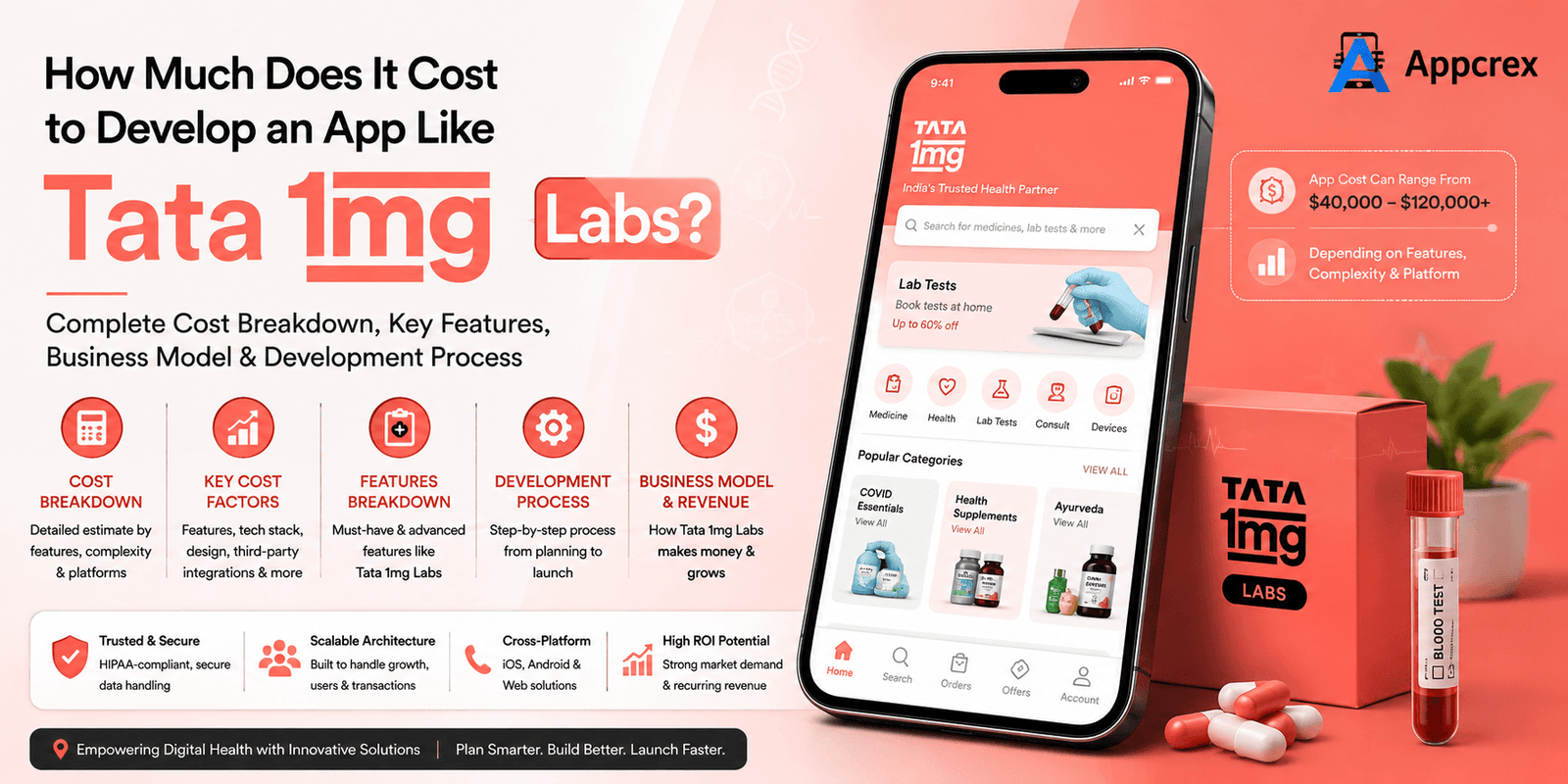
A diagnostic testing platform can cost approximately $50,000 to $200,000+, depending on its complexity, number of platforms, features, integrations, backend infrastructure, security requirements, and geographic coverage.
A basic MVP may cost around $50,000–$80,000, while a medium-complexity platform can range from $80,000–$130,000. A large-scale healthcare ecosystem with advanced integrations, multiple user apps, AI capabilities, real-time tracking, sophisticated administration, and extensive security can cost $130,000–$200,000+.
This guide explains the complete process of building a Tata 1mg Labs-like app, including features, development cost, technology stack, business model, revenue opportunities, development timeline, and important factors to consider before launching.
Just Read : Healthcare CRM Software Development: Complete Guide to Features, Benefits, Cost & AI Integration (2026)
What Is a Tata 1mg Labs-Like App?
A Tata 1mg Labs-like platform is essentially a digital diagnostic and lab test booking solution that connects customers with diagnostic laboratories and healthcare services.
Depending on the business model, users can:
- Search for diagnostic tests
- Browse test packages
- Compare prices
- Select a nearby laboratory
- Book appointments
- Schedule home sample collection
- Make online payments
- Track sample collection
- Receive notifications
- Access diagnostic reports
- Manage their health records
The platform can operate as a standalone diagnostic marketplace or become part of a broader healthcare ecosystem.
A new business does not necessarily need to replicate every feature of an established healthcare platform. Instead, entrepreneurs can develop a focused product around a particular market, city, diagnostic network, or healthcare niche.
Just Read : AI-Powered Healthcare Platforms (2026): Features, Benefits & Development Guide
How Much Does It Cost to Develop an App Like Tata 1mg Labs?
The cost depends primarily on the scope of the platform.
| App Type | Estimated Cost |
|---|---|
| Basic MVP | $50,000–$80,000 |
| Medium-Complexity Platform | $80,000–$130,000 |
| Advanced Diagnostic Platform | $130,000–$200,000+ |
| Large Healthcare Ecosystem | $200,000+ |
These are general planning estimates. The actual development cost can change significantly based on the required features and technology architecture.
Cost Breakdown by Platform
A complete diagnostic application may require multiple interfaces.
Patient Mobile App
Estimated cost: $20,000–$45,000+
The customer application can include test discovery, booking, payments, sample tracking, reports, and profiles.
Diagnostic Partner App or Dashboard
Estimated cost: $15,000–$35,000+
Labs can use this interface to manage bookings, sample collection, test processing, reports, and customer information.
Phlebotomist/Collection App
Estimated cost: $10,000–$25,000+
This application can help collection staff manage assigned home sample appointments and navigation.
Admin Dashboard
Estimated cost: $15,000–$35,000+
Administrators can manage users, labs, tests, bookings, payments, offers, reports, and analytics.
Backend & APIs
Estimated cost: $20,000–$50,000+
The backend connects all applications and manages business logic, databases, authentication, notifications, payments, and integrations.
The total cost therefore depends on whether you want a simple customer application or a complete multi-sided healthcare platform.
Also Read : Patient Portal Software Development Company: Complete Guide to Features, Cost & Development Process
Key Features of a Tata 1mg Labs-Like App
The feature set is one of the biggest factors affecting development cost.
1. User Registration & Login
Users should be able to create accounts using:
- Mobile number
- OTP
- Password
- Social login
- Biometric authentication
A user profile can store basic information and preferences.
2. Diagnostic Test Search
Search is one of the most important features of a lab booking application.
Users should be able to search for:
- Blood tests
- Health packages
- Diabetes tests
- Vitamin tests
- Thyroid tests
- Hormone tests
- Allergy tests
- Preventive health packages
- Specialized diagnostic tests
Filters can allow users to search by:
- Price
- Location
- Lab
- Test category
- Availability
- Home collection
- Package
3. Test & Package Details
Every diagnostic test should have a detailed information page.
It can display:
- Test name
- Description
- Price
- Discount
- Preparation requirements
- Sample type
- Report delivery time
- Laboratory information
- Home collection availability
Health packages can combine multiple tests into a single offering.
4. Home Sample Collection
Home sample collection can be a major differentiating feature.
Instead of visiting a diagnostic center, customers can schedule a trained collection professional to visit their home.
The system can manage:
- Address
- Date
- Time slot
- Collector assignment
- GPS location
- Appointment status
- Sample collection confirmation
This feature requires additional backend and operational management, increasing development complexity.
5. Lab Discovery
Users can discover diagnostic centers based on location.
The application can show:
- Nearby labs
- Distance
- Address
- Working hours
- Available tests
- Pricing
- Ratings
- Home collection availability
Map integration can make the experience more convenient.
6. Appointment Booking
The booking system should allow users to select:
- Test or package
- Laboratory
- Home or center collection
- Date
- Time
- Patient
- Payment method
Once booking is confirmed, the user receives confirmation through the application.
7. Multiple Patient Profiles
Families may use the same account for multiple people.
For example, users could add:
- Self
- Parents
- Children
- Spouse
- Other family members
Each patient can have their own booking and report history.
8. Online Payment
The platform can support online payments through appropriate payment providers.
Possible options include:
- Credit/debit cards
- Bank payments
- Digital wallets
- Other supported payment methods
Payment integration requires secure processing and transaction management.
9. Booking Tracking
Users should be able to track their booking status.
For example:
Booking Confirmed → Collector Assigned → Sample Collected → Processing → Report Ready
This can make the diagnostic experience more transparent.
10. Diagnostic Reports
Digital reports are one of the most important features.
Users can:
- View reports
- Download reports
- Share reports
- Access previous reports
- Organize reports by patient
Reports should be handled using appropriate security and access controls.
11. Push Notifications
Notifications can inform users about:
- Booking confirmation
- Appointment reminders
- Collector arrival
- Sample collection
- Report availability
- Promotions
- Payment status
12. Ratings & Reviews
Users can provide feedback about:
- Laboratories
- Collection services
- Overall experience
Ratings can help other customers choose diagnostic providers.
Diagnostic Lab Partner Features
If your platform operates as a marketplace, diagnostic laboratories need their own dashboard.
Labs can manage:
Test Management
- Add tests
- Update prices
- Manage packages
- Set availability
- Update preparation instructions
Booking Management
Labs can view:
- New bookings
- Upcoming appointments
- Completed tests
- Cancellations
- Refund requests
Report Management
Authorized staff can upload reports and update their status.
Revenue Dashboard
Labs can track:
- Bookings
- Revenue
- Commission
- Settlements
- Completed tests
Phlebotomist App Features
For home sample collection, a separate collection staff application can be valuable.
Features can include:
- Login
- Assigned appointments
- Customer information
- Navigation
- Appointment status
- Sample collection confirmation
- Digital verification
- Notifications
- Daily schedule
The collector can update the booking as the appointment progresses.
Admin Panel Features
The admin dashboard controls the entire ecosystem.
User Management
Administrators can manage:
- Users
- Patient profiles
- Accounts
- Verification
- Support requests
Laboratory Management
Admin can onboard and manage diagnostic partners.
Also Read : HIPAA-Compliant Healthcare App Development: Complete Guide
Test Management
Administrators can manage:
- Tests
- Packages
- Prices
- Categories
- Availability
Booking Management
The admin can monitor all bookings and their status.
Payment Management
The system can track:
- Transactions
- Refunds
- Commissions
- Settlements
Analytics
Business owners can monitor:
- Total bookings
- Revenue
- Active users
- Popular tests
- Popular labs
- Repeat customers
- Conversion rates
Advanced Features for a Diagnostic App
Once the core product is established, additional features can be introduced.
AI-Powered Recommendations
AI can help personalize the user experience.
For example, the platform may recommend relevant services based on permitted user inputs and healthcare workflows.
AI could support:
- Search
- Recommendations
- Customer support
- Test discovery
- Report organization
However, healthcare-related AI functionality should be carefully designed and validated for the intended use.
Digital Health Records
A healthcare platform can allow users to maintain a centralized history of:
- Diagnostic reports
- Previous tests
- AppointmentsHealth documents
Appropriate privacy and security controls are essential for sensitive health information.
Telemedicine Integration
A diagnostic platform can eventually expand beyond lab testing by integrating:
- Doctor consultation
- Video consultation
- Prescription management
- Follow-up appointments
This can transform a diagnostic application into a broader healthcare platform.
Business Model for a Tata 1mg Labs-Like App
There are several ways to monetize the platform.
Commission Model
The platform can charge diagnostic labs a percentage of each completed booking.
For example:
Customer booking → Lab receives order → Platform receives commission
The percentage depends on the business agreement.
Convenience Fee
A small service or convenience fee can be charged to customers for specific services.
Subscription Model
Users could receive benefits through a premium membership.
Possible benefits:
- Discounts
- Free home collection
- Exclusive packages
- Priority support
Featured Listings
Diagnostic laboratories can pay for additional visibility within relevant areas of the platform, subject to appropriate policies and transparency.
Corporate Healthcare Packages
Businesses can purchase diagnostic packages for employees.
This can create a B2B revenue stream alongside consumer bookings.
Also Read : AI-Powered Healthcare Platforms (2026): Features, Benefits & Development Guide
How Does a Diagnostic Lab App Make Money?
A multi-revenue model can include:
- Lab commissions
- Convenience fees
- Memberships
- Corporate packages
- Premium services
- Partner programs
- Subscription plans
The best approach depends on the market and target audience.
Technology Stack for a Tata 1mg Labs-Like App
The technology stack should be selected according to the product’s complexity.
Mobile Development
iOS:
- Swift
Android:
- Kotlin
- Flutter
- React Native
Backend
Possible technologies include:
- Node.js
- Python
- Java
- .NET
Database
Depending on requirements:
- PostgreSQL
- MySQL
- MongoDB
- Redis
Cloud
Possible cloud infrastructure includes:
- AWS
- Microsoft Azure
- Google Cloud
APIs
The platform may require:
- Payment APIs
- Maps APIs
- SMS APIs
- Email APIs
- Notification services
- Healthcare integrations
- Analytics APIs
The final technology architecture should be determined during technical discovery.
Development Process for a Tata 1mg Labs-Like App
Building a healthcare platform requires more than simply creating mobile screens.
Step 1: Market Research
Research:
- Target customers
- Competitors
- Diagnostic providers
- Pricing
- Test categories
- Geographic market
Step 2: Define the Business Model
Decide whether the platform will operate as:
- Diagnostic marketplace
- Single laboratory platform
- Aggregator
- Healthcare ecosystem
Step 3: Define MVP Features
Prioritize the features necessary for launch.
A practical MVP could include:
- Registration
- Test search
- Test details
- Booking
- Home collection
- Payments
- Notifications
- Reports
- Admin panel
Step 4: UI/UX Design
Design:
- User journeys
- Wireframes
- Prototypes
- Mobile interfaces
- Partner dashboards
- Admin dashboards
Step 5: Backend Development
Develop:
- Database
- APIs
- Authentication
- Business logic
- Booking engine
- Payment system
- Notification system
Step 6: Mobile Development
Develop the customer application and required partner/collection applications.
Step 7: Integrations
Integrate:
- Payment
- Maps
- Notifications
- SMS
- Other required healthcare systems
Step 8: Testing
Testing should include:
- Functional testing
- API testing
- Security testing
- Performance testing
- Device testing
- Usability testing
Step 9: Deployment
The application can be prepared for deployment to the appropriate app stores and production infrastructure.
Step 10: Maintenance
After launch, the product requires:
- Bug fixes
- Security updates
- Performance improvements
- OS compatibility updates
- New features
- API updates
How Long Does It Take to Build an App Like Tata 1mg Labs?
Development time depends on the platform’s scope.
| Development Stage | Approximate Timeline |
|---|---|
| Discovery | 2–4 weeks |
| UI/UX Design | 4–8 weeks |
| MVP Development | 3–5 months |
| Advanced Platform | 6–10+ months |
| Testing & Deployment | 3–6 weeks |
A basic diagnostic marketplace can potentially launch faster than a complete ecosystem containing patient, laboratory, collector, doctor, and administrator applications.
Factors That Affect Development Cost
The final Tata 1mg Labs app development cost depends on several factors.
Number of Applications
A customer app costs less than building customer + lab + collector + admin platforms.
Number of Features
More functionality means additional development and testing.
UI/UX Complexity
Custom interfaces require more design and development effort.
Integrations
Every third-party integration adds technical work.
Security
Healthcare information requires strong security practices.
AI
Advanced AI functionality can increase development and infrastructure costs.
Geographic Coverage
Launching in multiple cities or countries can introduce additional operational and technical requirements.
Technology Choice
Native and cross-platform approaches have different development and maintenance implications.
How to Reduce the Cost of Building a Diagnostic App?
Start With One Market
Instead of launching nationwide immediately, start with one city or region.
Build an MVP
Launch only the features necessary to validate your concept.
Use Cross-Platform Development
Flutter or React Native may be suitable for some products targeting both iOS and Android.
Integrate Existing Services
Use reliable APIs where building an equivalent service from scratch isn’t necessary.
Add Advanced Features Later
AI, telemedicine, advanced analytics, and other complex features can be introduced after validating the core business model.
MVP vs Full-Scale Diagnostic Platform
A major difference in cost comes from deciding how much you want to launch initially.
MVP
A diagnostic MVP can include:
- Customer registration
- Test search
- Test details
- Booking
- Payment
- Home sample collection
- Reports
- Notifications
- Admin dashboard
Estimated cost: $50,000–$80,000
Full Platform
A larger product could include:
- Customer app
- Lab app
- Collector app
- Admin dashboard
- Advanced analytics
- AI
- Health records
- Telemedicine
- Multiple payment methods
- Complex integrations
- Multi-city operations
Estimated cost: $130,000–$200,000+
Starting with an MVP allows entrepreneurs to test demand before making a larger investment.
Compliance and Security Considerations
Healthcare applications handle sensitive information, so privacy and security should be considered from the beginning.
Depending on the target market and business model, the platform may need to address:
- Data privacy
- Secure authentication
- Encryption
- Access control
- Audit logging
- Secure APIs
- Data storage
- Consent management
- Healthcare regulations
- Third-party provider requirements
For Canada, India, or other target markets, the exact legal and compliance requirements should be reviewed with appropriate legal and healthcare compliance professionals.
Technology alone does not guarantee regulatory compliance.
Why Choose AppCrex for Healthcare App Development?
AppCrex provides custom healthcare app development services for businesses looking to create digital healthcare platforms.
Our services can include:
- Healthcare App Development
- Diagnostic Lab App Development
- Telemedicine App Development
- Patient App Development
- Doctor App Development
- Pharmacy App Development
- Healthcare Marketplace Development
- AI Healthcare App Development
- UI/UX Design
- Backend Development
- API Integration
- Cloud App Development
- Admin Dashboard Development
- Testing
- Maintenance & Support
We can help businesses build a diagnostic platform from the initial concept through design, development, testing, deployment, and future scaling.
Why Build a Diagnostic Lab Booking App?
A well-designed diagnostic platform can provide value to both customers and healthcare providers.
For Customers
- Convenient test booking
- Home sample collection
- Easy access to reports
- Price comparison
- Multiple lab options
- Digital records
For Laboratories
- More bookings
- Digital order management
- Customer acquisition
- Automated notifications
- Better operational visibility
For Entrepreneurs
- Commission revenue
- Subscription opportunities
- Corporate healthcare services
- Scalable marketplace model
- Expansion into other healthcare services
Build a Diagnostic App Like Tata 1mg Labs With AppCrex
Building an app inspired by Tata 1mg Labs is not simply about replicating an existing product. The goal should be to create a unique diagnostic healthcare platform designed around your target customers, laboratory network, geographic market, and business model.
A basic MVP can start at around $50,000, while a full-scale platform can require $130,000–$200,000+, depending on the functionality and infrastructure.
The most practical strategy is usually to begin with the core diagnostic booking experience, validate the market, establish laboratory partnerships, and then expand into advanced capabilities such as AI, digital health records, telemedicine, corporate healthcare, and broader healthcare services.
Have an idea for a diagnostic lab booking platform? Contact AppCrex to discuss your concept, feature requirements, technology options, and development roadmap.
FAQs
Q. How much does it cost to develop an app like Tata 1mg Labs?
The estimated cost can range from $50,000 to $200,000+. A basic MVP may cost $50,000–$80,000, while an advanced multi-platform healthcare ecosystem can exceed $130,000.
Q. How long does it take to build a diagnostic lab booking app?
A basic MVP may take around 3–5 months, while a larger platform with multiple applications and integrations can take 6–10+ months.
Q. What features should a diagnostic app have?
Core features can include test search, test packages, lab discovery, booking, home sample collection, payments, notifications, reports, patient profiles, and an admin dashboard.
Q. Can I build an app like Tata 1mg Labs for one city?
Yes. Starting with one city can be a practical MVP strategy before expanding to additional locations.
Q. Can the app support home sample collection?
Yes. Home sample collection can be integrated with scheduling, GPS, collector assignment, appointment tracking, and notifications.
Q. Can I add AI to a diagnostic app?
Yes. AI can support areas such as search, customer assistance, personalization, recommendations, and certain workflow automation. Healthcare AI functionality should be designed for its intended use with appropriate validation and oversight.
Q. Can AppCrex develop the lab partner and collector apps?
Yes. A complete diagnostic ecosystem can include a customer application, laboratory dashboard/app, collection staff application, and centralized admin panel.
Q. Is it possible to build the app using Flutter?
Yes. Flutter can be considered when the business wants applications for both iOS and Android and the product’s requirements are compatible with cross-platform development.