
📌 Key Takeaways
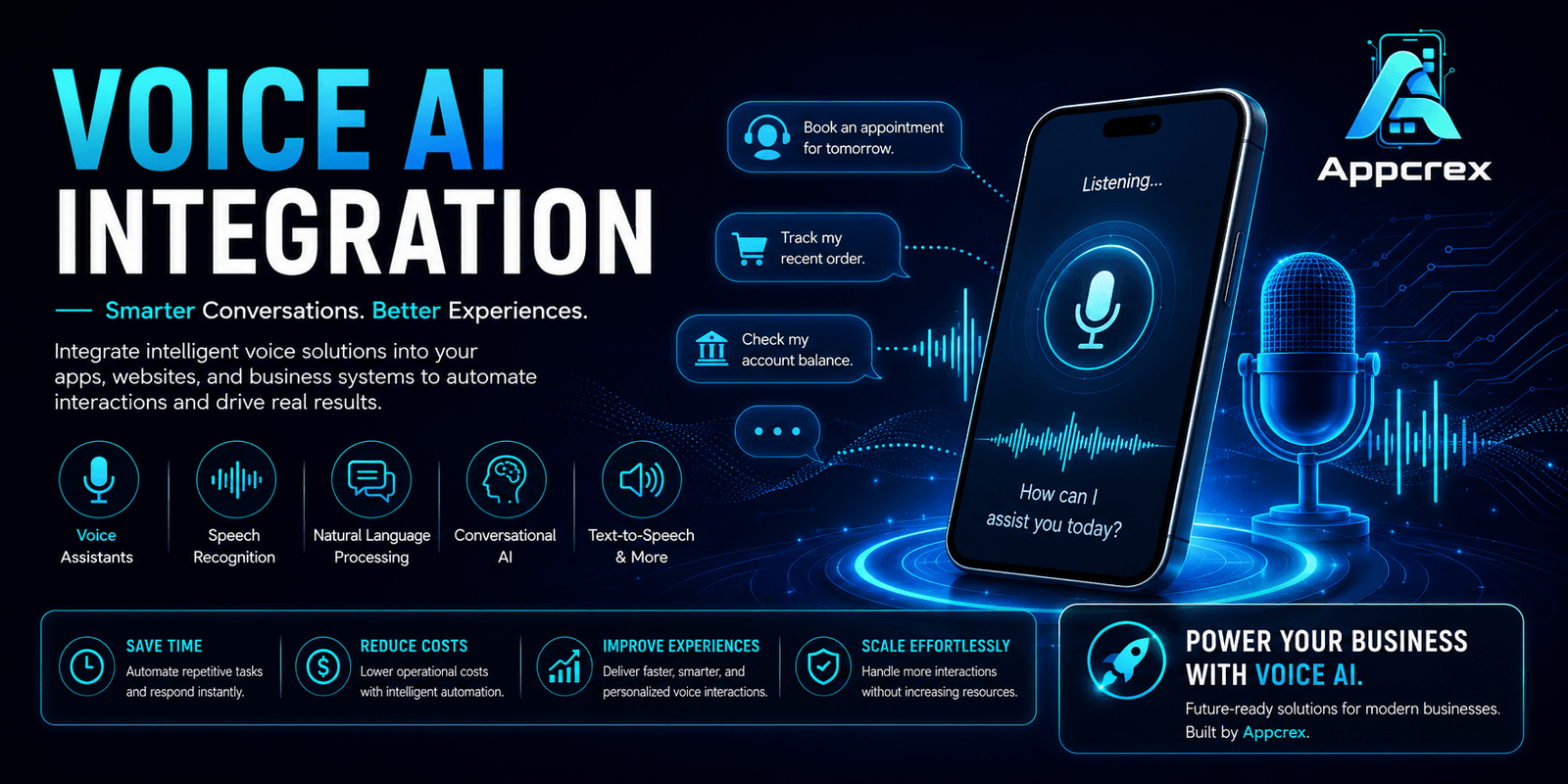
- Voice AI enables natural, human-like interactions through speech recognition and conversational AI.
- Businesses can automate customer support, call centers, and voice-based workflows.
- Voice AI improves customer experiences with faster and more personalized interactions.
- Industries like healthcare, finance, retail, and logistics are rapidly adopting voice technology.
- A well-implemented Voice AI solution can reduce costs, increase efficiency, and drive business growth.
Introduction
Voice technology is rapidly transforming how businesses communicate with customers, employees, and partners. Consumers today expect faster, more convenient, and hands-free interactions, making voice-enabled experiences increasingly important across industries.
From virtual assistants like Siri, Alexa, and Google Assistant to AI-powered customer support systems, Voice AI has become one of the most impactful innovations in digital transformation.
Businesses are leveraging Voice AI to automate customer service, streamline workflows, improve accessibility, and create more engaging user experiences. Whether it’s handling customer inquiries, booking appointments, processing payments, or providing healthcare assistance, Voice AI is reshaping the way organizations operate.
At AppCrex, we help businesses integrate advanced Voice AI solutions into websites, mobile applications, enterprise software, customer support platforms, and digital products.
This comprehensive guide explores everything you need to know about Voice AI Integration, including benefits, technologies, use cases, implementation strategies, costs, and future trends shaping the industry in 2026.
What is Voice AI Integration?
Voice AI Integration refers to the process of incorporating Artificial Intelligence-powered voice capabilities into applications, software systems, websites, devices, and business workflows.
Voice AI combines several advanced technologies, including:
- Speech Recognition
- Natural Language Processing (NLP)
- Machine Learning
- Conversational AI
- Text-to-Speech (TTS)
- Speech-to-Text (STT)
These technologies allow systems to understand spoken language, process user intent, and generate intelligent responses.
Voice AI can be integrated into:
- Mobile Applications
- Websites
- Customer Support Platforms
- Call Centers
- Smart Devices
- Healthcare Systems
- Enterprise Software
- Automotive Applications
The goal is to create seamless and natural voice-based interactions that improve user experiences and operational efficiency.
Why Voice AI is Growing Rapidly?
The adoption of Voice AI has accelerated significantly due to changing consumer behaviors and advancements in AI technologies.
Rise of Smart Devices
Smartphones, smart speakers, and connected devices have increased demand for voice interactions.
Hands-Free Convenience
Users can perform tasks without typing or navigating complex interfaces.
Faster Communication
Voice commands are often quicker than traditional text-based interactions.
Improved Accessibility
Voice AI makes technology more accessible for people with disabilities.
Advancements in AI Models
Modern AI systems understand language with greater accuracy and context awareness.
How Voice AI Works
Voice AI systems follow a multi-step process.
Step 1: Speech Recognition
The system captures and converts spoken words into text.
Step 2: Natural Language Processing
AI analyzes the text to understand user intent.
Step 3: Decision-Making
Machine learning models determine the most appropriate response.
Step 4: Response Generation
The system generates a relevant answer or action.
Step 5: Text-to-Speech Conversion
The response is converted into natural-sounding speech.
This entire process happens within seconds, creating a seamless conversational experience.
Benefits of Voice AI Integration
Enhanced Customer Experience
Voice interactions provide faster and more convenient support.
Benefits include:
- Instant Responses
- Personalized Assistance
- Reduced Wait Times
Increased Operational Efficiency
Voice AI automates repetitive communication tasks.
Examples include:
- Appointment Scheduling
- Customer Support
- Order Tracking
Cost Reduction
Organizations can reduce staffing and support costs through automation.
Improved Accessibility
Voice technology helps users interact with digital systems more easily.
24/7 Availability
Voice AI solutions can operate continuously without human intervention.
Higher Customer Engagement
Natural conversations create stronger user engagement and satisfaction.
Key Features of Voice AI Solutions
Speech Recognition
Accurately converts spoken language into text.
Natural Language Understanding (NLU)
Identifies user intent and context.
Text-to-Speech (TTS)
Generates realistic voice responses.
Multi-Language Support
Supports users across global markets.
Voice Biometrics
Enhances security through voice authentication.
Sentiment Analysis
Detects emotions and adjusts responses accordingly.
Real-Time Analytics
Tracks interactions and performance metrics.
CRM Integration
Connects with customer management systems for personalized experiences.
Also Read : Healthcare CRM Software Development: Complete Guide to Features, Benefits, Cost & AI Integration (2026)
Types of Voice AI Solutions
AI Voice Assistants
Examples include:
- Siri
- Alexa
- Google Assistant
These assistants help users perform tasks through voice commands.
Voice Chatbots
Voice-enabled conversational systems designed for customer interactions.
AI Call Center Solutions
Automate inbound and outbound customer communications.
Voice Search Systems
Allow users to search information using natural speech.
Enterprise Voice Assistants
Help employees access information and complete tasks more efficiently.
Industry Use Cases of Voice AI Integration
Healthcare
Voice AI helps healthcare organizations:
- Schedule Appointments
- Support Patients
- Manage Medical Records
- Assist Telemedicine Platforms
Example
Patients can book appointments simply by speaking with an AI-powered virtual assistant.
Retail & eCommerce
Retailers use Voice AI for:
- Product Search
- Order Tracking
- Personalized Recommendations
- Customer Support
Voice shopping is becoming increasingly popular among consumers.
Banking & Finance
Financial institutions leverage Voice AI for:
- Account Assistance
- Fraud Detection
- Loan Information
- Customer Verification
Voice authentication improves security and user convenience.
Education
Educational platforms use Voice AI for:
- Virtual Tutors
- Student Support
- Language Learning
- Interactive Learning Experiences
Logistics & Transportation
Voice AI supports:
- Route Planning
- Fleet Management
- Driver Assistance
- Shipment Tracking
Hospitality & Travel
Businesses automate:
- Reservations
- Travel Assistance
- Customer Support
- Concierge Services
Technologies Used in Voice AI Integration
1. OpenAI
Supports conversational AI and voice-enabled assistants.
2. Google Speech-to-Text
Provides highly accurate speech recognition.
3. Amazon Lex
Enables conversational voice experiences.
4. Microsoft Azure Speech Services
Offers enterprise-grade voice AI capabilities.
5. IBM Watson
Supports NLP and conversational AI applications.
6. AssemblyAI
Popular for speech recognition and transcription solutions.
7. Deepgram
Provides scalable speech-to-text APIs.
Voice AI Integration Process
Step 1: Business Analysis
Identify:
- Business Objectives
- Target Audience
- Voice Interaction Requirements
Step 2: Technology Selection
Choose appropriate voice AI technologies and platforms.
Step 3: Conversation Design
Create intuitive and natural conversation flows.
Step 4: Development
Build and integrate voice capabilities into existing systems.
Step 5: AI Model Training
Train AI models using industry-specific data.
Step 6: Testing
Perform:
- Speech Recognition Testing
- Performance Testing
- Security Testing
- User Experience Testing
Step 7: Deployment
Launch voice-enabled applications across target platforms.
Step 8: Optimization
Continuously improve accuracy and performance.
Also Read : AI Chatbot Development Company: Complete Guide to Features, Benefits, Cost & Trends (2026)
Voice AI Integration in Mobile Applications
Modern mobile apps increasingly use voice technology.
Popular features include:
1. Voice Search
Users search content using spoken commands.
Hands-free navigation improves convenience.
3. Voice Messaging
Send messages using speech instead of typing.
4. Voice Commerce
Purchase products through voice interactions.
5. Virtual Assistants
Provide personalized support and recommendations.
At AppCrex, we integrate Voice AI into Android, iOS, Flutter, and React Native applications.
Voice AI Integration Cost
The cost of Voice AI integration depends on project complexity, integrations, and customization requirements.
| Solution Type | Estimated Cost |
|---|---|
| Basic Voice Assistant | $10,000 – $30,000 |
| Voice Chatbot Integration | $20,000 – $75,000 |
| Enterprise Voice AI Solution | $75,000 – $250,000+ |
| Advanced AI Call Automation Platform | $250,000 – $1M+ |
Cost Factors
- Voice Recognition Complexity
- Number of Languages
- Integration Requirements
- AI Model Selection
- Security Features
- Cloud Infrastructure
- Industry Compliance Requirements
Challenges in Voice AI Integration
1. Speech Recognition Accuracy
Different accents and languages can impact performance.
2. Data Privacy
Voice data must be securely stored and processed.
3. Background Noise
Environmental noise can affect recognition quality.
4. Integration Complexity
Connecting voice systems with existing software requires expertise.
5. Compliance Requirements
Healthcare and financial organizations must meet strict regulatory standards.
Future Trends in Voice AI
1. Conversational AI Agents
Advanced AI agents capable of handling complete workflows through voice interactions.
2. Emotion-Aware Voice AI
Systems that detect emotional tone and adapt responses.
3. Multimodal AI
Combining voice, text, image, and video interactions.
4. Real-Time Language Translation
Breaking language barriers through instant translation.
5. Voice Commerce Growth
Increasing adoption of voice-enabled shopping experiences.
6. Industry-Specific Voice Solutions
Customized Voice AI for healthcare, finance, logistics, and enterprise environments.
Also Read : AI Workflow Automation Guide: Everything You Need to Know in 2026
Why Choose AppCrex for Voice AI Integration?
AppCrex helps businesses build intelligent Voice AI solutions that improve customer experiences and operational efficiency.
Our Voice AI Services Include
- Voice AI Integration
- AI Voice Assistant Development
- Conversational AI Solutions
- Voice Chatbot Development
- Speech Recognition Integration
- AI Call Automation
- Enterprise Voice Solutions
- Voice Commerce Applications
- AI Consulting Services
- Ongoing Support & Maintenance
Why Businesses Choose AppCrex
- Experienced AI Developers
- Custom Voice Solutions
- Scalable Architecture
- Enterprise-Level Security
- Industry Expertise
- End-to-End Development Services
- Long-Term Support
Our team delivers future-ready Voice AI solutions tailored to your business goals.
Frequently Asked Questions
What is Voice AI Integration?
Voice AI Integration involves adding AI-powered speech recognition and conversational capabilities to software, applications, and business systems.
How much does Voice AI Integration cost?
Costs typically range from $10,000 to $1 million+ depending on complexity and business requirements.
Which industries use Voice AI?
Healthcare, retail, finance, education, logistics, travel, and many other industries benefit from Voice AI solutions.
Can Voice AI integrate with existing software?
Yes. Voice AI can integrate with websites, mobile apps, CRM platforms, ERP systems, and enterprise software.
How long does Voice AI implementation take?
Basic projects may take a few weeks, while enterprise-scale implementations can take several months.
Does AppCrex provide custom Voice AI solutions?
Yes. AppCrex develops custom Voice AI solutions tailored to specific industries, business objectives, and user requirements.
Final Thoughts
Voice AI is becoming a critical component of modern digital experiences. As businesses continue to prioritize automation, customer engagement, and operational efficiency, Voice AI offers tremendous opportunities to transform communication and service delivery.
From virtual assistants and customer support automation to enterprise workflow management and voice commerce, the applications of Voice AI continue to expand rapidly.
At AppCrex, we help organizations leverage the full potential of Voice AI through secure, scalable, and intelligent integration solutions. Whether you’re looking to enhance customer experiences, automate operations, or build innovative voice-enabled products, our team can help you achieve your goals.
Ready to integrate Voice AI into your business? Contact AppCrex today and discover how our Voice AI Integration Services can help you drive innovation, improve efficiency, and stay ahead in 2026 and beyond.