📌 Key Takeaways
- UAsset management software helps Saudi businesses track assets throughout their lifecycle.
- Construction, manufacturing, logistics, energy, healthcare, and facilities can use custom asset platforms.
- IoT and AI can enable real-time monitoring and predictive maintenance.
- Development costs can range from approximately $20,000 for an MVP to $150,000+ for enterprise systems.
- Custom integrations with ERP, GPS, IoT, accounting, and inventory systems can make the platform more valuable.
Introduction
Managing physical and digital assets across multiple locations can become difficult when companies rely on spreadsheets, disconnected systems, manual inspections, and separate maintenance records. This is especially true for organizations operating large fleets, industrial facilities, construction projects, warehouses, utilities, real estate portfolios, and manufacturing plants.
This is where asset management software in Saudi Arabia can help.
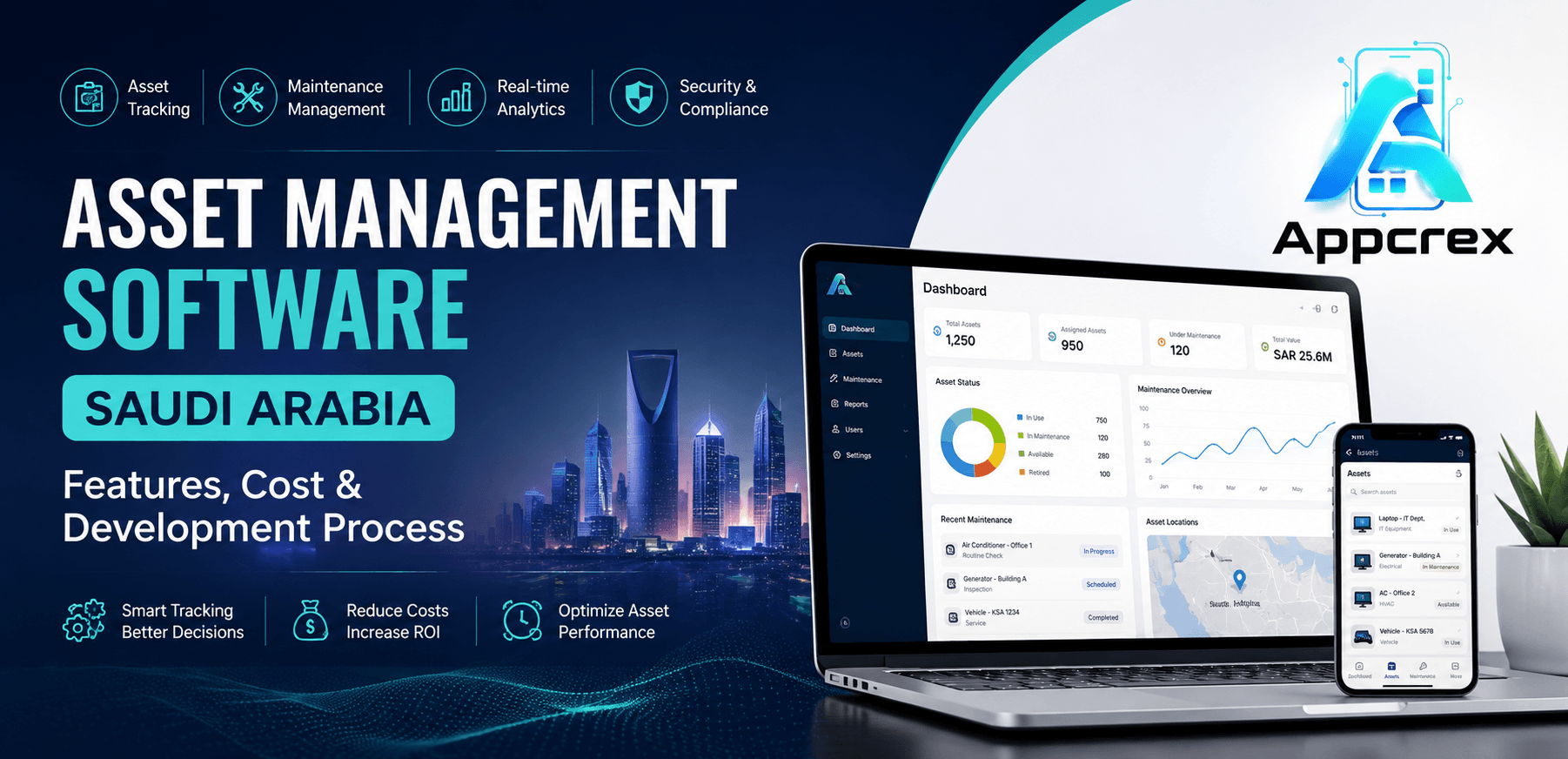
A modern asset management platform allows businesses to maintain a centralized record of assets, monitor their condition and location, schedule maintenance, manage ownership and depreciation information, track usage, and analyze asset performance.
For larger organizations, the platform can also connect with IoT sensors, ERP systems, accounting software, procurement platforms, GPS systems, mobile applications, and AI-powered analytics.
Saudi Arabia’s digital transformation agenda continues to emphasize technology adoption, industrial digitization, AI, cloud technologies, and operational efficiency. The Ministry of Industry and Mineral Resources’ Future Factories initiative, for example, includes IoT software and sensors, production-control systems, ERP/CRM systems, and warehouse-management technologies among basic digitization solutions for industrial facilities.
For businesses planning to build a custom asset management platform, this guide covers the important features, solutions, technology stack, development process, estimated cost, timeline, and business use cases.
What Is Asset Management Software?
Asset management software is a digital platform used to track, manage, maintain, and optimize an organization’s assets throughout their lifecycle.
An asset can include almost anything valuable that a company needs to monitor.
Examples include:
- Industrial machinery
- Construction equipment
- Vehicles
- Trucks
- IT equipment
- Buildings
- Facilities
- Warehouse equipment
- Medical equipment
- Energy infrastructure
- Tools
- Production equipment
- Office assets
- Digital assets
Instead of maintaining asset information across spreadsheets and disconnected systems, a centralized platform provides one source of information for asset records, maintenance, documents, costs, users, locations, and operational history.
Just Read : Digital Payment Solutions UAE: Features, Cost & Development Process
Why Businesses in Saudi Arabia Need Asset Management Software?
Saudi organizations across construction, manufacturing, logistics, oil and gas, utilities, healthcare, real estate, transportation, and industrial operations may manage thousands of assets across multiple sites.
Without centralized asset management, businesses can face problems such as:
- Missing asset records
- Unplanned equipment downtime
- Delayed maintenance
- Poor utilization
- Duplicate purchases
- Difficulty tracking asset location
- Inaccurate maintenance history
- Manual reporting
- High operating costs
- Limited visibility across branches
A centralized system can give managers better visibility into what assets they own, where those assets are located, how they are being used, when maintenance is due, and how much they cost to operate.
This aligns well with Saudi Arabia’s broader digital and industrial transformation agenda. Vision 2030’s current framework includes the National Industrial Development and Logistics Program and emphasizes a thriving economy supported by technology and digital transformation.
Asset Management Software Development Solutions Saudi Arabia
A custom asset management platform can be designed around the specific requirements of different industries.
1. Enterprise Asset Management Software
Enterprise Asset Management (EAM) software provides organizations with centralized control over physical assets throughout their lifecycle.
It can cover:
- Asset registration
- Asset procurement
- Installation
- Maintenance
- Repairs
- Transfers
- Retirement
- Replacement
- Cost tracking
- Performance analysis
EAM platforms are particularly useful for large organizations managing assets across multiple facilities and locations.
2. Fixed Asset Management Software
Fixed asset software helps finance and operations teams manage long-term assets.
Features can include:
- Asset acquisition
- Asset categorization
- Purchase information
- Depreciation
- Asset transfers
- Disposal
- Book value
- Financial reporting
- Audit history
Integration with accounting and ERP systems can reduce duplicate data entry.
3. Fleet Asset Management Software
For transportation and logistics companies, vehicles are among the most important assets.
Fleet asset management software can track:
- Vehicle information
- Registration
- Insurance
- Maintenance
- Mileage
- Fuel consumption
- Driver assignment
- GPS location
- Repair history
- Vehicle utilization
The platform can also generate alerts for scheduled servicing, registration renewal, insurance expiry, and other important dates.
Just Read : GPS Navigation App Development Guide: Features, Cost & Development Process
4. Industrial Asset Management
Manufacturing and industrial businesses can use asset software to manage:
- Production machinery
- Equipment
- Tools
- Spare parts
- Production lines
- Sensors
- Maintenance schedules
IoT integration can provide real-time equipment information and support predictive maintenance.
5. Construction Asset Management
Construction companies often move equipment between multiple projects.
A construction asset management system can track:
- Heavy machinery
- Cranes
- Excavators
- Generators
- Vehicles
- Tools
- Equipment operators
- Project allocation
- Maintenance
- Equipment utilization
Managers can see which equipment is assigned to which project and identify underutilized assets.
6. Facility Asset Management
Property owners and facility management companies can use the software to manage:
- HVAC systems
- Elevators
- Generators
- Electrical systems
- Fire-safety equipment
- Building infrastructure
- Security systems
Maintenance teams can receive work orders and update asset conditions directly from mobile devices.
Key Features of Asset Management Software
A successful asset management platform should provide more than a basic asset list.
Centralized Asset Registry
Every asset can have a unique digital profile containing:
- Asset ID
- Name
- Category
- Serial number
- Manufacturer
- Purchase date
- Purchase cost
- Location
- Department
- Responsible employee
- Warranty
- Current condition
- Maintenance history
This creates a single source of truth for asset information.
QR Code and Barcode Tracking
Each physical asset can be assigned a QR code or barcode.
Employees can scan the code using a mobile application to access:
- Asset details
- Maintenance history
- Documents
- Current location
- Assigned user
- Service records
This can simplify field operations and audits.
Asset Location Tracking
The system can record where assets are located.
For mobile assets such as vehicles and construction equipment, GPS integration can provide real-time or periodic location information.
Asset Lifecycle Management
The software can manage an asset from acquisition through retirement.
A typical lifecycle includes:
Purchase → Registration → Assignment → Usage → Maintenance → Transfer → Replacement → Disposal
This helps organizations understand the total lifecycle of each asset.
Maintenance Management
Maintenance functionality can include:
- Preventive maintenance
- Corrective maintenance
- Work orders
- Service schedules
- Maintenance history
- Technician assignment
- Spare-parts tracking
- Maintenance costs
Automated reminders can notify teams before scheduled maintenance is due.
Warranty Management
The platform can store warranty details and automatically alert users before warranty periods expire.
This can help businesses avoid unnecessary repair expenses when a covered service is available.
Document Management
Asset-related documents can be stored digitally.
These may include:
- Purchase invoices
- Warranty certificates
- Manuals
- Inspection reports
- Registration documents
- Insurance documents
- Service reports
- Compliance certificates
Asset Transfer Management
When equipment moves between projects, branches, departments, or employees, the transfer can be recorded in the system.
This provides a complete audit trail.
Inventory and Spare Parts
Asset management can be connected with spare-parts inventory.
The system can monitor:
- Spare-part stock
- Consumption
- Reorder levels
- Suppliers
- Purchase orders
- Warehouse locations
Dashboard and Reporting
Managers can monitor important metrics through dashboards.
Reports can cover:
- Total assets
- Asset value
- Maintenance costs
- Asset utilization
- Downtime
- Upcoming maintenance
- Expiring warranties
- Asset distribution
- Depreciation
- Replacement requirements
AI in Asset Management Software
AI can make asset management more proactive.
Instead of simply recording what happened, AI can help predict what may happen next.
Predictive Maintenance
Machine-learning models can analyze equipment data to identify patterns associated with potential failures.
Inputs may include:
- Temperature
- Vibration
- Pressure
- Operating hours
- Historical repairs
- Equipment usage
- Sensor readings
The system can then flag equipment that may require inspection.
Asset Failure Prediction
AI can estimate the probability of asset failure based on historical and real-time information.
This can help maintenance teams prioritize high-risk equipment.
Maintenance Recommendations
An AI-powered system can analyze maintenance history and recommend inspection or service actions based on predefined rules and available operational data.
Asset Utilization Analytics
AI can identify underused or overused assets.
For example, a construction company could discover that certain equipment remains idle at one project while another location requires similar equipment.
Intelligent Reporting
AI can turn large amounts of operational data into easier-to-understand summaries for managers.
IoT Integration for Asset Management
IoT can transform asset management from a periodic tracking system into a real-time monitoring platform.
Sensors can collect information from equipment and send it to the software.
Depending on the asset, the system can monitor:
- Temperature
- Vibration
- Pressure
- Fuel level
- Operating hours
- Location
- Battery level
- Energy consumption
- Machine status
The Ministry of Industry and Mineral Resources specifically includes IoT software and sensors among technologies supported under its basic industrial digitization initiative.
Also Read : IoT Integration Services: Complete Guide to Benefits, Process, Cost & Use Cases
Mobile Asset Management App
A mobile application is particularly important for teams working outside the office.
Technicians, inspectors, drivers, warehouse staff, and project managers can use the app to:
- Scan assets
- View asset details
- Create work orders
- Update asset condition
- Upload photos
- Record maintenance
- Check equipment
- Report problems
- Update locations
- Complete inspections
Offline functionality can also be considered for locations with unreliable connectivity.
Asset Management Software for Different Industries in Saudi Arabia
Construction
Construction companies can track heavy machinery, tools, vehicles, generators, and project equipment.
Manufacturing
Manufacturers can monitor production machinery, equipment, tools, maintenance schedules, and spare parts.
Oil and Gas
Asset software can support equipment tracking, maintenance management, inspection workflows, and operational monitoring.
Logistics and Transportation
Companies can manage vehicles, trailers, warehouse equipment, and other operational assets.
Healthcare
Hospitals and healthcare organizations can track medical equipment, maintenance schedules, service records, and locations.
Real Estate and Facilities
Property operators can manage building systems, HVAC, elevators, electrical infrastructure, and maintenance operations.
Energy and Utilities
Utilities can use asset platforms to monitor infrastructure, equipment, field assets, inspections, and maintenance activities.
Saudi-Specific Features to Consider
A Saudi-focused asset management platform may need several capabilities beyond basic asset tracking.
Arabic and English Support
A bilingual interface can support both Arabic- and English-speaking users.
Multi-Location Management
Large organizations may have assets across:
- Riyadh
- Jeddah
- Dammam
- Khobar
- Makkah
- Madinah
- Other Saudi regions
The system should allow organizations to manage assets across multiple branches, sites, warehouses, and projects.
Multi-Company Architecture
Enterprise groups may need separate companies, departments, subsidiaries, or business units within the same platform.
Local Reporting
Reports can be customized around the organization’s financial, operational, maintenance, and compliance requirements.
ERP Integration
Asset software can integrate with existing ERP systems for:
- Procurement
- Accounting
- Inventory
- Finance
- Vendors
- Purchase orders
Role-Based Access
Different users should have different permissions.
For example:
Administrator: Full system access
Asset Manager: Asset and lifecycle management
Maintenance Manager: Maintenance and work orders
Technician: Assigned service tasks
Finance User: Asset value and depreciation
Employee: Assigned assets
Asset Management Software Technology Stack
The technology stack depends on project scope and integration requirements.
Frontend
- React.js
- Angular
- Vue.js
Mobile
- Flutter
- React Native
- Swift
- Kotlin
Backend
- Node.js
- Python
- Java
- .NET
Database
- PostgreSQL
- MySQL
- MongoDB
- Redis
Cloud
- AWS
- Microsoft Azure
- Google Cloud
AI and Machine Learning
- Python
- TensorFlow
- PyTorch
- Machine-learning APIs
IoT
- MQTT
- REST APIs
- IoT platforms
- Device management systems
Maps and GPS
- Google Maps Platform
- Mapbox
- OpenStreetMap
- GIS solutions
The final architecture should depend on the number of assets, users, devices, locations, integrations, and real-time monitoring requirements.
How to Build Asset Management Software in Saudi Arabia?
Building a custom asset management platform generally involves the following stages.
Step 1: Define Business Requirements
Start by identifying:
- Asset types
- Number of assets
- Locations
- Users
- Departments
- Maintenance workflows
- Reporting requirements
- Existing systems
Step 2: Design the Asset Architecture
The development team defines the database structure, asset hierarchy, permissions, workflows, integrations, and technology architecture.
Step 3: UI/UX Design
Interfaces are designed for administrators, managers, technicians, finance teams, and field workers.
Step 4: Backend Development
The backend handles:
- Asset records
- Users
- Workflows
- Maintenance
- Notifications
- Documents
- Reporting
- APIs
Step 5: Web and Mobile Development
The web dashboard is developed for management teams, while the mobile app supports field operations.
Step 6: Integrations
The platform can be connected with ERP, accounting, procurement, GPS, IoT, inventory, and other business systems.
Step 7: AI and IoT Implementation
Advanced projects can add predictive maintenance, sensor monitoring, anomaly detection, and intelligent analytics.
Step 8: Testing
Testing should cover:
- Functional performance
- Mobile usability
- API security
- Data accuracy
- Role permissions
- Integration reliability
- Performance
- IoT connectivity
Step 9: Deployment
The system can be deployed on a suitable cloud or enterprise infrastructure.
Step 10: Maintenance and Optimization
After launch, the software can be continuously improved with new integrations, reports, AI models, mobile features, and automation.
How Much Does Asset Management Software Cost in Saudi Arabia?
The cost depends on the number of modules, assets, users, integrations, mobile applications, IoT devices, AI requirements, and overall system complexity.
A general estimate is:
| Project Type | Estimated Development Cost |
|---|---|
| Basic Asset Management MVP | $20,000 – $40,000 |
| Medium Asset Management Platform | $40,000 – $80,000 |
| Advanced Asset Management System | $80,000 – $150,000+ |
| Enterprise EAM Platform | $150,000 – $300,000+ |
These are approximate software development estimates rather than fixed Saudi Arabia project quotations.
An enterprise system involving thousands of assets, multiple locations, IoT sensors, ERP integration, AI-based predictive maintenance, mobile applications, and advanced reporting can require a substantially larger budget.
Factors That Affect Development Cost
The main cost drivers include:
- Number of asset types
- Number of users
- Number of locations
- Web application
- Mobile application
- QR/barcode functionality
- GPS tracking
- IoT integration
- AI features
- Predictive maintenance
- ERP integration
- Accounting integration
- Inventory integration
- Document management
- Multi-language support
- Cloud infrastructure
- Security requirements
- Analytics and reporting
Asset Management Software Development Timeline
The timeline depends on the scope of the platform.
| Project Type | Approximate Timeline |
|---|---|
| Basic MVP | 3–4 months |
| Medium Platform | 4–7 months |
| Advanced System | 7–10+ months |
| Enterprise EAM Platform | 10–15+ months |
IoT hardware deployment, ERP integration, data migration, and complex enterprise workflows can increase the timeline.
Benefits of Custom Asset Management Software
Centralized Asset Visibility
Businesses can manage asset information from one platform.
Reduced Manual Work
Automated workflows can reduce spreadsheet-based tracking and repetitive administrative tasks.
Better Maintenance Planning
Preventive and predictive maintenance can reduce unexpected equipment problems.
Improved Asset Utilization
Managers can identify idle, underused, or overused assets.
Better Cost Control
The platform can track acquisition, maintenance, operational, and lifecycle costs.
Faster Field Operations
Mobile applications allow field teams to update asset information without returning to an office.
Data-Driven Decisions
Dashboards and analytics provide management with better visibility into asset performance.
Asset Management Software vs. Inventory Management Software
These two systems are related but not identical.
| Asset Management | Inventory Management |
|---|---|
| Tracks long-term assets | Tracks stock and consumables |
| Equipment lifecycle | Product/stock lifecycle |
| Maintenance tracking | Stock movement |
| Asset depreciation | Inventory valuation |
| Asset location | Warehouse location |
| Service history | Purchase/sales history |
| Equipment utilization | Stock levels |
A larger enterprise platform can combine both capabilities when the business requires it.
Why Choose AppCrex for Asset Management Software Development?
AppCrex can help businesses develop custom asset management solutions designed around their operational requirements.
Our capabilities can include:
- Custom asset management software
- Enterprise asset management
- Fleet asset management
- Construction asset management
- Industrial asset management
- Asset tracking applications
- Maintenance management software
- IoT asset monitoring
- Predictive maintenance solutions
- QR and barcode tracking
- GPS integration
- ERP integrations
- Mobile asset management apps
- AI-powered analytics
- Cloud-based enterprise software
The platform can be designed for startups, growing businesses, and large enterprises managing assets across multiple locations.
FAQs
Q. How much does asset management software cost in Saudi Arabia?
A basic asset management MVP may cost around $20,000–$40,000, while an advanced system can cost $80,000–$150,000 or more. Enterprise EAM platforms may exceed $150,000 depending on integrations and complexity.
Q. How long does it take to build asset management software?
A basic system may take around 3–4 months, while a medium platform can require 4–7 months. Advanced and enterprise systems may take 7–15 months or longer.
Q. Can asset management software integrate with ERP systems?
Yes. Custom asset management software can integrate with ERP, accounting, procurement, inventory, CRM, and other enterprise systems through APIs or suitable integration methods.
Q. Can IoT be integrated into asset management software?
Yes. IoT sensors can provide real-time or periodic information about equipment condition, temperature, vibration, location, fuel, energy consumption, and other operational parameters.
Q. Can AI be used in asset management?
Yes. AI can support predictive maintenance, failure prediction, anomaly detection, asset utilization analysis, and intelligent reporting.
Q. Can asset management software support Arabic?
Yes. A bilingual Arabic-English interface can be developed for organizations operating in Saudi Arabia.
Q. Which industries need asset management software in Saudi Arabia?
Construction, manufacturing, oil and gas, logistics, transportation, healthcare, real estate, facilities management, utilities, energy, and other asset-intensive industries can benefit from asset management software.
Q. Can you build a mobile asset management app?
Yes. A mobile application can allow technicians, inspectors, drivers, and field workers to scan assets, update records, complete inspections, manage work orders, and upload photos from the field.
Conclusion
Asset management software in Saudi Arabia can help organizations move from manual asset tracking toward a centralized, data-driven approach to managing equipment, vehicles, machinery, facilities, and other valuable resources.
A basic platform can manage asset records, locations, documents, maintenance schedules, and work orders. More advanced systems can connect IoT sensors, GPS, ERP platforms, mobile applications, AI analytics, and predictive maintenance capabilities.
For businesses operating large or distributed asset portfolios, the right software architecture can improve visibility, maintenance planning, utilization, reporting, and operational control.
Whether you need an asset tracking application for a construction company, an enterprise asset management platform for manufacturing, fleet asset software for logistics, or an IoT-enabled industrial asset solution, the system can be customized around your business processes and future growth.
Build Custom Asset Management Software with AppCrex
Looking for an asset management software development company in Saudi Arabia? AppCrex can help you build scalable asset management platforms with web dashboards, mobile applications, IoT integrations, AI-powered analytics, GPS tracking, QR/barcode scanning, ERP integrations, maintenance workflows, and enterprise reporting.
Contact AppCrex to discuss your asset management software requirements and build a customized solution for your Saudi business.