📌 *Key Takeaways*
- Choose the right business model, such as a single-store app, multi-vendor marketplace, or quick commerce platform.
- Include essential modules for customers, delivery partners, vendors, and administrators.
- AI-powered recommendations, smart search, and real-time tracking improve user experience and operational efficiency.
- Development costs vary based on features, platforms, integrations, and scalability requirements.
- Partnering with an experienced company like AppCrex helps you build a secure, scalable, and future-ready grocery delivery platform.
Introduction
The way people shop for groceries has changed dramatically over the last few years. Instead of visiting supermarkets, customers now expect fresh groceries, household essentials, and daily needs to be delivered directly to their doorstep within minutes. This growing demand has fueled the rapid rise of on-demand grocery delivery apps, making them one of the fastest-growing segments in the eCommerce industry.
From global platforms like Instacart to quick commerce leaders such as Blinkit and Zepto, grocery delivery apps have transformed how businesses connect with customers. With features like real-time order tracking, digital payments, AI-powered recommendations, and lightning-fast deliveries, these apps provide a seamless shopping experience while helping businesses increase revenue and customer loyalty.
If you’re planning to launch a grocery delivery platform, choosing the right on-demand grocery app development company is the first step toward building a scalable, secure, and future-ready solution.
In this comprehensive guide, you’ll learn everything about grocery app development, including its business models, essential features, technology stack, development process, estimated costs, and the latest trends shaping the grocery delivery industry in 2026.
What Is an On-Demand Grocery App?
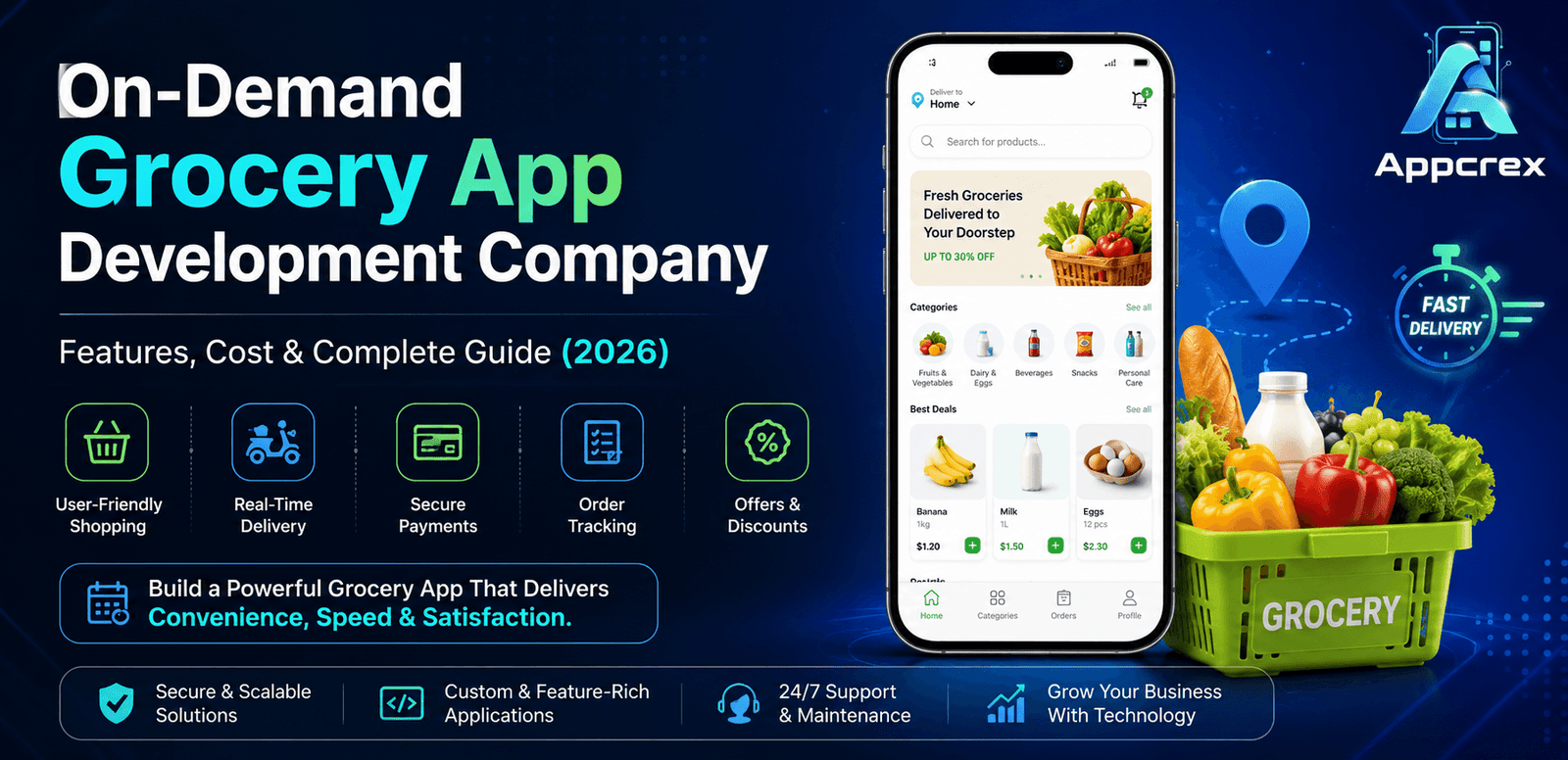
An on-demand grocery app is a mobile and web-based platform that enables customers to order groceries, fresh produce, beverages, household products, and daily essentials online. Customers can browse products, add items to their cart, make secure payments, and track deliveries in real time—all from their smartphones.
These platforms connect customers with grocery stores, supermarkets, dark stores, or warehouse fulfillment centers. Depending on the business model, deliveries can be completed within 10–30 minutes (quick commerce) or scheduled for a later time based on customer preference.
Today’s grocery delivery apps go beyond simple online ordering. They use artificial intelligence, location tracking, personalized recommendations, and inventory management systems to improve the overall shopping experience and streamline operations.
Types of On-Demand Grocery Delivery Apps
Choosing the right business model is one of the most important decisions before starting grocery app development. Different models serve different business goals and customer needs.
1. Single Store Grocery App
This model is designed for individual grocery stores or supermarkets that want to sell directly to customers without relying on third-party marketplaces.
Best For
- Local grocery stores
- Organic food shops
- Independent supermarkets
- Regional grocery chains
Benefits
- Full control over branding
- Direct customer relationships
- Better profit margins
- Personalized promotions
- Customer loyalty programs
2. Multi-Vendor Grocery Marketplace
A marketplace platform allows multiple grocery stores and vendors to register and sell products through a single application.
Customers can compare products, prices, delivery times, and offers from different stores before placing an order.
Best For
- Grocery startups
- Hyperlocal delivery businesses
- Large marketplaces
- Regional grocery platforms
Benefits
- Larger product catalog
- Multiple revenue sources
- Commission-based income
- Easy business expansion
3. Chain Supermarket App
Large supermarket brands often build dedicated apps to serve customers across multiple cities and branches.
The app integrates inventory, customer accounts, payment systems, loyalty programs, and delivery management into one platform.
Best For
- National supermarket chains
- Retail franchises
- Large grocery brands
4. Dark Store Grocery App
Dark stores are fulfillment centers built specifically for online grocery orders. Unlike traditional supermarkets, they are not open to walk-in customers.
Orders are packed and dispatched quickly, making this model ideal for rapid delivery services.
Benefits
- Faster order fulfillment
- Better inventory management
- Reduced operational costs
- Higher delivery efficiency
5. Quick Commerce App
Quick commerce (Q-Commerce) focuses on delivering groceries in 10–30 minutes.
This model relies on strategically located dark stores, AI-based route optimization, and efficient delivery partner management.
Ideal For
- Urban areas
- High-demand neighborhoods
- Convenience shopping
- Daily essentials
Why Businesses Are Investing in Grocery App Development?
Consumer shopping habits continue to shift toward digital experiences, creating significant opportunities for grocery businesses of all sizes.
Here are the major reasons why investing in grocery app development makes business sense.
Growing Customer Demand
Modern consumers value convenience more than ever. Ordering groceries through a mobile app saves time, reduces travel, and provides access to thousands of products with just a few taps.
Higher Revenue Opportunities
Mobile apps generate additional sales through:
- Personalized product recommendations
- Subscription plans
- Premium memberships
- Flash sales
- Combo offers
- Cross-selling
- Upselling
These features encourage customers to purchase more frequently and increase average order value.
Better Customer Retention
Features like reward points, loyalty programs, cashback offers, personalized discounts, and push notifications help businesses keep customers engaged and encourage repeat purchases.
Acquiring a new customer is often more expensive than retaining an existing one, making customer loyalty a key driver of long-term profitability.
Operational Efficiency
A well-designed grocery app automates many business operations, including:
- Order management
- Inventory tracking
- Delivery assignment
- Customer support
- Payment processing
- Sales reporting
Automation reduces manual work, minimizes errors, and improves operational efficiency.
Real-Time Business Insights
Modern grocery platforms provide advanced analytics that help businesses understand:
- Best-selling products
- Customer buying behavior
- Peak shopping hours
- Delivery performance
- Inventory turnover
- Revenue trends
These insights enable smarter business decisions and more effective marketing strategies.
AI-Powered Shopping Experiences
Artificial intelligence is transforming grocery shopping by offering:
- Personalized product recommendations
- Smart search suggestions
- Demand forecasting
- Inventory optimization
- Dynamic pricing
- Automated customer support
- Predictive shopping lists
These AI-driven features enhance customer satisfaction while improving operational efficiency.
Grocery Delivery Market Statistics (2026)
The online grocery industry continues to experience strong growth, driven by changing consumer habits, increased smartphone adoption, and advancements in delivery technology.
Some key trends shaping the market include:
- Millions of consumers now prefer ordering groceries online instead of visiting physical stores.
- Quick commerce has become one of the fastest-growing segments in the retail industry.
- AI-powered recommendation engines are helping businesses increase average order values through personalized shopping experiences.
- Digital wallets and contactless payments have become the preferred payment methods for grocery purchases.
- Businesses are increasingly investing in cloud-based inventory systems, real-time analytics, and automated fulfillment to improve operational efficiency.
- Subscription-based grocery delivery models are gaining popularity as customers seek convenience and recurring savings.
- Hyperlocal delivery services continue to expand in metropolitan and tier-2 cities, reducing delivery times and improving customer satisfaction.
As customer expectations continue to evolve, businesses that invest in scalable, technology-driven grocery delivery platforms will be better positioned to compete in the rapidly growing digital commerce market.