Introduction: Downloads Don’t Mean Success
Many businesses celebrate the day their app launches.
It gets downloads.
Users install it.
The brand feels modern.
But weeks later, reality often looks different.
Low activity.
Poor retention.
Few returning users.
Silent uninstallations.
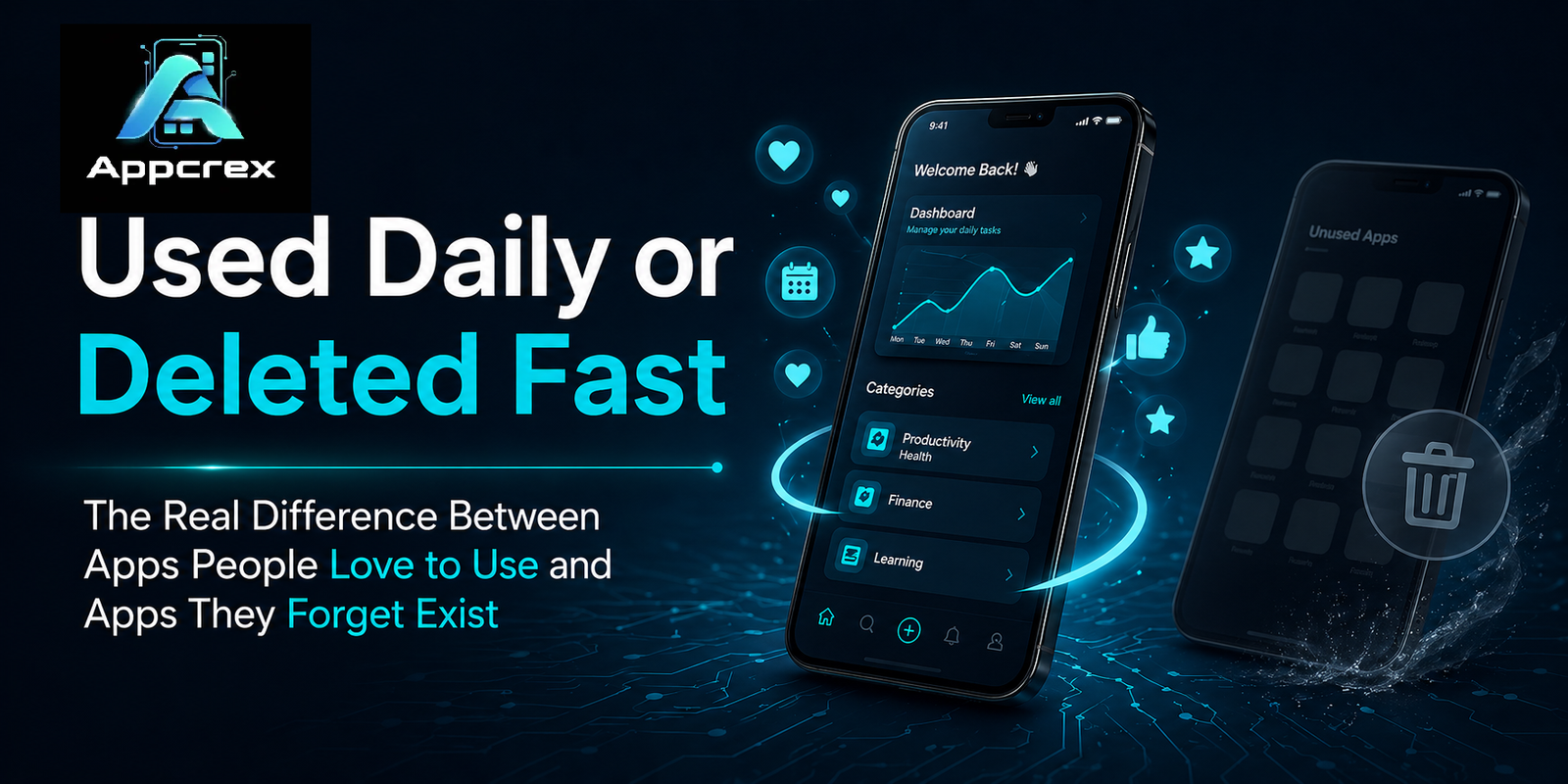
This happens because launching an app and building a useful app are not the same thing.
Success is not measured by installs alone.
It is measured by continued usage.
The real question is:
Will people keep opening it after the first week?
Why Users Ignore So Many Apps
Most people already have limited attention.
Their phones are full of apps competing for time:
To earn space in someone’s routine, your app must offer clear value.
If it feels confusing, unnecessary, slow, or forgettable, it gets ignored.
Sometimes permanently.
What Makes an App Become a Habit
Apps people use regularly usually solve one of three things:
- They Save Time: Faster booking, easier payments, quick access.
- They Reduce Friction: Remove effort from daily tasks.
- They Add Ongoing Value: Useful updates, convenience, rewards, progress.
When an app consistently improves life, people return naturally.
The Biggest Difference: Utility vs Novelty
Many apps launch with excitement.
Cool design.
Fancy features.
Strong promotion.
But excitement fades.
If the app was interesting but not useful, users stop opening it.
Useful beats flashy over time.
The apps that survive are not always the most beautiful.
They are the most valuable.
1. Clear Purpose Wins Immediately
When someone opens your app for the first time, they should quickly understand:
- What this app does
- Why it matters
- How it helps me now
If users feel confused, drop-off rises fast.
Simple purpose creates faster adoption.
2. Smooth Onboarding Creates Momentum
First impressions matter.
Bad onboarding often includes:
- Too many signup steps
- Long tutorials
- Unnecessary permissions
- Confusing navigation
Good onboarding helps users reach value quickly.
The faster they experience benefit, the higher retention becomes.
3. Great UX Feels Effortless
Users rarely praise UX directly.
But they notice bad UX instantly.
People return to apps that feel:
- Fast
- Clean
- Predictable
- Easy to navigate
- Frustration-free
Every extra tap, delay, or confusion reduces future usage.
4. Performance Builds Trust
If an app crashes, freezes, or loads slowly, confidence drops.
Users think:
- Can I rely on this?
- Will this waste my time again?
Reliability is one of the strongest retention drivers.
People return to apps they trust.
5. Real Need Beats Forced Usage
Some businesses build apps because competitors have one.
That can be a mistake.
An app should exist because it solves recurring customer needs.
Good examples:
- Ordering food
- Booking rides
- Managing finances
- Scheduling services
- Shopping faster
- Tracking progress
If users don’t need repeated access, they may prefer a website instead.
6. Personalization Keeps Apps Relevant
People engage more when experiences feel tailored.
Examples:
- Recommended products
- Saved preferences
- Smart reminders
- Location relevance
- Personalized dashboards
Relevance increases return visits.
Generic experiences often fade into the background.
7. Notifications Should Help, Not Annoy
Push notifications can boost engagement-or trigger deletion.
Bad notifications:
- Too frequent
- Irrelevant
- Purely promotional
Smart notifications:
- Useful reminders
- Real-time updates
- Personalized offers
- Progress nudges
Respect attention.
That builds loyalty.
8. Rewards and Progress Encourage Return Use
Many successful apps use motivation wisely.
Examples:
- Loyalty points
- Discounts
- Streaks
- Progress tracking
- Membership benefits
When users feel progress or gain, habits strengthen.
Why Many Apps Get Ignored After Download
Common reasons include:
- No clear value after install: The user sees no reason to return.
- Complicated experience: Too much effort.
- Slow performance: Frustrating daily use.
- No habit loop: Nothing pulls users back.
- Weak retention strategy: No reminders, rewards, or relevance.
The Business Cost of an Ignored App
An unused app is expensive.
It can mean:
- Wasted development budget
- Low ROI
- Poor customer adoption
- Weak brand perception
- Missed loyalty opportunities
Building an app is only half the challenge.
Getting used consistently is the real test.
How to Build an App People Actually Use
1. Start With User Problems: Solve recurring pain points.
2. Remove Friction: Simplify every key action.
3. Prioritize Speed: Fast apps feel valuable.
4. Focus on Retention: Design reasons to come back.
5. Use Data: Learn what users use, ignore, and abandon.
6. Improve Continuously: Winning apps evolve constantly.
Why Simplicity Often Beats More Features
Many businesses think more features equal better apps.
Often the opposite happens.
Too many features create clutter.
Users prefer apps that do a few things extremely well.
Simplicity improves confidence and repeat use.
How Appcrex Builds Apps Users Return To
At Appcrex, apps are built around behavior-not just code.
That includes:
- User-first strategy
- Smooth onboarding
- Retention-focused UX
- Fast performance
- Scalable architecture
- Smart engagement systems
- Ongoing optimization readiness
Because successful apps are not just launched.
They are adopted.
The Future of App Success
Tomorrow’s leading apps will focus even more on:
- Personalization
- Predictive convenience
- Seamless integrations
- AI-driven support
- Frictionless design
- Habit-forming experiences
But one principle stays constant:
Apps that genuinely help users will keep winning.
Conclusion:
People Keep What Adds Value
Phones are crowded.
Attention is limited.
Users keep apps that earn their place.
If your app saves time, solves real problems, feels smooth, and creates ongoing value—it becomes part of daily life.
If not, it gets ignored.
The difference is rarely luck.
It is a thoughtful product strategy.
Want to Build an App People Actually Use?
Partner with Appcrex to create high-performing, user-focused mobile apps designed for engagement, retention, and long-term growth.
Let’s build something users keep opening.
FAQ
1. Why do users stop using apps quickly?
Usually because the app lacks value, feels confusing, or creates friction.
2. Are downloads enough to measure app success?
No. Retention, engagement, and repeat usage matter more.
3. How important is onboarding?
Very important. First impressions strongly affect long-term usage.
4. Should every business build an app?
Only if customers have recurring needs better solved by an app than a website.
5. How can Appcrex help?
Appcrex builds custom apps focused on usability, retention, and business growth.