📌 Key Takeaways
- Building an app like STC Pay requires a secure, scalable, and compliance-ready fintech architecture.
- Development costs depend on platform choice, integrations, AI capabilities, and security requirements.
- Cross-platform technologies like Flutter and React Native help reduce development time and maintenance costs.
- Digital wallets can generate recurring revenue through merchant services, subscriptions, financial products, and enterprise solutions.
- Partnering with an experienced app development company and skilled app developers ensures long-term success and business scalability.
Why Saudi Arabia Is Leading the Digital Wallet Revolution
Saudi Arabia is rapidly transforming into one of the world’s most advanced digital economies. Under Vision 2030, the government has invested heavily in financial technology, digital payments, and cashless commerce, encouraging businesses and consumers to embrace modern payment solutions.
Today, millions of users rely on digital wallets for everyday transactions—from paying utility bills and shopping online to transferring money and managing finances directly from their smartphones.
This transformation has created enormous opportunities for businesses looking to enter the fintech industry. Instead of building traditional banking software, many startups and enterprises are now investing in secure, user-friendly digital wallet platforms inspired by market leaders like STC Pay.
If you’re planning to launch a similar solution, partnering with an experienced mobile app development company can significantly reduce development risks while accelerating your product launch.
This guide explains everything you need to know about building an app like STC Pay—from business planning and essential modules to technology choices, development costs, and future trends.
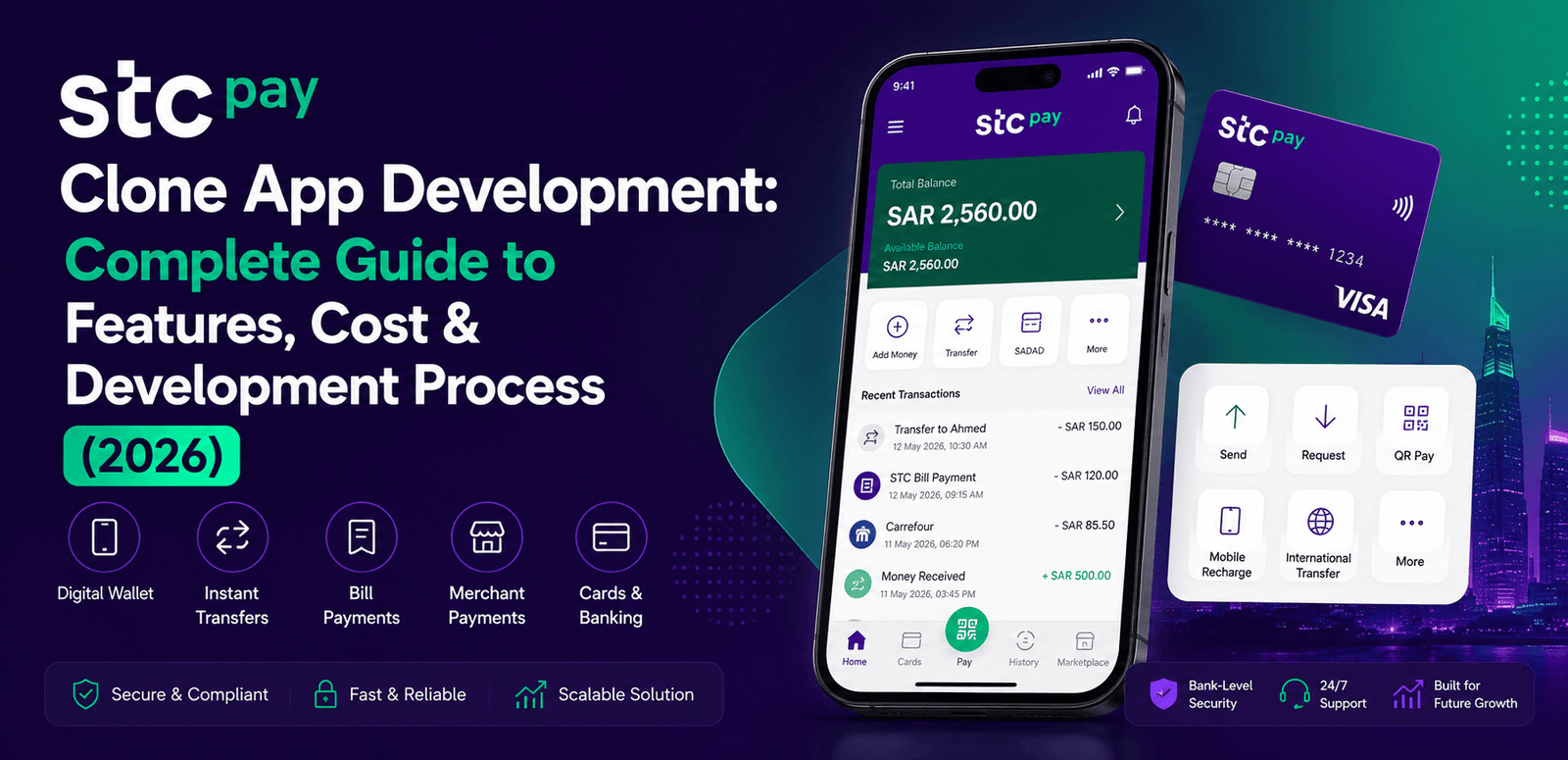
What Is STC Pay?
STC Pay is one of Saudi Arabia’s most successful digital wallet platforms, offering users a secure and convenient way to manage their finances without depending entirely on traditional banking channels.
Originally launched by STC Group, the platform has evolved into a comprehensive digital financial solution that supports millions of users across Saudi Arabia.
Today, customers use the application for:
- Instant money transfers
- Mobile payments
- Bill payments
- International remittances
- Merchant payments
- Digital wallet services
- Virtual and physical payment cards
Its seamless user experience and strong security framework have positioned it as one of the region’s leading fintech applications.
Why Businesses Want to Build an App Like STC Pay?
Digital wallets are no longer limited to banks or telecom companies. Retail brands, fintech startups, financial institutions, and enterprises are increasingly launching their own payment ecosystems to improve customer engagement and unlock new revenue streams.
Developing an application similar to STC Pay allows businesses to:
Create a Complete Financial Ecosystem
Instead of relying on third-party payment providers, businesses can manage payments, customer wallets, loyalty programs, and financial services within a single platform.
Improve Customer Retention
Users who actively manage their payments through one application are more likely to remain loyal to the platform.
Digital wallets increase daily engagement by becoming part of customers’ everyday routines.
Expand Revenue Opportunities
Beyond transactions, businesses can generate income through:
- Merchant partnerships
- Premium subscriptions
- Value-added financial services
- Payment processing fees
- Business solutions
Strengthen Brand Authority
Owning a custom digital wallet helps businesses establish themselves as trusted financial service providers while creating long-term customer relationships.
Industries That Can Benefit from STC Pay-Like Applications
Although STC Pay serves the general market, similar digital wallet platforms can be customized for many industries.
Examples include:
Retail & E-commerce
Offer customers integrated payment experiences directly inside shopping applications.
Healthcare
Enable secure payments for appointments, prescriptions, and insurance claims.
Education
Support tuition payments, digital student wallets, and campus transactions.
Transportation
Manage ride payments, parking fees, toll collection, and public transit transactions.
Hospitality
Simplify hotel bookings, restaurant payments, and loyalty rewards.
Enterprise Solutions
Businesses can provide employees with secure corporate wallets for expense management and reimbursements.
Also Read : Digital Transformation: Complete Guide to Strategy, Benefits, Process & Trends (2026)
Core Functional Modules Required for a Digital Wallet App
Instead of thinking in terms of individual features, successful fintech platforms are built around functional modules that work together to create a seamless financial ecosystem.
Identity Management Module
Every financial platform begins with secure user identification.
This module handles:
- User Registration
- Login
- Identity Verification
- Profile Management
- Account Recovery
A reliable identity system ensures only authorized users can access financial services.
Wallet Management Module
The wallet acts as the central hub of the application.
Users can:
- View Available Balance
- Add Funds
- Withdraw Funds
- Manage Payment Methods
- Track Wallet Activity
This module forms the foundation of the user experience.
Money Transfer Module
One of the primary reasons users adopt digital wallets is the ability to transfer money instantly.
Transfer capabilities typically include:
- Person-to-Person Transfers
- Bank Transfers
- Scheduled Payments
- International Remittances
Fast and reliable transfers increase customer satisfaction.Merchant Payment Module
Digital wallets should support payments across multiple channels.
Examples include:
- Online Shopping
- In-Store Payments
- QR Code Payments
- NFC Payments
- Merchant Checkout
Providing multiple payment options improves user convenience while increasing merchant adoption.
Financial History Module
Transparency is essential for financial applications.
Users should have access to:
- Transaction History
- Payment Receipts
- Wallet Statements
- Spending Summaries
A detailed history helps customers manage finances more effectively.
Rewards & Cashback Module
Reward programs encourage continued platform usage.
Popular incentives include:
- Cashback Offers
- Loyalty Points
- Referral Bonuses
- Merchant Discounts
These programs significantly improve user retention.
Understanding the User Journey
A successful fintech application removes friction from every interaction.
A typical customer journey might look like this:
- Download the application.
- Register and verify identity.
- Create a secure wallet.
- Link a bank account or payment card.
- Add funds to the wallet.
- Transfer money or make purchases.
- Receive payment confirmations instantly.
- Track transactions and manage finances through a personalized dashboard.
Every step should feel intuitive, secure, and effortless.
Also Read : E-Wallet App Development Like Paytm & PhonePe: Features, Cost & Tech Stack (2026)
Why Choosing the Right App Development Company Matters?
Building a digital wallet application requires expertise in financial systems, security, cloud infrastructure, compliance, and user experience.
An experienced app development company brings together specialists across multiple disciplines to ensure your platform is secure, scalable, and ready for long-term growth.
At AppCrex, our dedicated app developers build custom fintech solutions that combine modern technology with business strategy. From concept validation and UI/UX design to backend engineering and post-launch support, we help businesses create reliable digital payment platforms that meet both user expectations and industry standards.
Building a Scalable Digital Wallet Architecture
A successful digital wallet like STC Pay is much more than a mobile application. Behind every transaction is a robust ecosystem that securely processes payments, validates users, communicates with banks, and manages financial data in real time.
A professional mobile app development company focuses on creating an architecture that supports future growth rather than just current requirements.
A well-designed fintech platform generally consists of the following layers:
- Presentation Layer (Mobile Applications)
- API Gateway
- Authentication Services
- Payment Processing Layer
- Banking Integration Layer
- Database Layer
- Cloud Infrastructure
- Analytics & Monitoring
Separating these components makes the platform easier to maintain, update, and scale as user traffic increases.
Choosing the Right Technology Stack
Technology selection directly impacts performance, maintenance costs, and future scalability.
An experienced app development company chooses technologies based on business objectives rather than simply following industry trends.
Mobile Frontend Technologies
The mobile application is the primary interaction point between users and the digital wallet.
Flutter
Flutter has become one of the most popular choices for fintech applications because it enables businesses to launch Android and iOS apps from a single codebase.
Advantages include:
- Faster development
- Native-like performance
- Lower maintenance costs
- Beautiful UI consistency
- Rapid feature deployment
React Native
React Native is another excellent framework for cross-platform fintech applications.
It offers:
- Code reusability
- Faster updates
- Strong community support
- Lower overall development costs
For businesses planning continuous product improvements, React Native is a practical solution.
Native Development
Some enterprise organizations prefer native development for maximum optimization.
Technologies include:
Android
- Kotlin
- Java
iOS
- Swift
Native development is ideal when applications require deep hardware integration or highly customized device capabilities.
Backend Technologies
The backend powers every financial operation.
It manages:
- User authentication
- Wallet balances
- Transactions
- Payment processing
- Notifications
- Reporting
- Banking communication
Popular backend technologies include:
- Node.js
- Python
- Java Spring Boot
- .NET
- Laravel (PHP)
Each technology offers different advantages depending on the project’s scale and complexity.
Database Selection
Digital wallets continuously process financial records, requiring databases that are both reliable and scalable.
Common choices include:
PostgreSQL
Ideal for financial systems because of:
- Data consistency
- ACID compliance
- High reliability
MongoDB
Suitable for:
- Flexible document storage
- User activity
- Logs
- Analytics
Many fintech platforms combine SQL and NoSQL databases to achieve optimal performance.
Cloud Infrastructure
Cloud computing enables fintech platforms to grow without expensive infrastructure upgrades.
Most enterprise digital wallet applications use:
- Amazon Web Services (AWS)
- Microsoft Azure
- Google Cloud Platform (GCP)
Cloud deployment offers:
- Auto Scaling
- High Availability
- Disaster Recovery
- Secure Storage
- Global Accessibility
Essential API Integrations
A digital wallet cannot function independently. It must communicate securely with multiple third-party services.
Important integrations include:
Payment Gateways
To process transactions securely:
- Stripe
- HyperPay
- PayTabs
- Checkout.com
Card Networks
Support for:
- Visa
- Mastercard
- Mada
- Apple Pay
- Google Pay
Identity Verification
Customer verification providers:
- KYC APIs
- Face Verification
- OCR Document Verification
Notification Services
Real-time communication using:
- Firebase Cloud Messaging
- SMS Gateways
- Email APIs
Maps & Location
Useful for:
- Merchant Discovery
- Nearby Stores
- Branch Locations
Banking Integrations
Unlike ordinary shopping apps, digital wallets communicate directly with banking systems.
These integrations may include:
- Bank Account Linking
- Balance Verification
- Account Validation
- Fund Transfers
- Open Banking APIs
Reliable banking integrations improve customer confidence and simplify payment processing.
AI Capabilities That Improve Digital Wallets
Artificial Intelligence has become an essential component of modern fintech applications.
Instead of treating AI as an optional feature, successful platforms use it to improve security, customer experience, and operational efficiency.
Intelligent Fraud Detection
AI continuously analyzes user activity to identify suspicious behavior.
Examples include:
- Unusual transaction amounts
- Unknown devices
- Location anomalies
- Multiple failed login attempts
Potential fraud can be flagged instantly for additional verification.
Smart Spending Insights
AI categorizes expenses automatically and generates useful financial insights.
Customers can understand:
- Monthly spending habits
- Category-wise expenses
- Saving opportunities
- Budget recommendations
Personalized Financial Recommendations
Machine learning recommends services based on customer behavior.
Examples include:
- Cashback offers
- Merchant promotions
- Payment reminders
- Loyalty rewards
This improves customer engagement without overwhelming users.
AI Customer Support
Virtual assistants help users resolve common issues instantly.
Typical requests include:
- Transaction status
- Card management
- Wallet balance
- Payment failures
- Account settings
AI reduces support costs while improving response times.
Designing for High Performance
A digital wallet must respond instantly, even during peak usage.
Performance optimization includes:
- Efficient API calls
- Database indexing
- Image optimization
- Caching strategies
- Background processing
- CDN integration
These techniques ensure smooth performance even as transaction volumes grow.
Compliance Requirements
Every digital wallet application must comply with financial regulations applicable to its target market.
Common compliance standards include:
- PCI DSS
- KYC
- AML
- GDPR
- Local Central Bank Guidelines
For Saudi Arabia, compliance with Saudi Central Bank (SAMA) regulations is especially important.
Building compliance into the application from the beginning is significantly easier than adding it later.
Quality Assurance Strategy
Financial software leaves little room for errors.
Before launch, every module undergoes rigorous testing.
Testing includes:
- Functional Testing
- Security Testing
- API Testing
- Performance Testing
- Load Testing
- Compatibility Testing
- User Acceptance Testing
A structured QA process minimizes risks while ensuring a stable production release.
Deployment Strategy
Launching a fintech application involves more than publishing it on Google Play or the App Store.
Deployment typically includes:
- Production Server Configuration
- Database Migration
- SSL Setup
- Monitoring Tools
- Backup Configuration
- Store Submission
- Performance Validation
A professional deployment strategy ensures the application is ready for real-world users from day one.
Why Businesses Choose AppCrex?
At AppCrex, our experienced app developers specialize in building secure, scalable, and enterprise-grade fintech platforms.
As a trusted mobile app development company, we provide:
- Product Strategy
- UI/UX Design
- Flutter Development
- React Native Development
- Native Android & iOS Development
- Backend Engineering
- Cloud Infrastructure
- AI Integration
- Long-Term Maintenance
Our goal is to build digital products that continue growing alongside your business rather than requiring complete redevelopment in the future.
How Much Does It Cost to Build an App Like STC Pay?
One of the most common questions entrepreneurs ask is:
“How much does it cost to build an app like STC Pay?”
The answer depends on your business vision, target audience, required functionality, third-party integrations, security requirements, and long-term scalability.
An experienced app development company evaluates these factors before providing an accurate project estimate.
Below is a general pricing guide for 2026.
| Application Type | Estimated Cost | Development Timeline |
|---|---|---|
| MVP Digital Wallet | $20,000 – $40,000 | 3–4 Months |
| Mid-Level FinTech App | $40,000 – $80,000 | 5–7 Months |
| Enterprise Digital Wallet | $80,000 – $180,000+ | 8–12+ Months |
These figures vary based on project scope and business requirements.
Cost Breakdown by Development Stage
Instead of looking at the total investment alone, it’s useful to understand where your budget is allocated.
| Development Phase | Estimated Share of Budget |
|---|---|
| Business Analysis & Planning | 5% |
| UI/UX Design | 10–15% |
| Mobile App Development | 30–35% |
| Backend Development | 20–25% |
| API & Payment Integrations | 10–15% |
| QA & Testing | 10% |
| Deployment & Launch | 5% |
Proper planning at every stage reduces technical debt and future maintenance costs.
Key Factors That Influence Development Cost
Number of Platforms
Developing for:
- Android only
- iOS only
- Both Android and iOS
directly affects the project budget.
Cross-platform development using Flutter or React Native is often the most cost-effective approach.
Feature Complexity
A basic wallet costs significantly less than an enterprise fintech platform.
Advanced features include:
- International transfers
- Virtual debit cards
- QR payments
- AI recommendations
- Investment tools
- Merchant dashboards
- Expense analytics
The more sophisticated the platform, the higher the development effort.
Banking Integrations
Integrating multiple financial institutions requires additional development and testing.
Examples include:
- Open Banking APIs
- Card Networks
- Merchant Payment Systems
- Remittance Services
Security Infrastructure
Enterprise security includes:
- Encryption
- Fraud monitoring
- Secure authentication
- Device management
- Risk scoring
Financial applications should never compromise on security.
Post-Launch Expenses
Launching your application is only the beginning.
Ongoing costs typically include:
- Cloud hosting
- Security updates
- Performance monitoring
- Feature enhancements
- Bug fixes
- Customer support
- Server maintenance
Most successful fintech companies continuously improve their applications based on customer feedback.
Monetization Strategies
A digital wallet should generate sustainable revenue without negatively affecting customer experience.
Merchant Service Fees
Businesses pay a transaction fee whenever customers use the wallet for purchases.
This remains the primary revenue source for many fintech platforms.
Premium Membership
Offer premium wallet subscriptions featuring:
- Higher transaction limits
- Priority customer support
- Exclusive cashback
- Premium financial tools
Recurring subscriptions improve revenue stability.
International Transfer Services
Many customers regularly send money across borders.
Charging a small service fee on international remittances creates another revenue stream.
Business Payment Solutions
Offer payment solutions for merchants including:
- Payment collection
- Business analytics
- Invoice management
- Payment links
Enterprise services increase average customer value.
Financial Marketplace
As the platform grows, businesses can introduce:
- Insurance products
- Investment opportunities
- Lending services
- Savings accounts
This transforms the wallet into a complete financial ecosystem.
Common Challenges During Development
Every fintech project presents unique challenges.
Understanding them early improves planning and reduces project risks.
Regulatory Complexity
Financial regulations differ between countries.
Businesses expanding internationally must comply with multiple legal frameworks.
User Trust
Customers only adopt financial applications they trust.
Professional design, transparent policies, and strong security are essential.
Payment Reliability
Transaction failures directly impact customer satisfaction.
Redundant payment systems and reliable APIs help minimize disruptions.
Rapid Market Changes
Fintech evolves quickly.
Applications should be designed with flexibility so new services can be added without rebuilding the platform.
Future Trends in Digital Wallet Applications
The next generation of digital wallets will offer much more than payment processing.
Emerging innovations include:
AI Financial Coaching
Applications will help users:
- Improve saving habits
- Reduce unnecessary spending
- Achieve financial goals
Voice-Based Transactions
Customers will increasingly perform transfers and payments using voice commands.
Embedded Finance
Financial services will become integrated into:
- Retail Apps
- Healthcare Platforms
- Education Systems
- Transportation Services
Digital Identity Integration
Wallets may evolve into secure identity platforms capable of storing:
- Government IDs
- Licenses
- Certificates
- Travel Documents
Predictive Financial Intelligence
Artificial intelligence will forecast future expenses and recommend smarter financial decisions.
Why Businesses Choose AppCrex
At AppCrex, we help organizations build secure, scalable, and future-ready fintech solutions.
As a trusted mobile app development company, we provide complete end-to-end services including:
- Product Discovery
- UI/UX Design
- Mobile App Development
- Backend Engineering
- Cloud Infrastructure
- AI Integration
- Payment Gateway Integration
- Security Consulting
- Maintenance & Support
Our experienced app developers focus on creating digital products that deliver measurable business value rather than simply developing software.
Whether you’re launching a digital wallet, payment platform, or enterprise fintech solution, AppCrex provides the technical expertise required to bring your vision to life.
Frequently Asked Questions
1. How long does it take to develop an app like STC Pay?
Development generally takes:
- MVP: 3–4 months
- Mid-Level Platform: 5–7 months
- Enterprise Platform: 8–12+ months
2. Which framework is best for digital wallet development?
Flutter and React Native are both excellent options for cross-platform applications.
Native development is recommended for projects requiring maximum performance and deep platform integration.
3. Can I integrate multiple banks into one wallet?
Yes.
Modern digital wallets commonly integrate multiple banking systems through secure APIs.
4. Is AI necessary for fintech applications?
While not mandatory, AI significantly improves:
- Fraud Detection
- Customer Support
- Financial Recommendations
- Risk Analysis
5. How secure should a digital wallet be?
Enterprise-grade security should include:
- Data Encryption
- Multi-Factor Authentication
- Fraud Detection
- Secure APIs
- Compliance Standards
6. Can digital wallets support international payments?
Yes.
With the appropriate banking and payment integrations, digital wallets can process international transfers securely.
7. Why should I hire professional app developers?
Experienced app developers understand fintech architecture, security, scalability, compliance, and modern development practices, reducing project risks and improving product quality.
8. Why choose AppCrex?
AppCrex combines fintech expertise, AI capabilities, modern technology, and end-to-end development services to deliver scalable digital payment solutions tailored to your business goals.
Also Read : How Much Does It Cost to Develop an App in 2026? Complete Pricing Guide
Final Thoughts
Digital wallets have become an essential part of the modern financial ecosystem, offering users faster, safer, and more convenient ways to manage their money.
Building an app like STC Pay requires careful planning, advanced technology, secure payment infrastructure, regulatory compliance, and a strong understanding of customer expectations.
Working with an experienced app development company ensures every stage—from strategy and design to development, deployment, and maintenance—is executed efficiently.
At AppCrex, our dedicated app developers help startups, enterprises, and financial institutions build innovative fintech products that are secure, scalable, and ready for future growth.
If you’re planning to launch a next-generation digital wallet, we’re here to help you turn your idea into a successful product.