📌 Key Takeaways
- Mobile app development costs in Saudi Arabia vary based on app complexity, features, technology stack, and development timeline.
- Cross-platform development with Flutter or React Native can reduce development time and overall project costs.
- Planning an MVP helps businesses launch faster, validate ideas, and optimize their investment.
- Choosing an experienced app development company ensures higher quality, better scalability, and long-term support.
- AppCrex provides end-to-end mobile app development services, helping businesses in Saudi Arabia build secure, scalable, and future-ready applications.
Saudi Arabia is rapidly becoming one of the leading technology and innovation hubs in the Middle East. Driven by Vision 2030, businesses across industries are investing in digital transformation to improve customer experiences, streamline operations, and create new revenue opportunities. As a result, mobile applications have become an essential tool for companies looking to stay competitive in today’s digital marketplace.
Whether you’re launching a startup, modernizing an existing business, or expanding your digital presence, investing in a mobile app can help you reach a wider audience and improve customer engagement. However, one of the most common questions businesses ask is:
“How much does it cost to develop a mobile app in Saudi Arabia?”
The answer depends on several factors, including the app’s complexity, features, platform (Android, iOS, or cross-platform), UI/UX design, backend development, third-party integrations, and ongoing maintenance.
Why Mobile App Development Is Growing in Saudi Arabia
Saudi Arabia has become one of the fastest-growing digital markets in the GCC. Government initiatives under Vision 2030 encourage businesses to adopt innovative technologies, including mobile applications, AI, cloud computing, and digital payment systems.
Today, mobile apps play a critical role across industries such as:
- Healthcare
- FinTech
- eCommerce
- Education
- Logistics
- Food Delivery
- Travel & Hospitality
- Real Estate
Consumers increasingly expect businesses to offer seamless mobile experiences, making app development a strategic investment rather than an optional feature.
Why Invest in a Mobile App?
A professionally developed mobile app can deliver measurable business benefits.
Improve Customer Engagement
Mobile apps provide direct communication through push notifications, personalized content, and loyalty programs.
Increase Revenue
Apps simplify purchasing, subscriptions, online bookings, and digital payments, helping businesses generate more sales.
Strengthen Brand Presence
A dedicated mobile app keeps your brand visible on customers’ devices and builds long-term loyalty.
Streamline Business Operations
Apps can automate appointment scheduling, inventory management, customer support, employee communication, and more.
Gain Valuable Business Insights
Analytics tools help track user behavior, enabling businesses to optimize services and make informed decisions.
Average Mobile App Development Cost in Saudi Arabia
The cost of developing a mobile app depends primarily on its complexity and required features.
| App Complexity | Estimated Cost (USD) | Estimated Cost (SAR)* |
|---|---|---|
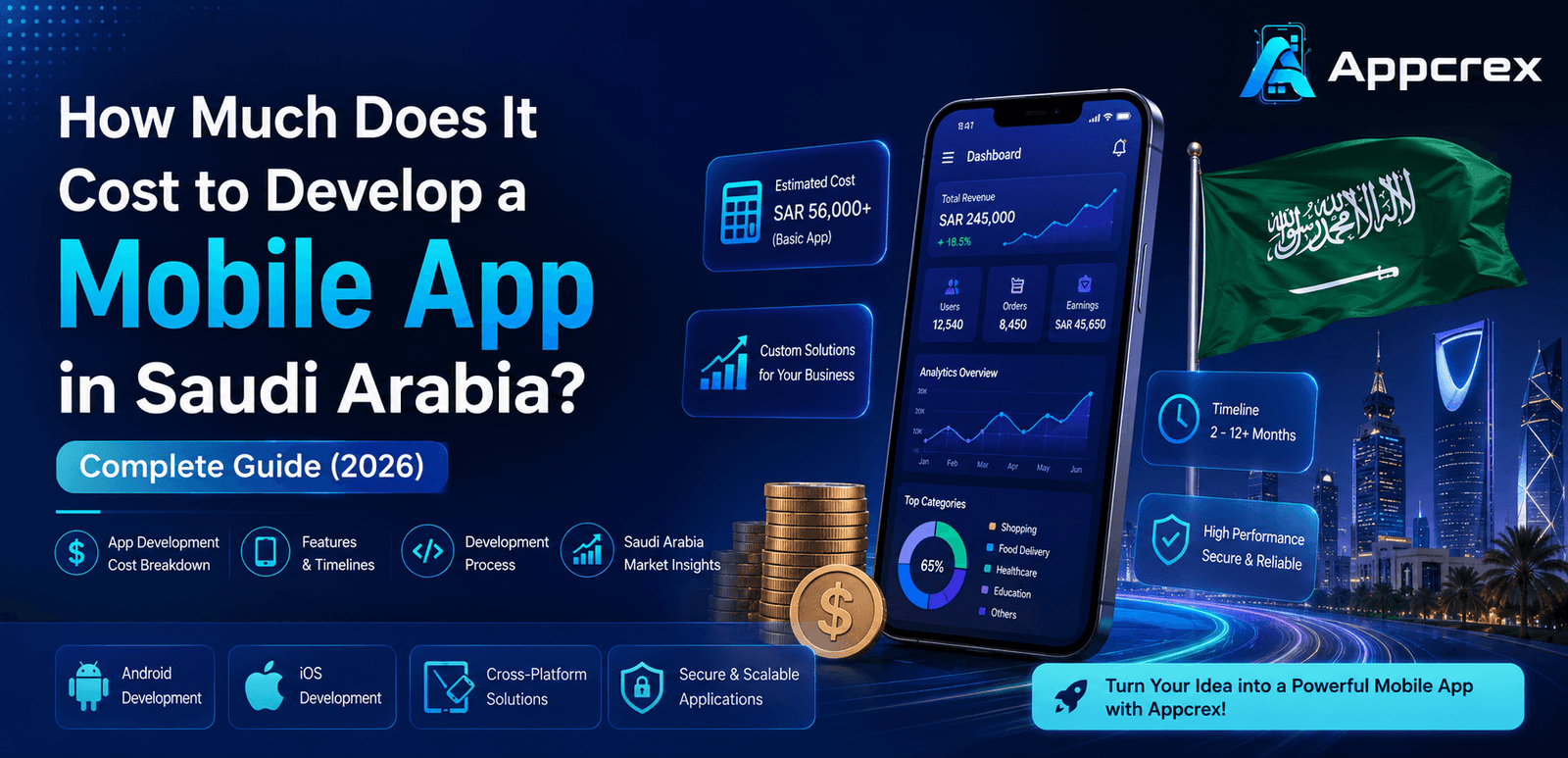
| Basic App | $15,000–$30,000 | SAR 56,000–112,000 |
| Medium App | $30,000–$60,000 | SAR 112,000–225,000 |
| Advanced App | $60,000–$120,000 | SAR 225,000–450,000 |
| Enterprise App | $120,000–$250,000+ | SAR 450,000–937,000+ |
*Approximate conversions; actual costs vary with exchange rates and project scope.
These estimates typically include:
- Business Analysis
- UI/UX Design
- Mobile App Development
- Backend Development
- API Integration
- Testing & Quality Assurance
- App Store Deployment
Mobile App Development Cost by Complexity
1. Basic Mobile App
A basic application is ideal for startups and businesses validating a new idea.
Common Features
- User Registration
- Login
- Profile Management
- Contact Form
- Push Notifications
- Basic Dashboard
Development Timeline
2–3 Months
Estimated Cost
$15,000–$30,000
2. Medium Complexity App
These apps include advanced business features and integrations.
Features
- Online Payments
- GPS Tracking
- Booking System
- Chat
- Notifications
- Admin Dashboard
- Reports
Development Timeline
3–5 Months
Estimated Cost
$30,000–$60,000
3. Advanced Mobile App
Advanced apps are designed for businesses that require sophisticated functionality.
Features
- AI Integration
- Live Video
- Real-Time Chat
- IoT Connectivity
- Machine Learning
- Business Analytics
- Multi-Language Support
Development Timeline
6–9 Months
Estimated Cost
$60,000–$120,000
4. Enterprise Mobile Applications
Large organizations require secure and scalable enterprise-grade applications.
Features
- ERP Integration
- CRM Integration
- Cloud Infrastructure
- Role-Based Access
- Enterprise Security
- High Availability
- Advanced Reporting
Development Timeline
9–12+ Months
Estimated Cost
$120,000–$250,000+
Factors That Affect Mobile App Development Cost in Saudi Arabia
Every app is unique, and several elements influence the final project budget.
1. App Platform
Your choice of platform directly impacts development costs.
Android App Development
Android apps provide broad market reach and support a wide range of devices.
iOS App Development
iOS apps offer excellent performance and access to users with higher purchasing power.
Cross-Platform Development
Frameworks like Flutter and React Native allow developers to build Android and iOS apps from a single codebase, reducing both development time and maintenance costs.
2. Features and Functionality
The number and complexity of features significantly affect the overall cost.
Common features include:
- User Authentication
- Social Login
- Push Notifications
- Payment Gateway
- GPS & Maps
- Chat & Messaging
- Reviews & Ratings
- File Uploads
- Search & Filters
- Multi-Language Support
More advanced features require additional design, development, testing, and integration work.
3. UI/UX Design
A modern, intuitive interface improves user satisfaction and engagement.
UI/UX services typically include:
- User Research
- Wireframes
- Interactive Prototypes
- High-Fidelity UI Design
- Responsive Layouts
- Design Systems
Custom designs generally cost more than template-based solutions but provide a stronger brand identity and better user experience.
4. Backend Development
Most business apps require a secure backend to manage users, content, transactions, and business logic.
Backend development includes:
- Database Design
- API Development
- User Management
- Cloud Storage
- Admin Dashboard
- Notification Services
The complexity of the backend directly impacts project cost.
5. Third-Party Integrations
Modern mobile apps often integrate with external platforms such as:
- Payment Gateways
- Google Maps
- Firebase
- Twilio
- CRM Systems
- ERP Software
- Analytics Platforms
Each integration requires development time, testing, and ongoing maintenance.
6. Security & Compliance
Security is essential, particularly for apps handling financial, healthcare, or personal data.
Key security features include:
- End-to-End Encryption
- Secure Authentication
- Role-Based Access Control
- Secure APIs
- Data Backup
- Compliance with regional and international standards
Investing in robust security protects user trust and helps meet regulatory requirements.
Mobile App Development Cost by Industry
Different industries require different features, integrations, and security standards. As a result, development costs vary based on the type of application you want to build.
1. Healthcare App Development
Healthcare apps are transforming the way patients and providers interact. These apps often require strong security, regulatory compliance, and real-time communication features.
Common Features
- Appointment Booking
- Telemedicine & Video Consultation
- Electronic Health Records (EHR)
- e-Prescriptions
- Health Monitoring
- Secure Patient Portal
- Payment Integration
- Push Notifications
Estimated Cost
$40,000–$120,000
Development Timeline
4–8 Months
2. eCommerce App Development
Mobile commerce continues to grow across Saudi Arabia as businesses expand their digital presence.
Common Features
- User Registration
- Product Catalog
- Search & Filters
- Shopping Cart
- Secure Checkout
- Payment Gateway
- Order Tracking
- Wishlist
- Customer Reviews
Estimated Cost
$35,000–$100,000
Development Timeline
3–6 Months
3. FinTech App Development
Financial applications require advanced security, encryption, and regulatory compliance.
Common Features
- Digital Wallet
- Online Banking
- Investment Dashboard
- KYC Verification
- Payment Gateway
- Transaction History
- AI Fraud Detection
- Biometric Authentication
Estimated Cost
$60,000–$180,000
Development Timeline
6–10 Months
4. Education App Development
Educational institutions and e-learning companies increasingly rely on mobile applications for digital learning.
Common Features
- Live Classes
- Video Courses
- Student Dashboard
- Online Tests
- Assignments
- Certificates
- Progress Tracking
- Push Notifications
Estimated Cost
$30,000–$90,000
Development Timeline
3–6 Months
5. Food Delivery App Development
Food delivery platforms require real-time tracking and seamless payment integration.
Common Features
- Restaurant Listings
- Online Ordering
- GPS Tracking
- Driver Management
- Secure Payments
- Ratings & Reviews
- Coupons & Discounts
Estimated Cost
$40,000–$120,000
Development Timeline
4–7 Months
6. Real Estate App Development
Real estate companies use mobile apps to improve property discovery and customer engagement.
Common Features
- Property Listings
- Interactive Maps
- Virtual Property Tours
- Mortgage Calculator
- Appointment Booking
- Agent Profiles
- Chat Support
Estimated Cost
$35,000–$100,000
Development Timeline
4–6 Months
Android vs iOS vs Cross-Platform Development Cost
Choosing the right platform affects your overall budget and development timeline.
| Platform | Estimated Cost | Best For |
|---|---|---|
| Android | Medium | Broad audience reach |
| iOS | Medium to High | Premium user base |
| Cross-Platform (Flutter/React Native) | Lower Overall | Faster launch and reduced maintenance |
Android Development
Android offers the largest market share and supports a wide range of devices.
iOS Development
iOS apps are known for their performance, security, and high-value customer base.
Cross-Platform Development
Frameworks like Flutter and React Native enable developers to build Android and iOS apps using one codebase, reducing both development time and long-term maintenance costs.
Mobile App Development Process
A structured development process ensures your project is delivered efficiently and meets business objectives.
Step 1: Business Discovery & Requirement Analysis
The process begins with understanding your:
- Business goals
- Target audience
- Competitors
- Required features
- Budget
- Timeline
This phase results in a clear project roadmap.
Step 2: UI/UX Design
Designers create:
- User Journey Maps
- Wireframes
- Interactive Prototypes
- High-Fidelity UI Designs
- Responsive Layouts
An intuitive design improves user satisfaction and engagement.
Step 3: App Development
Developers build:
- Android Application
- iOS Application
- Backend APIs
- Database
- Admin Panel
- Third-Party Integrations
Most projects follow an Agile development methodology, allowing continuous testing and feedback.
Step 4: Quality Assurance & Testing
Before launch, the application undergoes extensive testing, including:
- Functional Testing
- Performance Testing
- Security Testing
- Device Compatibility Testing
- User Acceptance Testing (UAT)
Testing helps identify and resolve issues before deployment.
Step 5: App Store Deployment
Once approved, the application is published on:
- Google Play Store
- Apple App Store
The development team also ensures compliance with store guidelines.
Step 6: Maintenance & Support
After launch, ongoing support includes:
- Bug Fixes
- Performance Optimization
- Security Updates
- Feature Enhancements
- OS Compatibility Updates
Regular maintenance keeps the app secure and up to date.
Hidden Costs of Mobile App Development
Many businesses focus only on development costs and overlook long-term operational expenses.
Additional costs may include:
- App Store & Google Play Developer Accounts
- Cloud Hosting
- Domain & SSL Certificates
- Third-Party API Licenses
- Payment Gateway Fees
- Push Notification Services
- Analytics Tools
- Customer Support Software
- Ongoing Maintenance
- Digital Marketing & App Promotion
Planning for these costs helps avoid unexpected expenses after launch.
Best Technology Stack for Mobile App Development
Choosing the right technology stack ensures scalability, performance, and long-term maintainability.
Frontend
- Flutter
- React Native
- Swift
- Kotlin
Backend
- Node.js
- Laravel
- Django
- .NET
Database
- PostgreSQL
- MySQL
- MongoDB
- Firebase
Cloud Platforms
- AWS
- Microsoft Azure
- Google Cloud
Third-Party Integrations
- Stripe
- PayPal
- Firebase
- Google Maps
- Twilio
- SendGrid
How to Reduce Mobile App Development Costs?
Businesses can optimize their investment by following these best practices.
1. Start with an MVP
Develop a Minimum Viable Product (MVP) with only essential features. This allows you to validate your idea, gather user feedback, and reduce initial development costs.
2. Choose Cross-Platform Development
Using frameworks like Flutter or React Native allows you to launch on Android and iOS simultaneously while reducing development and maintenance costs.
3. Prioritize Core Features
Focus on features that solve your users’ primary problems. Additional functionality can be introduced in future releases.
4. Clearly Define Project Requirements
Well-documented requirements reduce misunderstandings, prevent scope creep, and help keep the project within budget.
5. Work with an Experienced Development Company
An experienced app development partner can recommend the right technologies, avoid costly mistakes, and deliver a high-quality product efficiently.
Why Choose AppCrex for Mobile App Development in Saudi Arabia?
At AppCrex, we help startups, SMEs, and enterprises build secure, scalable, and high-performing mobile applications tailored to their business goals.
Our Services
- Android App Development
- iOS App Development
- Flutter App Development
- React Native App Development
- Cross-Platform App Development
- AI App Development
- UI/UX Design
- MVP Development
- Backend Development
- API Integration
- QA & Testing
- App Store Deployment
- Maintenance & Support
Why Businesses Choose AppCrex
- Experienced Mobile App Developers
- Agile Development Process
- Transparent Pricing
- Modern Technology Stack
- Scalable Solutions
- Dedicated Project Managers
- On-Time Delivery
- Enterprise-Grade Security
- Industry Expertise
- Long-Term Technical Support
Whether you’re building a startup MVP or an enterprise-grade solution, AppCrex delivers custom mobile applications designed to support long-term business growth.
Mobile App Development Trends in Saudi Arabia (2026)
Saudi Arabia’s digital ecosystem is evolving rapidly, with businesses investing in innovative technologies to stay competitive. As part of Vision 2030, organizations across industries are embracing mobile applications to improve customer experiences, streamline operations, and drive digital transformation.
Here are some of the biggest mobile app development trends shaping the Saudi market in 2026.
Artificial Intelligence (AI)
AI-powered applications are becoming a standard across industries.
Popular AI features include:
- AI Chatbots
- Voice Assistants
- Personalized Recommendations
- Predictive Analytics
- Image Recognition
- Smart Search
Businesses use AI to improve customer engagement, automate workflows, and deliver personalized experiences.
Super Apps
Many businesses are moving toward all-in-one applications that combine multiple services in one platform.
Examples include:
- Digital Payments
- Food Delivery
- Shopping
- Ride Booking
- Healthcare
- Banking
- Messaging
Super apps improve user convenience while increasing customer retention.
Internet of Things (IoT)
IoT integration is expanding across healthcare, logistics, manufacturing, and smart cities.
Examples include:
- Smart Homes
- Wearable Devices
- Fleet Management
- Smart Healthcare
- Industrial Automation
IoT-enabled mobile apps provide real-time monitoring and better operational efficiency.
Cloud-Based Mobile Applications
Cloud-native applications offer:
- Better Performance
- Automatic Scaling
- Secure Data Storage
- Lower Infrastructure Costs
- Faster Updates
Cloud technology is becoming the preferred choice for businesses that expect rapid growth.
Advanced Mobile Security
As cyber threats continue to evolve, businesses are prioritizing application security through:
- Multi-Factor Authentication (MFA)
- End-to-End Encryption
- Secure APIs
- Biometric Authentication
- Role-Based Access Control
- Continuous Security Monitoring
Strong security measures protect user data and help businesses comply with industry regulations.
Common Mistakes to Avoid
Developing a successful mobile application requires careful planning. Avoiding these common mistakes can save both time and money.
1. Choosing the Cheapest Development Company
Selecting a development partner based solely on price can lead to poor code quality, missed deadlines, and higher long-term maintenance costs.
2. Skipping Market Research
Understanding your target audience and competitors helps ensure your app addresses real customer needs and stands out in the market.
3. Adding Too Many Features Initially
Launching with every possible feature can increase costs and delay release. Focus on the essential functionality first and expand based on user feedback.
4. Ignoring Scalability
Your app should be built to accommodate future growth, including more users, new features, and increased data volumes.
5. Neglecting Security
Security should be integrated into every stage of development, particularly for apps handling financial, healthcare, or personal information.
6. Overlooking Maintenance
Regular updates, bug fixes, performance improvements, and compatibility updates are essential to keep your app reliable and secure.
Why Choose AppCrex for Mobile App Development in Saudi Arabia?
At AppCrex, we help startups, SMEs, and enterprises transform innovative ideas into secure, scalable, and high-performance mobile applications.
Our Mobile App Development Services
- Android App Development
- iOS App Development
- Flutter App Development
- React Native App Development
- Cross-Platform App Development
- AI App Development
- Enterprise App Development
- UI/UX Design
- Backend Development
- API Integration
- Quality Assurance & Testing
- App Store Deployment
- App Maintenance & Support
Why Businesses Choose AppCrex
- Experienced Mobile App Developers
- Agile Development Methodology
- Transparent Pricing
- Custom Business Solutions
- Modern Technology Stack
- Secure Development Practices
- Scalable Architecture
- On-Time Delivery
- Dedicated Project Managers
- Ongoing Technical Support
Whether you’re launching a startup MVP or building an enterprise-grade digital solution, AppCrex delivers mobile applications that are designed for long-term success.
Conclusion
Mobile app development has become a strategic investment for businesses in Saudi Arabia as digital adoption continues to accelerate under Vision 2030. Whether you’re a startup looking to launch your first product or an established enterprise expanding your digital ecosystem, a well-designed mobile application can improve customer engagement, streamline operations, and create new revenue opportunities.
The cost of developing a mobile app in Saudi Arabia depends on several factors, including app complexity, platform choice, feature requirements, UI/UX design, backend development, third-party integrations, and ongoing maintenance. Understanding these factors early allows businesses to create a realistic budget and avoid unexpected expenses.
Choosing the right App Development Company in Saudi Arabia is equally important. An experienced development partner will help you define your product strategy, select the right technologies, and build a secure, scalable application that supports future growth.
At AppCrex, we combine technical expertise, industry knowledge, and an agile development approach to deliver custom mobile applications tailored to your business goals. From idea validation to post-launch support, our team is committed to helping businesses succeed in an increasingly competitive digital landscape.
Frequently Asked Questions (FAQs)
1. How much does it cost to develop a mobile app in Saudi Arabia?
The cost varies depending on the app’s complexity. Basic apps generally range from $15,000–$30,000, while enterprise applications can exceed $250,000.
2. How long does mobile app development take?
Typical timelines are:
- Basic App: 2–3 months
- Medium App: 3–5 months
- Advanced App: 6–9 months
- Enterprise App: 9–12+ months
3. Should I build an Android, iOS, or cross-platform app?
The right choice depends on your target audience and budget. Cross-platform frameworks like Flutter and React Native are often ideal for businesses seeking faster development and lower costs.
4. What factors influence mobile app development costs?
Major cost factors include:
- App complexity
- Features
- UI/UX design
- Backend infrastructure
- Third-party integrations
- Security requirements
- Testing
- Ongoing maintenance
5. Which industries benefit most from mobile apps?
Industries such as healthcare, eCommerce, fintech, education, logistics, food delivery, travel, and real estate commonly achieve strong business outcomes through mobile applications.
6. Does AppCrex provide custom mobile app development?
Yes. AppCrex develops fully customized mobile applications designed around your business goals, industry requirements, and target audience.
7. Do you provide post-launch support?
Yes. We offer maintenance, security updates, performance optimization, feature enhancements, and technical support after deployment.
8. Can AppCrex build both Android and iOS apps?
Absolutely. We develop native Android and iOS applications as well as cross-platform apps using Flutter and React Native.
9. How do I choose the best app development company in Saudi Arabia?
Evaluate the company’s portfolio, technical expertise, industry experience, client reviews, communication process, pricing transparency, and ongoing support services.
10. Why should businesses choose AppCrex?
AppCrex delivers secure, scalable, and high-performance mobile applications backed by experienced developers, modern technologies, agile methodologies, and dedicated post-launch support.
Ready to Build Your Mobile App?
Looking for a trusted App Development Company in Saudi Arabia? AppCrex specializes in designing and developing custom mobile applications that help startups, SMEs, and enterprises achieve their digital transformation goals.
From strategy and UI/UX design to development, deployment, and ongoing maintenance, our team provides end-to-end mobile app development services tailored to your business needs.
Contact AppCrex today to discuss your project and receive a customized mobile app development plan and cost estimate for your business.