📌 Key Takeaways
- A yoga app can combine on-demand classes, live sessions, programs, and wellness content.
- Personalization can make the experience more useful than a simple video library.
- Subscription, freemium, live booking, and corporate wellness are possible revenue models.
- A basic yoga app may start around $20,000–$40,000, while advanced platforms can cost significantly more.
- A clear MVP and focused audience can make the initial launch more manageable.
Introduction
Yoga has moved far beyond the traditional studio. People now use their phones to follow guided yoga sessions, join live classes, track their practice, follow structured programs, and build daily wellness routines from home.
That shift has created opportunities for businesses, fitness brands, yoga instructors, and wellness startups to launch their own digital yoga platforms.
If you are planning to make a yoga app in the USA, the biggest question is not simply how to upload yoga videos into an application. A successful yoga app needs the right content model, user experience, subscription system, instructor tools, progress tracking, and technology behind it.
This guide explains how to create a yoga app in the USA, what features you need, how the development process works, what technology can be used, and how much yoga app development may cost.
What Is a Yoga App?
A yoga app is a mobile or web-based wellness platform that allows users to access yoga classes, guided sessions, workout plans, meditation content, breathing exercises, and other wellness features through their smartphones or connected devices.
The business model can be as simple as an on-demand video library or as advanced as a complete yoga ecosystem with:
- On-demand yoga classes
- Live instructor sessions
- Personalized workout plans
- Yoga programs
- Meditation and breathing exercises
- Progress tracking
- Subscription plans
- Instructor profiles
- Community features
- AI-based recommendations
- Wearable integration
Existing platforms demonstrate how broad this category can become. For example, Glo currently combines yoga with Pilates, meditation, fitness, walking, and education, while offering thousands of on-demand classes and structured programs.
Just Read : Wearable App Development Company: Complete Guide to Features, Cost & Development Process
How Do Yoga Apps Work?
Before you start development, it is important to understand the basic workflow.
A typical yoga app works like this:
User Registration → Goal Selection → Class Discovery → Yoga Session → Progress Tracking → Personalized Recommendations → Subscription Renewal
For example, a new user may select:
- Beginner level
- 20-minute sessions
- Flexibility
- Morning practice
- Home workouts
The app can then recommend suitable classes.
More advanced platforms can use user activity and preferences to personalize the experience. Down Dog, for example, allows users to customize factors such as practice length, level, focus, voice, and music, and generates a new practice for each session.
This shows why a yoga app should be designed around personalization rather than simply storing videos.
How to Make a Yoga App in the USA?
Building a yoga application involves several stages. Your approach will depend on whether you are launching an MVP, a subscription-based wellness platform, or a large yoga ecosystem.
1. Define Your Yoga App Business Model
Start by deciding what type of yoga application you want to build.
Some common models include:
On-Demand Yoga App
Users access recorded yoga classes whenever they want.
This model works well for subscription-based businesses because new content can continuously be added to the platform.
Live Yoga Class App
Users join real-time sessions with instructors through video streaming.
You can offer:
- One-to-one sessions
- Group classes
- Premium workshops
- Instructor-led programs
Yoga Marketplace App
The platform connects yoga instructors with users.
Instructors can create profiles, publish classes, manage schedules, and receive bookings or payments.
Yoga + Wellness App
Instead of focusing only on yoga, you can combine:
- Yoga
- Meditation
- Breathwork
- Pilates
- Fitness
- Sleep content
- Nutrition
- Mindfulness
This broader model can create more opportunities for subscriptions and long-term engagement.
2. Identify Your Target Audience
A yoga app for everyone may be difficult to position.
Instead, define your primary audience.
For example:
- Yoga beginners
- Experienced practitioners
- Working professionals
- Seniors
- Pregnant users
- Athletes
- Corporate wellness users
- Home fitness users
- Users interested in meditation
- Users looking for flexibility or mobility programs
Your audience will influence the app’s design, content, pricing, and features.
3. Design the User Experience
Yoga applications should feel calm, simple, and easy to navigate.
Users should be able to find the right class without going through multiple complicated screens.
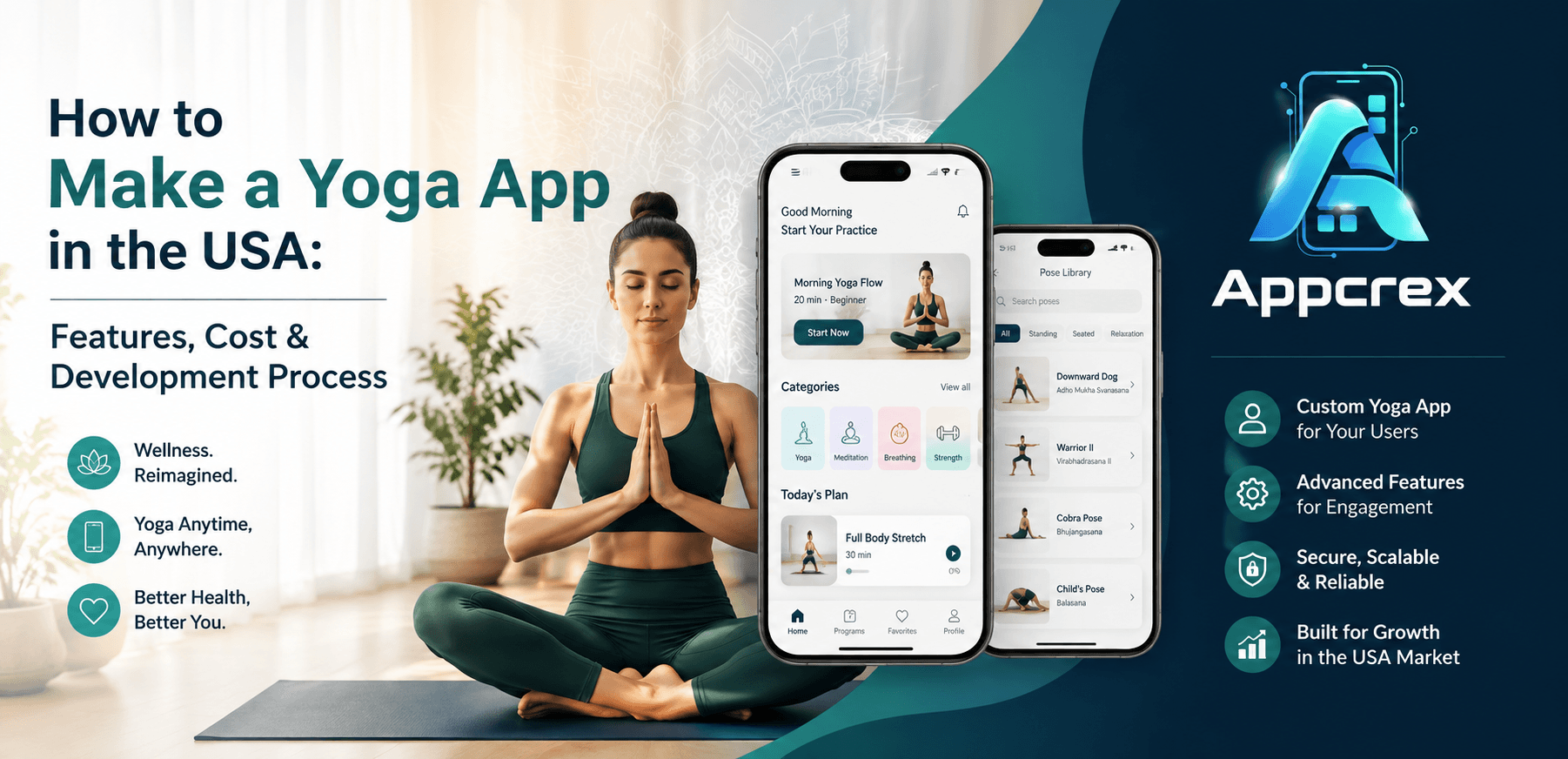
A typical home screen could include:
- Continue Practice
- Recommended For You
- Beginner Yoga
- Morning Yoga
- Evening Yoga
- Meditation
- Popular Classes
- Programs
- Live Classes
Search and filtering are also important. Platforms such as Glo allow users to filter classes by duration, level, teacher, style, focus, body part, props, and intensity.
4. Create the Yoga Content System
Content is one of the most important parts of a yoga app.
You may need different content categories such as:
- Hatha
- Vinyasa
- Yin
- Restorative
- Prenatal yoga
- Beginner yoga
- Power yoga
- Mobility
- Breathwork
- Meditation
You can also organize content by:
Duration
- 5 minutes
- 10 minutes
- 20 minutes
- 30 minutes
- 45 minutes
- 60+ minutes
Level
- Beginner
- Intermediate
- Advanced
Goal
- Flexibility
- Strength
- Relaxation
- Mobility
- Stress management
- Morning routine
- Sleep preparation
Structured programs can also improve engagement. Glo, for example, uses multi-class programs designed to guide users through practice over multiple sessions.
Essential Features for a Yoga App
The features you choose should match your business model.
User Registration and Profiles
Users should be able to create accounts using:
- Phone number
- Apple ID
The profile can store preferences, goals, completed sessions, saved classes, and subscription information.
Yoga Class Library
A searchable content library should allow users to quickly discover classes.
Each class can include:
- Video
- Instructor
- Duration
- Difficulty
- Yoga style
- Description
- Equipment
- Benefits
- Related classes
Search and Filters
Search helps users find specific content.
Useful filters include:
- Duration
- Level
- Style
- Instructor
- Goal
- Intensity
- Body area
Video Streaming
High-quality video streaming is central to an on-demand yoga app.
You may also support:
- Adaptive video quality
- Full-screen playback
- Captions
- Playback speed
- Download for offline viewing
- Chromecast
- AirPlay
Down Dog currently supports offline practices and casting through Chromecast or AirPlay, demonstrating how yoga apps can extend the experience beyond basic mobile playback.
Personalized Yoga Plans
Users can receive plans based on:
- Fitness level
- Goals
- Available time
- Previous activity
- Preferred yoga style
For example:
“30-Day Beginner Flexibility Program”
could automatically organize daily sessions for the user.
Progress Tracking
Progress tracking can include:
- Sessions completed
- Total practice time
- Weekly activity
- Monthly activity
- Streaks
- Completed programs
- Personal goals
This gives users a reason to return to the application.
Reminders and Notifications
Push notifications can remind users about:
- Scheduled classes
- Daily practice
- Upcoming live sessions
- New content
- Expiring subscriptions
- Personalized recommendations
Notifications should be useful rather than excessive.
Subscription and Payments
If your business uses a subscription model, the application can offer:
- Monthly membership
- Annual membership
- Free trial
- Premium classes
- One-time purchases
- Instructor sessions
- Corporate plans
For example, Glo currently offers both monthly and annual membership options.
Live Yoga Classes
A more advanced application can include live classes with:
- Video conferencing
- Instructor scheduling
- Class capacity
- User registration
- Chat
- Reminders
- Recording options
This feature can help create a stronger instructor-user relationship.
Also Read : AI App Development in the UK: Use Cases, Cost, Features & Development Guide
Advanced Features for a Yoga App
Once your core platform is working, you can add advanced functionality.
AI-Powered Recommendations
AI can analyze user preferences and activity to recommend suitable classes.
For example:
“You usually practice for 20 minutes in the morning. Try this beginner flexibility session.”
AI Yoga Assistant
An AI assistant can help users discover content, create routines, answer general app-related questions, and guide users toward appropriate classes.
However, health-related recommendations should be designed carefully and should not be presented as medical diagnosis or treatment.
Wearable Integration
You can connect the app with supported health and fitness platforms to bring activity data into the user’s wellness experience.
Down Dog, for example, says it can sync practice activity with Apple Health, Google Fit, and Fitbit.
Gamification
You can introduce:
- Practice streaks
- Badges
- Challenges
- Milestones
- Weekly goals
- Achievement levels
Gamification can make consistent practice more engaging.
Multi-Language Support
If you want to expand beyond the USA, consider supporting multiple languages from the beginning.
Down Dog currently offers practice in multiple languages with subtitles, showing how language support can become part of a global yoga product.
Admin Panel for a Yoga App
The admin dashboard controls the entire platform.
Important admin features include:
- User management
- Instructor management
- Video management
- Class categories
- Program management
- Subscription management
- Payment management
- Content moderation
- Push notifications
- Analytics
- Reports
- Reviews
- Coupons
- Revenue tracking
If you are building a marketplace, you may also need instructor payouts and commission management.
Instructor Panel
For an instructor-based yoga platform, instructors should have their own dashboard.
They can:
- Create profiles
- Upload classes
- Schedule live sessions
- Manage bookings
- View users
- Track earnings
- Respond to reviews
- Create programs
- Communicate with users
This makes the platform easier to scale as the number of instructors increases.
Technology Stack for Yoga App Development
The technology stack depends on your application requirements.
Mobile App
iOS: Swift / SwiftUI
Android: Kotlin
Cross-platform: Flutter or React Native
Backend
- Node.js
- Python
- Java
- PHP
- .NET
Database
- PostgreSQL
- MySQL
- MongoDB
- Firebase
Cloud
- AWS
- Google Cloud
- Microsoft Azure
Video Infrastructure
You may use:
- Cloud storage
- CDN
- Video transcoding
- Adaptive streaming
- Secure video delivery
Payments
Depending on the target market and business model, payment integrations can include:
- Stripe
- Apple Pay
- Google Pay
- Other supported payment providers
How Much Does It Cost to Make a Yoga App in the USA?
The cost depends on the number of platforms, content infrastructure, UI/UX complexity, streaming system, AI functionality, integrations, and administrative features.
A general development estimate is:
| Yoga App Type | Estimated Cost |
|---|---|
| Basic Yoga App / MVP | $20,000–$40,000 |
| Medium Yoga Platform | $40,000–$80,000 |
| Advanced Yoga App | $80,000–$150,000+ |
| Enterprise Yoga & Wellness Platform | $150,000–$300,000+ |
These are development estimates rather than fixed market prices. A final quote depends on the exact feature list, design requirements, platforms, integrations, content infrastructure, and development team.
If you are working with a yoga app development company in the USA, the development budget may also differ significantly from working with an offshore or distributed development team.
How Long Does It Take to Create a Yoga App?
The development timeline depends on the scope.
| Project | Approximate Timeline |
|---|---|
| Basic MVP | 3–5 months |
| Medium App | 5–8 months |
| Advanced Platform | 8–12+ months |
| Enterprise Platform | 12+ months |
Content production, video infrastructure, payment integration, live streaming, AI, and wearable integration can increase the timeline.
Yoga App Monetization Models
There are several ways to generate revenue from a yoga application.
Subscription
Users pay monthly or annually for premium access.
This is one of the most natural models for a content-focused yoga platform.
Freemium
Offer basic classes for free and charge for premium content.
Paid Programs
Users can purchase specialized programs separately.
Live Class Booking
Charge users for live instructor sessions or workshops.
Instructor Commission
For marketplace models, the platform can charge a commission on instructor bookings.
Corporate Wellness
Businesses can purchase memberships for employees.
This can turn the app into a B2B wellness platform in addition to its consumer offering.
Why Build a Yoga App for the USA Market?
The USA can be approached as a large digital wellness market with multiple possible customer segments.
Instead of building a generic yoga application, businesses can target a specific niche.
For example:
- Yoga app for beginners in the USA
- Corporate yoga app
- Prenatal yoga app
- Senior yoga app
- AI-powered yoga app
- Yoga and meditation app
- Yoga instructor marketplace
- Home yoga app
- Yoga app for athletes
A focused product can make marketing and content strategy easier.
Yoga App Development Process
A professional yoga app development company USA can typically follow this process:
Step 1: Business Analysis
Define the target audience, business model, monetization strategy, and competitors.
Step 2: Feature Planning
Separate MVP features from advanced functionality.
Step 3: UI/UX Design
Create the user journey, wireframes, visual design, and interactive prototype.
Step 4: Mobile App Development
Develop the iOS, Android, or cross-platform application.
Step 5: Backend Development
Build APIs, databases, authentication, subscriptions, content management, and other backend services.
Step 6: Integrations
Connect payment gateways, video infrastructure, analytics, health platforms, notifications, and other third-party services.
Step 7: Testing
Test the application across devices, screen sizes, operating systems, networks, and user flows.
Step 8: Launch
Publish the application on the Apple App Store and Google Play Store.
Step 9: Post-Launch Support
Continue improving the app based on user feedback, analytics, and new business requirements.
How to Make Your Yoga App Different?
The yoga app market already includes established products, so simply offering recorded videos may not be enough.
You can differentiate your platform through:
- Better personalization
- Specialized yoga programs
- Expert instructors
- AI-powered recommendations
- Live classes
- Community features
- Corporate wellness
- Wearable integration
- Offline access
- Better beginner experience
- Progress-based programs
The goal should be to solve a specific user problem better rather than adding every possible feature.
Why Choose AppCrex for Yoga App Development?
AppCrex can help businesses build custom yoga and wellness applications for startups, fitness brands, instructors, and established businesses.
Our yoga app development services can include:
- Custom UI/UX design
- iOS app development
- Android app development
- Cross-platform development
- Yoga video platforms
- Live yoga classes
- Subscription systems
- Payment integration
- Instructor dashboards
- Admin panels
- AI integration
- Wearable and health integrations
- Cloud and backend development
- API development
- Post-launch maintenance
Whether you need a focused MVP or a larger yoga and wellness ecosystem, the platform can be planned around your business model and target audience.
FAQs
Q. How much does it cost to make a yoga app?
A basic yoga app may cost around $20,000–$40,000, while an advanced platform can cost $80,000–$150,000+. Enterprise-level platforms may require $150,000 or more depending on functionality.
Q. How do I create a yoga app in the USA?
Start by defining your audience and business model, then plan the MVP, design the UI/UX, develop the mobile and backend systems, integrate payments and video infrastructure, test the application, and launch it on the relevant app stores.
Q. How long does it take to develop a yoga app?
A basic MVP may take around 3–5 months. More advanced yoga platforms with live streaming, AI, subscriptions, wearables, and large content libraries can take 8–12 months or longer.
Q. What features should a yoga app have?
Important features include user profiles, yoga video classes, search and filters, personalized programs, progress tracking, notifications, subscriptions, payments, instructor profiles, and an admin dashboard.
Q. Can I add AI to a yoga app?
Yes. AI can be used for content recommendations, personalized routines, conversational assistance, user engagement, and other app functions. AI features should be designed carefully when they involve health or wellness guidance.
Q. Can a yoga app include live classes?
Yes. Live classes can be added using video streaming or conferencing technology, along with scheduling, booking, payments, notifications, and instructor management.
Q. Can I build a yoga app for both iOS and Android?
Yes. You can develop separate native applications or use technologies such as Flutter or React Native to create a cross-platform application.
Conclusion
Creating a yoga app in the USA involves much more than developing a mobile application. You need a clear business model, useful yoga content, simple navigation, reliable video delivery, personalized experiences, secure payments, and a backend that can scale as your user base grows.
If you are planning to make a yoga app, start with the core experience your target users actually need. Once the MVP gains traction, you can expand it with AI recommendations, live classes, wearable integrations, advanced programs, community features, and other wellness services.
The right development strategy can turn a simple yoga application into a scalable digital wellness platform.
Build Your Custom Yoga App with AppCrex
Planning to create a yoga app in the USA? AppCrex can help you turn your yoga or wellness idea into a scalable mobile platform with custom UI/UX, video classes, subscriptions, payments, AI, instructor management, admin dashboards, and third-party integrations.
Hire mobile app developers from AppCrex to build your custom yoga app for the USA and global markets.