📌 Key Takeaways
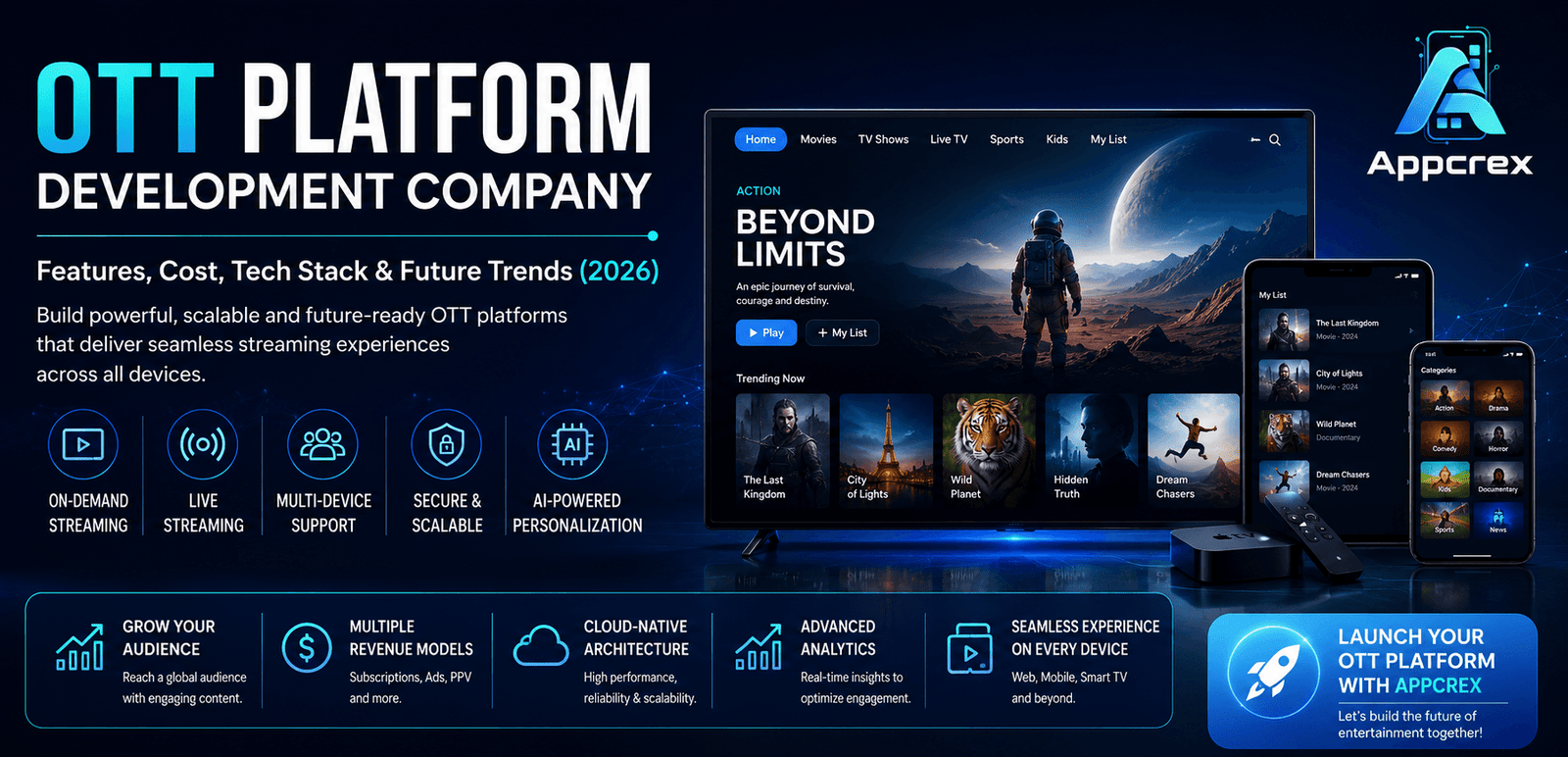
- OTT platforms are transforming entertainment, education, sports, fitness, and digital content delivery.
- AI-powered recommendations improve viewer engagement and retention.
- OTT platform development costs can range from $30,000 to $500,000+ depending on complexity.
- Choosing the right technology stack is critical for scalability and streaming performance.
- Businesses can generate recurring revenue through subscriptions, ads, and pay-per-view models.
Introduction
Remember when people had to wait for their favorite TV show to air at a specific time?
Those days are gone.
Today’s consumers expect instant access to movies, TV shows, sports, educational content, podcasts, and live events whenever and wherever they want. This shift in consumer behavior has fueled the explosive growth of OTT (Over-The-Top) platforms.
Platforms like Netflix, Disney+, Amazon Prime Video, Hulu, and ESPN+ have completely changed the entertainment landscape. Instead of relying on traditional cable television, users now stream content directly over the internet using smartphones, tablets, smart TVs, laptops, and connected devices.
This growing demand has created tremendous opportunities for businesses, startups, broadcasters, educational institutions, sports organizations, and content creators to launch their own OTT platforms.
At AppCrex, we help businesses develop powerful OTT platforms that deliver seamless streaming experiences while creating sustainable revenue streams.
In this complete guide, you’ll learn everything about OTT platform development, including features, business models, development process, technology stack, costs, challenges, and future trends.
What is OTT Platform Development?
OTT Platform Development refers to the process of building a digital streaming platform that delivers video, audio, live broadcasts, and on-demand content directly to users via the internet.
Unlike traditional television services, OTT platforms allow users to access content anytime and from any device.
Modern OTT platforms support:
- Smartphones
- Tablets
- Smart TVs
- Web Browsers
- Gaming Consoles
- Streaming Devices
The primary goal of OTT development is to provide users with a smooth, personalized, and engaging content consumption experience.
Why is OTT Platform Development Booming?
The OTT industry is experiencing unprecedented growth because consumer preferences have shifted dramatically toward on-demand content.
Growing Internet Penetration
High-speed internet and 5G connectivity have made streaming more accessible than ever.
Mobile-First Consumption
Most users now consume content directly from mobile devices.
Personalized Experiences
Viewers expect content recommendations tailored to their interests.
Global Reach
OTT platforms allow businesses to distribute content worldwide without geographical limitations.
Recurring Revenue Opportunities
Subscription-based models generate predictable monthly and annual income.
Types of OTT Platforms
Video on Demand (VOD)
Users can watch content whenever they want.
Examples:
- Netflix
- Disney+
- Amazon Prime Video
Live Streaming OTT Platforms
Designed for:
- Sports Events
- Concerts
- Webinars
- Corporate Events
- Religious Broadcasts
Educational OTT Platforms
Ideal for:
- Online Learning
- Corporate Training
- Skill Development Programs
Fitness OTT Platforms
Popular among:
- Fitness Coaches
- Wellness Brands
- Personal Trainers
Niche OTT Platforms
Target specific audiences such as:
- Regional Content
- Anime
- Kids Content
- Religious Communities
Must-Have Features of an OTT Platform
User Registration & Login
Secure authentication options including:
- Email Login
- Social Login
- OTP Authentication
- Multi-Factor Authentication
User Profiles
Allow multiple users under one subscription account.
Content Management System (CMS)
Manage:
- Videos
- Categories
- Metadata
- Content Scheduling
Search & Discovery
Users should easily find content through:
- Smart Search
- Categories
- Filters
- Tags
AI Recommendation Engine
Recommend content based on:
- Viewing History
- Watch Time
- User Preferences
- Behavioral Data
Watchlist
Allow users to save content for later viewing.
Continue Watching
Resume content from where users left off.
Offline Viewing
Enable video downloads for offline access.
Subscription Management
Support:
- Monthly Plans
- Annual Plans
- Premium Memberships
Payment Gateway Integration
Integrate:
- Stripe
- PayPal
- Apple Pay
- Google Pay
Push Notifications
Notify users about:
- New Releases
- Subscription Renewals
- Personalized Recommendations
Advanced OTT Features for 2026
Modern OTT platforms are leveraging AI and advanced technologies.
AI-Based Recommendations
Suggest personalized content automatically.
Voice Search
Allow users to search content using voice commands.
AI Content Tagging
Automatically categorize videos.
Multi-Language Support
Expand globally through localization.
Interactive Streaming
Increase engagement with polls and live interactions.
Live Commerce
Allow users to purchase products directly during streams.
OTT Platform Monetization Models
SVOD (Subscription Video on Demand)
Users pay recurring subscription fees.
Examples:
- Netflix
- Disney+
AVOD (Advertising Video on Demand)
Content is free but supported by ads.
Examples:
- YouTube
- Pluto TV
TVOD (Transactional Video on Demand)
Users pay for individual content.
Examples:
- Movie Rentals
Hybrid Model
Combines subscriptions and advertising.
OTT Platform Development Process
Step 1: Market Research
Identify:
- Target Audience
- Competitors
- Content Strategy
Step 2: Business Model Selection
Choose:
- Subscription
- Advertising
- Pay-Per-View
- Hybrid
Step 3: UI/UX Design
Create intuitive user experiences.
Step 4: Backend Development
Build secure and scalable infrastructure.
Step 5: Video Streaming Integration
Implement:
- HLS Streaming
- Adaptive Bitrate Streaming
- CDN Networks
Step 6: Testing
Perform:
- Functional Testing
- Security Testing
- Load Testing
- Streaming Quality Testing
Step 7: Deployment
Launch across:
- Android
- iOS
- Web
- Smart TVs
Best Technology Stack for OTT Platform Development
Frontend
- React.js
- Next.js
- Angular
Mobile Development
- React Native
- Flutter
- Swift
- Kotlin
Backend
- Node.js
- Python
- Laravel
- Django
Databases
- PostgreSQL
- MongoDB
- MySQL
Cloud Infrastructure
- AWS
- Azure
- Google Cloud
Streaming Technologies
- HLS
- MPEG-DASH
- WebRTC
- RTMP
OTT Platform Development Cost
| Platform Type | Estimated Cost |
|---|---|
| Basic MVP | $30,000 – $60,000 |
| Mid-Level Platform | $60,000 – $150,000 |
| Enterprise Platform | $150,000 – $500,000+ |
| AI-Powered OTT Platform | $200,000 – $700,000+ |
Cost Factors
- Number of Features
- Smart TV Support
- Cloud Infrastructure
- Streaming Quality
- AI Integration
- Security Requirements
Challenges in OTT Platform Development
Content Licensing
Obtaining legal rights for content distribution.
Streaming Performance
Maintaining smooth playback during peak traffic.
Security
Preventing piracy and unauthorized access.
Scalability
Supporting millions of concurrent viewers.
User Retention
Keeping audiences engaged through personalized experiences.
OTT Trends Shaping 2026
The future of OTT development includes:
- Generative AI Recommendations
- AI Content Creation
- Interactive Streaming
- Live Commerce
- Cloud-Native Architectures
- Multi-CDN Deployments
- Hyper-Personalized Experiences
- FAST Channels (Free Ad-Supported TV)
Also Read : What Is an MVP in App Development? A Complete Guide
Why Choose AppCrex for OTT Platform Development?
AppCrex specializes in building next-generation OTT platforms for startups, media companies, educational institutions, sports organizations, and enterprises.
Our expertise includes:
- OTT App Development
- Video Streaming Platforms
- Smart TV Applications
- OTT Web Development
- AI Recommendation Engines
- Subscription Management Systems
- Cloud Infrastructure
- OTT Analytics Platforms
- Maintenance & Support
We build secure, scalable, and feature-rich OTT platforms that help businesses grow audiences and generate recurring revenue.
Frequently Asked Questions
How much does OTT platform development cost?
Development costs typically range from $30,000 to $500,000+ depending on complexity and infrastructure requirements.
How long does it take to build an OTT platform?
A basic OTT MVP may take 4–6 months, while enterprise-grade platforms can take 8–12 months.
Can AI improve OTT platforms?
Yes. AI helps with recommendations, search, personalization, analytics, and content management.
Which monetization model is best?
SVOD, AVOD, TVOD, or Hybrid models can be selected based on your audience and business goals.
Does AppCrex provide OTT platform maintenance?
Yes. AppCrex offers ongoing support, updates, performance optimization, cloud management, and feature enhancements.
Final Thoughts
OTT platforms have become one of the most profitable digital business models in the modern content economy. Whether you’re a media company, educator, fitness brand, sports organization, or entrepreneur, launching an OTT platform can help you reach global audiences, create recurring revenue streams, and build long-term customer relationships.
With expertise in streaming technologies, AI integration, cloud infrastructure, and mobile app development, AppCrex helps businesses build future-ready OTT platforms that stand out in a competitive market.