The electric vehicle industry is growing rapidly, and with it, the demand for convenient charging solutions is also increasing. EV drivers no longer want to waste time searching for available charging stations or waiting in long queues. This is where EV charging station finder apps are transforming the driving experience.
Businesses, startups, and mobility brands are now investing in smart EV charging solutions that help users locate nearby charging stations, monitor charging availability, make payments, and plan trips more efficiently. Companies like Appcrex are helping businesses build advanced EV charging station finder applications that align with the latest digital mobility trends.
In this blog, we will explore how an EV charging station finder app works, the technology behind it, important features, and why these apps are becoming essential for the future of transportation.
Understanding an EV Charging Station Finder App
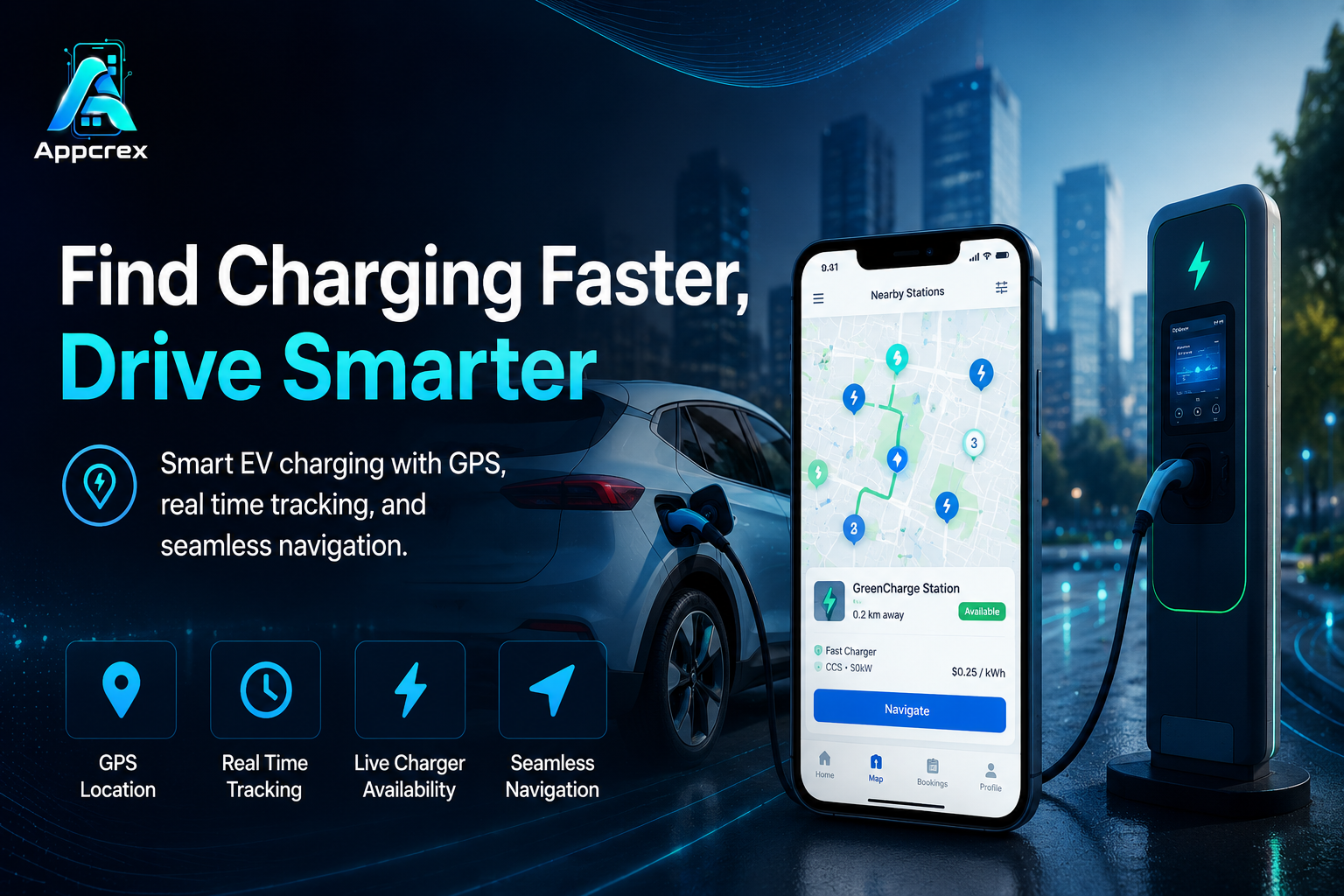
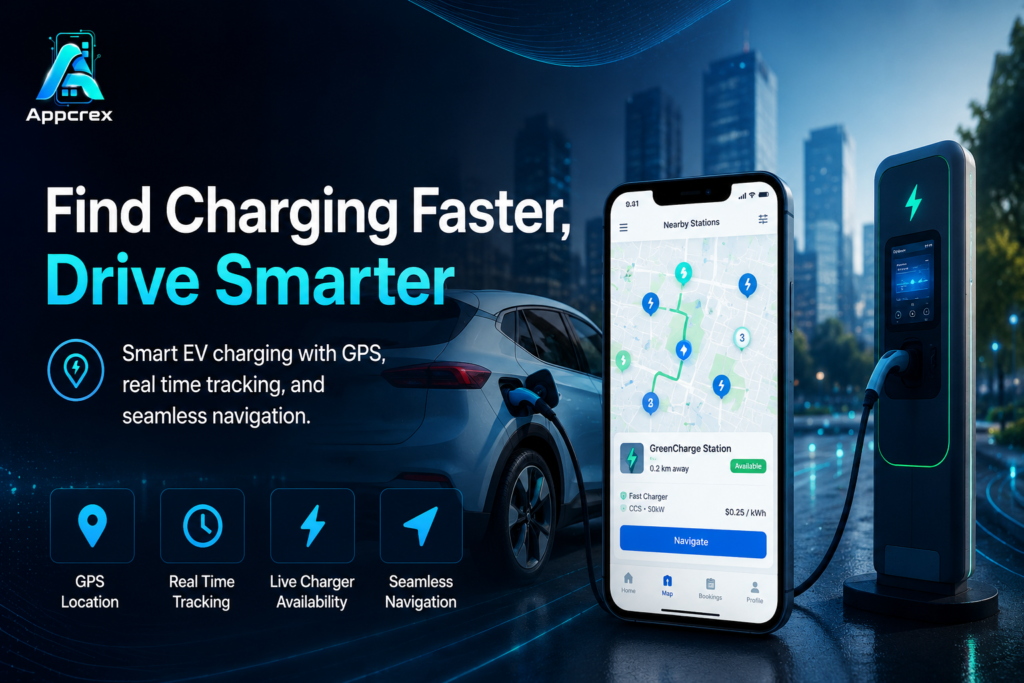
An EV charging station finder app is a mobile or web based application that helps electric vehicle owners locate charging stations nearby or along a planned route. These apps provide real time information such as:
- Charging station location
- Availability status
- Connector type compatibility
- Charging speed
- Pricing details
- Navigation support
- Payment integration
The main goal of these apps is to remove range anxiety and improve convenience for EV users.
Why EV Charging Finder Apps Are Trending
The rise in EV adoption has created a strong need for better charging infrastructure management. Drivers expect seamless digital experiences similar to ride sharing or food delivery apps.
Modern EV users want:
- Real time station availability
- Fast navigation
- Online booking
- Digital payments
- Smart route planning
- Charging history tracking
As smart cities and sustainable transportation continue growing, EV charging station finder apps are becoming a key part of connected mobility ecosystems.
How Does an EV Charging Station Finder App Work?
An EV charging station finder app works through a combination of GPS technology, cloud databases, APIs, real time data synchronization, and payment systems.
Let us break down the complete workflow step by step.
User Registration and Profile Setup
The first step involves creating a user account. Users can sign up using:
- Email address
- Mobile number
- Social login
The profile may also include:
- Vehicle model
- Preferred charging type
- Battery specifications
- Payment details
This information helps the app personalize recommendations.
Location Detection Using GPS
The app uses the smartphone’s GPS feature to identify the user’s current location. Once the location is detected, the app searches for nearby EV charging stations within a selected radius.
This process allows users to quickly discover available charging points without manually entering addresses.
Real Time Charging Station Data
One of the most important parts of the app is the real time charging station database.
The app collects live data from charging networks using APIs. This data may include:
- Number of available charging ports
- Occupied chargers
- Estimated waiting time
- Charging speed
- Maintenance status
This helps users avoid busy or unavailable stations.
Smart Search and Filtering
Users can filter charging stations based on various preferences such as:
- Fast charging stations
- Connector type
- Distance
- Pricing
- Ratings and reviews
- Brand networks
Advanced filtering improves user experience and helps drivers find the most suitable charging option quickly.
Interactive Map Integration
Most EV charging finder apps integrate maps for smooth navigation.
Popular map technologies include:
- Google Maps
- Apple Maps
- OpenStreetMap
The map interface displays charging stations visually, making it easier for users to plan routes and charging stops.
Modern EV apps go beyond simple station searching.
They help users plan long distance trips by calculating:
- Battery range
- Charging stops
- Traffic conditions
- Distance between stations
This feature is especially useful for travelers who want uninterrupted journeys.
Charger Compatibility Check
Different electric vehicles use different charging connectors and standards.
The app checks compatibility between the user’s vehicle and available charging stations to avoid charging issues.
Common connector types include:
- CCS
- CHAdeMO
- Type 2
- Tesla connectors
Compatibility filtering improves charging efficiency and user trust.
Real Time Notifications
Push notifications keep users informed about important updates such as:
- Charger availability
- Charging completion
- Reservation reminders
- Payment confirmations
- Nearby charging stations
Notifications enhance user engagement and convenience.
Online Booking and Reservations
Some advanced EV charging apps allow users to reserve charging slots before arriving.
This feature reduces waiting times and improves station management.
Reservation systems often include:
- Slot selection
- Time scheduling
- Booking confirmation
- Cancellation options
Integrated Payment Gateway
Digital payment integration is another core feature.
Users can pay directly within the app using:
- Credit cards
- Debit cards
- Mobile wallets
- UPI payments
- Subscription plans
Secure payment gateways improve user trust and streamline the charging process.
Charging Session Monitoring
Once charging starts, users can monitor their charging session in real time.
The app may display:
- Charging progress
- Battery percentage
- Estimated completion time
- Energy consumption
- Cost details
This creates a transparent and user friendly experience.
Backend Infrastructure of an EV Charging Finder App
The backend is the engine behind the application.
It handles:
- User management
- Charging station database
- API integrations
- Payment processing
- Data synchronization
- Analytics
Cloud based infrastructure ensures scalability and smooth performance even with thousands of active users.
Technologies Used in EV Charging Finder App Development
Building an advanced EV charging app requires multiple technologies.
Frontend Technologies
Frontend technologies help create the user interface.
Common options include:
- Flutter
- React Native
- Swift
- Kotlin
Backend Technologies
Backend systems manage server side operations.
Popular technologies include:
Database Systems
Databases store charging station and user data.
Common database solutions include:
- PostgreSQL
- MongoDB
- MySQL
APIs and Third Party Integrations
APIs help apps connect with charging station networks and mapping services.
These integrations provide:
- Real time charger availability
- Navigation services
- Payment systems
- Traffic data
AI and Smart Features in Modern EV Apps
Artificial intelligence is now enhancing EV charging experiences.
AI powered features may include:
- Predictive charger availability
- Smart route optimization
- Personalized station suggestions
- Dynamic pricing recommendations
- Usage pattern analysis
These innovations improve efficiency and user satisfaction.
Benefits of an EV Charging Station Finder App
- Convenience for EV Drivers: Drivers can easily locate nearby stations and avoid unnecessary travel.
- Reduced Range Anxiety: Real time station availability gives drivers confidence during long trips.
- Improved Charging Network Utilization: Station operators can manage traffic more efficiently.
- Better User Experience: Digital payments, reservations, and navigation simplify the charging process.
- Data Driven Insights; Businesses can analyze user behavior and optimize operations.
Industries Benefiting From EV Charging Apps
Several industries are adopting EV charging finder applications, including:
- Automotive companies
- Smart city projects
- Fleet management businesses
- Charging station operators
- Ride sharing platforms
- Logistics companies
The increasing focus on sustainability is driving more investment into EV infrastructure solutions.
Important Features Every EV Charging App Should Include
If you are planning to build an EV charging station finder app, these features are essential:
- User registration
- GPS location tracking
- Interactive maps
- Real time charger status
- Smart filters
- Route planning
- Push notifications
- Online reservations
- Secure payments
- Charging analytics
- Customer support
- Reviews and ratings
These features improve user retention and overall app performance.
Challenges in EV Charging App Development
Despite the opportunities, there are several challenges in development.
- Real Time Data Accuracy: Maintaining accurate live charger information can be difficult.
- Charging Network Integration: Different charging providers may use different systems and protocols.
- Scalability: Apps must handle growing user demand without performance issues.
- Security and Payment Protection: User data and payment systems require strong security measures.
Future of EV Charging Station Finder Apps
The future of EV charging apps looks highly promising.
Upcoming trends may include:
- Voice enabled charging search
- Autonomous vehicle integration
- Blockchain based payments
- AI driven charging recommendations
- Smart grid connectivity
- Wireless charging station discovery
As EV adoption grows globally, these apps will become even more advanced and essential.
Why Businesses Are Investing in EV Charging Apps
Businesses understand that EV infrastructure is a long term opportunity.
An EV charging finder app helps businesses:
- Build customer loyalty
- Generate subscription revenue
- Improve operational efficiency
- Expand digital mobility services
- Support sustainability goals
Companies looking to enter the EV market are increasingly partnering with experienced development firms like Appcrex to build scalable and feature rich charging solutions.
FAQ Section
What is an EV charging station finder app?
An EV charging station finder app helps electric vehicle users locate nearby charging stations, check availability, navigate routes, and make payments digitally.
How does an EV charging app find nearby stations?
The app uses GPS technology and map integrations to detect the user’s location and display nearby charging stations.
Can users reserve charging slots through the app?
Yes, many advanced EV charging apps allow users to reserve charging slots in advance.
What technologies are used to develop EV charging apps?
Technologies like Flutter, React Native, Node.js, Firebase, APIs, GPS, and cloud databases are commonly used.
Are EV charging apps secure for online payments?
Yes, secure payment gateways and encryption technologies help protect user transactions and sensitive information.
Why are EV charging apps important for the future?
These apps improve charging convenience, reduce range anxiety, support smart mobility, and enhance EV infrastructure management.
Final Thoughts
EV charging station finder apps are reshaping the future of transportation by making EV charging smarter, faster, and more accessible. With advanced technologies like AI, GPS, cloud computing, and real time analytics, these applications are becoming an essential tool for modern EV drivers.
Businesses that invest in EV charging app development today are positioning themselves for the rapidly growing electric mobility market. With the right features and scalable infrastructure, an EV charging app can deliver exceptional user experiences while supporting sustainable transportation goals.
Ready to build a powerful EV charging station finder app for your business? Explore smart EV app development solutions with Appcrex and stay ahead in the future of electric mobility.