📌 Key Takeaways
- Choose the Right App Model: Identify whether you’re building a workout app, gym management platform, personal trainer app, or nutrition solution.
- Focus on User Experience: An intuitive interface, personalized workouts, and progress tracking drive higher engagement and retention.
- Leverage AI & Wearables: AI coaching, smart recommendations, and wearable integrations enhance user value and differentiate your app.
- Plan Your Budget Wisely: Development costs depend on features, platforms, integrations, AI capabilities, and scalability.
- Work with an Experienced Development Partner: A trusted fitness app development company ensures your application is secure, scalable, and ready for long-term growth.
Introduction
The global fitness industry has experienced a remarkable digital transformation in recent years. With the growing adoption of smartphones, wearable devices, and AI-powered health technologies, people now expect personalized fitness experiences that fit seamlessly into their daily lives. From workout planning and calorie tracking to virtual personal training and real-time health monitoring, fitness apps have become an essential part of modern wellness.
According to industry reports, the global fitness app market continues to expand as more consumers prioritize healthier lifestyles and businesses invest in digital fitness solutions. Whether it’s a gym, fitness startup, wellness brand, healthcare provider, or personal trainer, a custom fitness app helps engage users, improve retention, and create new revenue opportunities.
If you’re planning to launch a fitness platform, partnering with an experienced Fitness App Development Company ensures your application is secure, scalable, feature-rich, and built to meet evolving user expectations.
At AppCrex, we develop custom fitness applications for startups, gyms, healthcare providers, sports organizations, and enterprises worldwide. Our team builds AI-powered fitness apps with workout tracking, wearable integrations, nutrition management, video coaching, subscription management, and personalized health insights.
What is a Fitness App?
A fitness app is a mobile or web application that helps users improve their physical health by providing workout programs, activity tracking, nutrition guidance, health monitoring, and personalized fitness recommendations.
Modern fitness applications combine technologies such as Artificial Intelligence (AI), wearable device integration, cloud computing, and real-time analytics to deliver customized fitness experiences.
Depending on the target audience, fitness apps can support:
- Workout Planning
- Personal Training
- Nutrition Tracking
- Step Counting
- Running & Cycling Tracking
- Yoga & Meditation
- Weight Management
- Heart Rate Monitoring
- Sleep Tracking
- Virtual Coaching
- Community Challenges
Instead of relying solely on gym visits or personal trainers, users can now manage their health anytime, anywhere using a fitness app.
Why Invest in Fitness App Development?
The fitness industry has become increasingly digital, creating new opportunities for businesses to engage users and generate recurring revenue.
Here are some key reasons why businesses invest in fitness app development.
Growing Market Demand
Consumers are becoming more health-conscious, driving demand for digital fitness solutions. Mobile fitness apps have become popular among individuals seeking convenient ways to exercise, monitor their health, and achieve wellness goals.
Increased Smartphone & Wearable Usage
Millions of users now rely on smartphones, smartwatches, and fitness trackers to monitor daily activities such as steps, calories burned, heart rate, sleep quality, and workout performance.
Integration with devices like Apple Watch, Fitbit, Garmin, and Samsung Galaxy Watch has significantly expanded the capabilities of modern fitness apps.
Recurring Revenue Opportunities
Fitness apps offer multiple monetization models, including:
- Monthly Subscriptions
- Annual Memberships
- Premium Workout Plans
- Personal Coaching
- Nutrition Programs
- In-App Purchases
- Online Classes
These recurring revenue streams make fitness apps an attractive investment for businesses.
Better User Engagement
Push notifications, daily challenges, achievement badges, progress tracking, and personalized recommendations keep users motivated and encourage long-term engagement.
AI-Powered Personalization
Artificial Intelligence enables fitness apps to recommend customized workout plans, meal suggestions, and training schedules based on individual goals, fitness levels, and progress.
This creates a highly personalized user experience that improves customer satisfaction and retention.
Business Growth & Brand Loyalty
A custom fitness app strengthens customer relationships by offering convenient access to fitness services, expert guidance, and ongoing support. Businesses can expand their reach beyond physical locations and build long-term brand loyalty.
Types of Fitness Apps
Fitness apps are designed to meet different health and wellness goals. Choosing the right type depends on your target audience, business model, and services.
Workout & Exercise Apps
Workout apps provide structured training programs for users based on their fitness goals and experience levels.
Features
- Exercise Library
- Video Tutorials
- Workout Plans
- Progress Tracking
- Daily Challenges
- AI Recommendations
Best For
- Fitness Startups
- Personal Trainers
- Gyms
- Wellness Brands
Gym Management Apps
Gym applications help members and fitness centers manage memberships, schedules, trainer bookings, and workout tracking.
Features
- Membership Management
- Trainer Booking
- Class Scheduling
- Attendance Tracking
- Payment Management
- Notifications
Personal Trainer Apps
These applications allow certified trainers to provide personalized coaching remotely.
Features
- Custom Workout Plans
- Client Management
- Video Consultations
- Progress Reports
- Messaging
- Goal Tracking
Nutrition & Diet Apps
Nutrition apps help users maintain healthy eating habits by tracking calories, meal plans, hydration, and nutritional intake.
Features
- Calorie Counter
- Meal Planner
- Food Database
- Water Intake Tracker
- Nutrition Reports
- Barcode Scanner
Running & Cycling Apps
Designed for outdoor fitness enthusiasts, these apps use GPS technology to track routes, speed, distance, and performance.
Features
- GPS Tracking
- Route History
- Pace Monitoring
- Distance Tracking
- Performance Analytics
- Achievement Badges
Yoga & Meditation Apps
These apps focus on improving mental and physical well-being through guided yoga sessions, breathing exercises, and meditation programs.
Features
- Guided Sessions
- Breathing Exercises
- Meditation Programs
- Progress Tracking
- Sleep Stories
- Relaxation Music
Wearable Fitness Apps
Wearable fitness applications integrate with smart devices to collect real-time health data.
Supported Devices
- Apple Watch
- Fitbit
- Garmin
- Samsung Galaxy Watch
- Wear OS Devices
These apps track heart rate, sleep, steps, calories burned, oxygen levels, and other health metrics.
How to Build a Fitness App?
Building a successful fitness app requires more than an attractive interface. It involves identifying your target audience, selecting the right business model, implementing advanced technologies, and delivering a seamless user experience. Whether you’re creating an app for gyms, personal trainers, healthcare providers, or fitness startups, following a structured development process increases the chances of long-term success.
Here’s a step-by-step guide to building a fitness app.
Step 1: Define Your Business Idea
The first step is identifying the purpose of your fitness app and the audience you want to serve.
Ask yourself:
- Who is your target audience?
- What problem will your app solve?
- Which fitness niche will you target?
- How will your app generate revenue?
Having clear business objectives helps shape the app’s features and development strategy.
Step 2: Choose the Right Fitness App Type
Different businesses require different fitness solutions. Selecting the right app category ensures that your product meets user expectations.
Popular fitness app categories include:
- Workout & Exercise Apps
- Gym Management Apps
- Personal Trainer Apps
- Nutrition & Diet Apps
- Yoga & Meditation Apps
- Running & Cycling Apps
- Fitness Tracking Apps
- Wearable Fitness Apps
Choosing the right model also helps prioritize the features required for your MVP.
Step 3: Conduct Market Research
Before development begins, analyze competitors and understand user expectations.
Research should include:
- Competitor Analysis
- User Pain Points
- Trending Features
- Monetization Models
- Market Demand
Studying successful apps like MyFitnessPal, Strava, Nike Training Club, and Fitbit can provide valuable insights into user preferences and industry trends.
Step 4: Design an Intuitive UI/UX
A fitness app should be simple, visually engaging, and easy to navigate.
The design process includes:
- User Journey Mapping
- Wireframing
- Interactive Prototypes
- Responsive Mobile Design
- Accessibility Optimization
An intuitive interface encourages users to engage with the app regularly and improves retention rates.
Step 5: Develop an MVP (Minimum Viable Product)
Instead of launching with every possible feature, start with an MVP that includes the core functionality.
A typical MVP includes:
- User Registration
- Profile Management
- Workout Plans
- Activity Tracking
- Progress Dashboard
- Push Notifications
- Subscription Plans
Launching an MVP allows you to gather user feedback, validate your concept, and improve the product before adding advanced features.
Also Read : What Is an MVP in App Development? A Complete Guide
Step 6: Add Advanced Features
Once the MVP is validated, you can expand the app with premium capabilities such as:
- AI Workout Recommendations
- Nutrition Planning
- Live Video Coaching
- Community Challenges
- Wearable Integration
- Leaderboards
- Personalized Health Insights
- Smart Notifications
These features improve user engagement and create additional revenue opportunities.
Step 7: Test the Application
Thorough testing ensures that your fitness app performs reliably across different devices and operating systems.
Testing should include:
- Functional Testing
- Performance Testing
- Security Testing
- Compatibility Testing
- API Testing
- User Acceptance Testing (UAT)
Testing minimizes bugs and ensures a smooth user experience.
Step 8: Launch & Maintain the App
After successful testing, launch the app on Android, iOS, and the web (if applicable).
Post-launch activities include:
- Performance Monitoring
- Bug Fixes
- Security Updates
- Feature Enhancements
- User Feedback Analysis
- Regular Maintenance
Continuous updates help keep users engaged and ensure compatibility with new devices and operating systems.
Must-Have Features of a Fitness App
A successful fitness app should provide an engaging and personalized experience while simplifying health and wellness management. Most fitness applications include three primary modules:
- User App
- Trainer Panel
- Admin Dashboard
User App Features
The user application is where people track workouts, monitor health, and interact with trainers.
User Registration & Profile Management
Allow users to register using email, phone number, or social accounts and create personalized fitness profiles.
Profile information may include:
- Age
- Height
- Weight
- Fitness Goals
- Activity Level
- Medical Conditions (optional)
Personalized Workout Plans
Offer customized workout routines based on:
- Fitness Goals
- Experience Level
- Body Type
- Available Equipment
- Workout Preferences
Personalized plans increase engagement and help users achieve better results.
Exercise Library
Include a comprehensive library of exercises with:
- HD Videos
- Step-by-Step Instructions
- Muscle Group Information
- Difficulty Levels
- Equipment Requirements
A rich exercise library enhances the learning experience and supports users of all fitness levels.
Activity & Progress Tracking
Enable users to monitor their fitness journey through:
- Weight Tracking
- BMI
- Calories Burned
- Workout History
- Daily Steps
- Heart Rate
- Sleep Data
Visual charts and progress reports help users stay motivated.
Nutrition & Meal Planner
Support healthy eating habits with features such as:
- Calorie Tracking
- Meal Plans
- Water Intake Monitoring
- Macronutrient Tracking
- Healthy Recipes
- Barcode Scanner
Wearable Device Integration
Connect with popular wearable devices for real-time health monitoring.
Supported platforms include:
- Apple Health
- Google Fit
- Fitbit
- Garmin
- Samsung Health
Push Notifications
Keep users engaged through timely notifications for:
- Workout Reminders
- Water Intake
- Meal Times
- Daily Challenges
- Goal Achievements
- Subscription Renewals
Also Read : Push Notification Guide: Benefits, Types & Best Practices (2026)
Community & Social Features
Increase motivation by allowing users to:
- Join Fitness Challenges
- Share Achievements
- Follow Friends
- Compare Progress
- Participate in Leaderboards
Building a fitness community encourages long-term user engagement.
Subscription & Membership Management
Support multiple subscription models, including:
- Monthly Plans
- Annual Memberships
- Premium Content
- Personal Training Packages
Secure payment integration ensures a smooth subscription experience.
Trainer Panel Features
A dedicated trainer panel enables fitness coaches, gym instructors, and personal trainers to efficiently manage clients, create customized workout programs, monitor progress, and communicate with users from a centralized dashboard.
Client Management
Trainers can manage all client information from a single interface.
Features
- View Client Profiles
- Fitness Goals
- Workout History
- Health Metrics
- Subscription Status
- Progress Reports
This helps trainers deliver more personalized coaching and improve client retention.
Workout Plan Management
Trainers should be able to create and assign customized workout plans based on each client’s fitness level and objectives.
Features
- Create Workout Programs
- Assign Daily Exercises
- Set Repetitions & Sets
- Schedule Weekly Plans
- Update Workouts Anytime
Personalized workout planning helps users achieve better results while keeping them engaged.
Nutrition Plan Management
Fitness is closely linked to nutrition. Trainers can create personalized meal plans based on a user’s goals.
Features
- Daily Meal Plans
- Calorie Recommendations
- Macronutrient Tracking
- Healthy Recipes
- Water Intake Goals
- Diet Progress
Progress Monitoring
Monitor client performance through real-time analytics.
Track:
- Weight Changes
- BMI
- Calories Burned
- Workout Completion
- Body Measurements
- Heart Rate Trends
- Daily Activity
Progress dashboards help trainers adjust fitness programs based on actual performance.
Video Coaching & Live Sessions
Provide personalized coaching through online sessions.
Features
- HD Video Calls
- Live Workout Classes
- Screen Sharing
- Session Recording
- Group Training
Virtual coaching expands business opportunities beyond physical gym locations.
Messaging & Notifications
Allow trainers to communicate directly with clients.
Examples include:
- Workout Feedback
- Diet Suggestions
- Appointment Reminders
- Motivation Messages
- Progress Updates
Performance Analytics
Provide trainers with detailed insights such as:
- Active Clients
- Workout Completion Rate
- Client Retention
- Average Progress
- Revenue Reports
These reports help trainers improve coaching quality and business performance.
Also Read : What Features Make a Fitness App Successful Today?
Admin Dashboard Features
The admin dashboard acts as the control center of the fitness platform, allowing administrators to manage users, trainers, subscriptions, content, payments, and overall system performance.
User Management
Admins can:
- Add/Edit/Delete Users
- Manage User Accounts
- Reset Passwords
- Verify Profiles
- Suspend Accounts
- View Activity Logs
Trainer Management
Manage all trainer-related operations, including:
- Trainer Registration
- Certification Verification
- Profile Approval
- Performance Monitoring
- Revenue Tracking
Subscription Management
Handle subscription plans and premium memberships.
Features
- Monthly Plans
- Annual Plans
- Coupon Codes
- Discounts
- Membership Renewals
- Subscription Reports
Payment Management
Track all financial transactions from a centralized dashboard.
Manage:
- Payments
- Refunds
- Invoices
- Revenue Reports
- Taxes
- Commission Management
Content Management System (CMS)
Update app content without requiring development changes.
Manage:
- Workout Videos
- Exercise Library
- Nutrition Plans
- Blog Articles
- Push Notifications
- Promotional Banners
Reports & Analytics
Generate business reports such as:
- User Growth
- Active Users
- Revenue
- Workout Completion
- Subscription Statistics
- Trainer Performance
- Customer Retention
These insights support strategic business decisions.
Role-Based Access Control (RBAC)
Assign permissions based on user roles.
Examples:
- Super Admin
- Admin
- Trainer
- Support Staff
- Content Manager
This enhances security and operational efficiency.
AI Features in Fitness Apps
Artificial Intelligence is redefining digital fitness by providing highly personalized experiences, automating routine tasks, and delivering data-driven health insights.
Also Read : AI Chatbot Development Company: Complete Guide to Features, Benefits, Cost & Trends (2026)
AI Personal Trainer
An AI-powered fitness coach can generate customized workout plans based on:
- Fitness Goals
- Age
- Weight
- Body Type
- Workout History
- Medical Conditions (if provided)
Users receive personalized recommendations without requiring manual intervention.
AI Workout Generator
Generate dynamic workout routines that automatically adapt as users improve.
Benefits include:
- Personalized Exercise Selection
- Progressive Difficulty Levels
- Goal-Based Programs
- Injury-Aware Recommendations
AI Nutrition Coach
AI analyzes dietary habits and recommends personalized meal plans.
Capabilities include:
- Daily Calorie Goals
- Meal Suggestions
- Macronutrient Balance
- Healthy Alternatives
- Hydration Recommendations
AI Pose Detection
Using computer vision, AI can analyze exercise posture in real time.
Benefits:
- Correct Exercise Form
- Injury Prevention
- Live Feedback
- Improved Workout Accuracy
This feature is especially valuable for home workout applications.
AI Health Insights
Analyze fitness data collected from workouts and wearable devices to provide:
- Weekly Progress Reports
- Recovery Recommendations
- Performance Trends
- Personalized Health Tips
AI Chatbot
Provide 24/7 assistance by answering common questions related to:
- Workouts
- Meal Plans
- Subscription Plans
- Technical Support
- App Navigation
AI chatbots improve user satisfaction while reducing support costs.
Predictive Analytics
AI can identify behavioral patterns to predict:
- User Retention
- Drop-Off Risk
- Workout Consistency
- Subscription Renewal Probability
- Personalized Engagement Strategies
These insights help businesses improve retention and maximize lifetime customer value.
Wearable Device Integration
Wearable technology has become an essential part of modern fitness apps. Integrating with leading wearable platforms enables users to automatically sync health and activity data for a more connected fitness experience.
Popular Wearable Integrations
- Apple Health
- Apple Watch
- Google Fit
- Fitbit
- Garmin
- Samsung Health
- Wear OS Devices
Data That Can Be Synced
- Daily Steps
- Heart Rate
- Calories Burned
- Distance Covered
- Sleep Tracking
- Blood Oxygen (SpO₂)
- Workout Sessions
- Active Minutes
Wearable integration provides real-time insights, improves data accuracy, and helps users track their progress effortlessly across multiple devices.
Benefits of AI & Wearable Integration
Combining AI with wearable technology creates a smarter fitness ecosystem by offering:
- Personalized Workout Recommendations
- Real-Time Health Monitoring
- Automated Activity Tracking
- Predictive Health Insights
- Improved User Engagement
- Better Goal Achievement
- Higher Customer Retention
These advanced capabilities not only enhance the user experience but also differentiate your fitness app in a competitive market.
How Much Does It Cost to Develop a Fitness App?
One of the most common questions businesses ask is, “How much does it cost to develop a fitness app?”
The answer depends on several factors, including the app’s complexity, feature set, supported platforms, AI capabilities, wearable integrations, UI/UX design, and third-party services. A simple MVP for a fitness startup will cost much less than an enterprise-grade platform with AI coaching, live video sessions, and advanced analytics.
Defining your business goals and feature requirements early helps estimate a realistic budget while avoiding unnecessary development costs.
Estimated Fitness App Development Cost
| App Type | Estimated Cost (USD) | Timeline |
|---|---|---|
| Basic Fitness MVP | $15,000–$30,000 | 3–4 Months |
| Standard Fitness App | $30,000–$60,000 | 4–6 Months |
| Advanced Fitness App | $60,000–$120,000 | 6–9 Months |
| Enterprise AI Fitness Platform | $120,000–$250,000+ | 9–12+ Months |
Note: These are estimated development costs. The final price depends on your business requirements, feature complexity, integrations, security, and scalability.
Factors That Affect Fitness App Development Cost
Several factors influence the overall development budget.
1. App Features & Functionality
The number and complexity of features significantly impact development costs. Basic workout tracking requires less effort than AI coaching, wearable integrations, or live streaming.
2. Platform Selection
Developing for Android, iOS, and the web increases development time and cost. Using cross-platform technologies like Flutter or React Native can reduce costs while maintaining excellent performance.
3. UI/UX Design
A modern, intuitive, and engaging interface improves user retention but requires additional design effort and usability testing.
4. AI & Machine Learning
AI-powered features such as personalized workout plans, nutrition recommendations, pose detection, predictive analytics, and virtual fitness coaches increase development complexity but provide a competitive advantage.
5. Wearable Device Integration
Connecting with platforms like Apple Health, Google Fit, Fitbit, Garmin, and Samsung Health requires additional APIs, testing, and synchronization logic.
6. Third-Party Integrations
Many fitness apps integrate with:
- Payment Gateways
- Video Calling APIs
- Push Notifications
- Maps & GPS
- Health Platforms
- Cloud Storage
- Analytics Tools
Each integration adds development and testing effort.
7. Security & Data Privacy
Protecting user health information requires:
- Secure Authentication
- Data Encryption
- Role-Based Access
- Secure Cloud Storage
- GDPR Compliance
- HIPAA Compliance (if handling protected health information)
Strong security improves user trust and safeguards sensitive data.
8. Maintenance & Future Updates
Launching your app is only the beginning. Ongoing maintenance includes:
- Bug Fixes
- Performance Optimization
- OS Compatibility Updates
- New Feature Development
- Security Patches
- Cloud Monitoring
Regular updates ensure long-term success and user satisfaction.
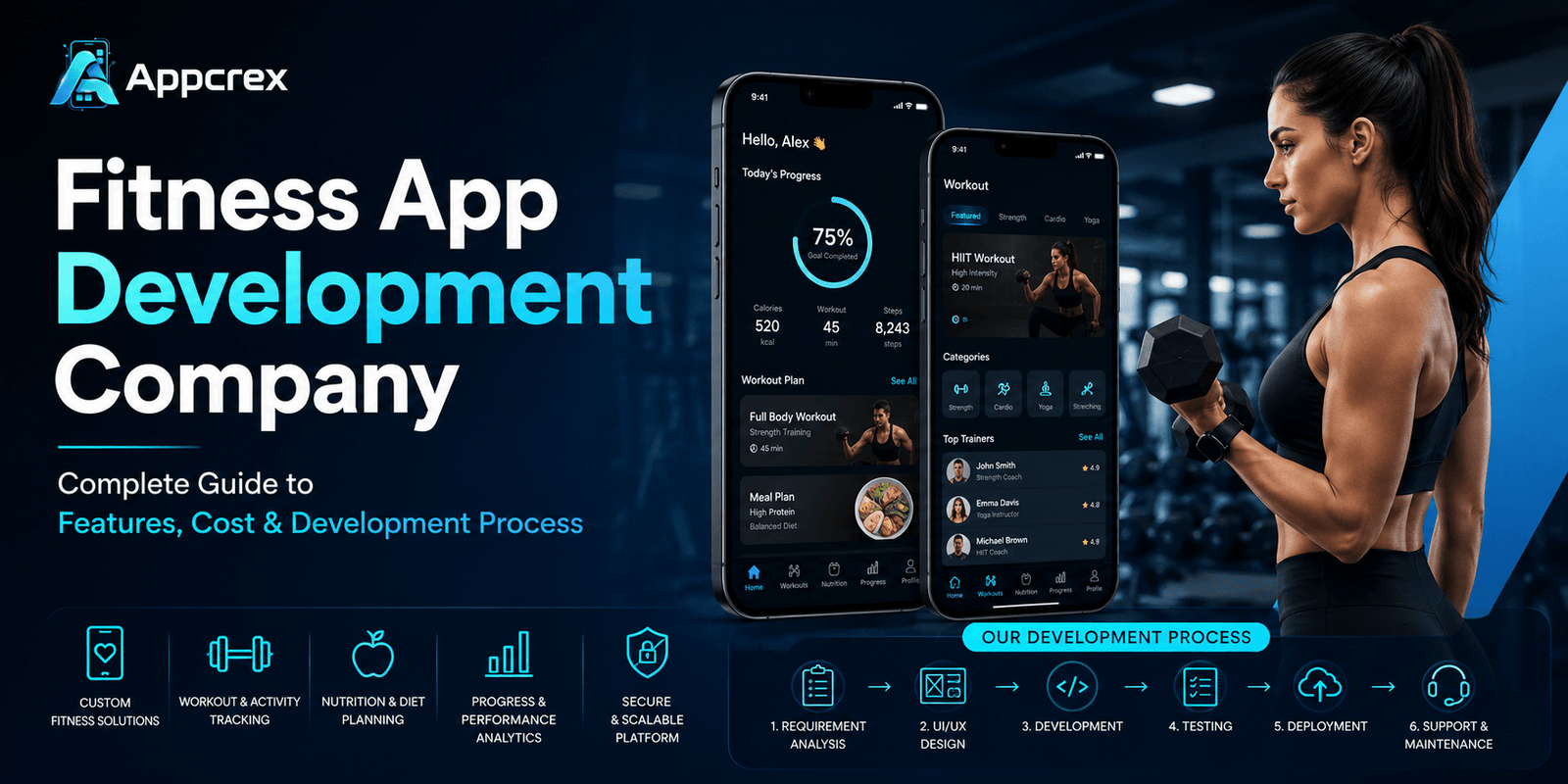
Fitness App Development Process
A structured development process helps transform your fitness app idea into a secure, scalable, and engaging digital product.
Step 1: Discovery & Requirement Analysis
Understand business goals, target audience, competitors, and feature requirements to define the project scope.
Step 2: UI/UX Design
Create wireframes, user journeys, and interactive prototypes focused on delivering an intuitive and engaging experience.
Step 3: MVP Development
Develop a Minimum Viable Product with core features such as user registration, workout plans, activity tracking, and subscriptions.
Step 4: App Development
Build the frontend, backend, APIs, databases, and admin dashboard while integrating third-party services and cloud infrastructure.
Step 5: AI & Wearable Integration
Add advanced capabilities such as AI workout recommendations, nutrition coaching, wearable synchronization, and predictive analytics.
Step 6: Testing & Quality Assurance
Perform functional, performance, security, compatibility, and user acceptance testing to ensure reliability.
Step 7: Launch & Deployment
Publish the app on Android, iOS, and web platforms while configuring cloud hosting, analytics, and monitoring tools.
Step 8: Maintenance & Continuous Improvement
Monitor performance, release updates, add new features, and optimize the app based on user feedback.
Best Technology Stack for Fitness App Development
Choosing the right technology stack ensures scalability, security, and long-term performance.
| Layer | Technologies |
|---|---|
| Frontend | React.js, Angular |
| Mobile Development | Flutter, React Native |
| Backend | Node.js, Laravel, Django, .NET |
| Database | PostgreSQL, MongoDB, MySQL |
| Cloud | AWS, Google Cloud, Microsoft Azure |
| AI & ML | OpenAI, Google Gemini, TensorFlow |
| Video Streaming | Agora, Twilio, Zoom SDK |
| Notifications | Firebase Cloud Messaging, OneSignal |
| Payments | Stripe, PayPal, Razorpay |
| Wearables | Apple HealthKit, Google Fit, Fitbit API, Garmin API |
Revenue Models for Fitness Apps
A successful fitness app should have a sustainable monetization strategy.
Popular revenue models include:
- Monthly Subscription Plans
- Annual Memberships
- Freemium Model
- In-App Purchases
- Premium Workout Programs
- Personal Trainer Bookings
- Nutrition Consultation Services
- Live Online Fitness Classes
- Affiliate Marketing
- Fitness Equipment Store
- Brand Sponsorships
- Advertisements
Combining multiple revenue streams can maximize profitability and support long-term business growth.
Why Choose AppCrex for Fitness App Development?
At AppCrex, we build secure, scalable, and AI-powered fitness applications tailored to startups, gyms, wellness brands, healthcare providers, and enterprises.
Our Expertise Includes
- Custom Fitness App Development
- Workout & Exercise Apps
- Gym Management Apps
- Personal Trainer Platforms
- Nutrition & Diet Apps
- AI-Powered Fitness Solutions
- Wearable Device Integration
- Flutter & React Native Development
- Android & iOS App Development
- UI/UX Design
- Cloud-Based Architecture
- API Integration
- Post-Launch Maintenance & Support
Our experienced team focuses on delivering engaging user experiences, robust security, and scalable solutions that help businesses grow in the competitive fitness industry.
(FAQs)
Q. How much does it cost to develop a fitness app?
A basic fitness app typically costs between $15,000 and $30,000, while advanced AI-powered fitness platforms can range from $120,000 to $250,000+, depending on features and complexity.
Q. How long does it take to build a fitness app?
A basic MVP can take 3–4 months, while feature-rich fitness applications generally require 6–12 months to design, develop, test, and launch.
Q. What features should a fitness app include?
Core features include user registration, workout plans, progress tracking, nutrition management, wearable integration, subscriptions, push notifications, AI recommendations, and an admin dashboard.
Q. Can AI be integrated into a fitness app?
Yes. AI can power personalized workout plans, meal recommendations, virtual fitness coaches, pose detection, predictive analytics, and intelligent chatbots.
Q. Can fitness apps integrate with wearable devices?
Absolutely. Fitness apps can integrate with platforms such as Apple Health, Google Fit, Fitbit, Garmin, and Samsung Health to sync activity and health data in real time.
Conclusion
Fitness apps are transforming how people train, monitor their health, and achieve wellness goals. By combining personalized workouts, nutrition tracking, wearable integrations, AI-powered coaching, and real-time analytics, businesses can deliver engaging digital experiences that drive long-term user retention and recurring revenue.
However, building a successful fitness app requires the right strategy, modern technology, intuitive design, and an experienced development partner. Whether you’re launching a new fitness startup or expanding an existing wellness business, investing in a custom fitness app positions you for success in a rapidly growing market.
Ready to Build Your Fitness App?
Whether you’re planning to launch a workout app, gym management platform, personal trainer app, nutrition solution, or AI-powered fitness application, AppCrex can turn your vision into reality.
From product strategy and UI/UX design to custom development, wearable integrations, AI implementation, testing, deployment, and ongoing support, we provide end-to-end fitness app development services tailored to your business goals.
Contact AppCrex today to build a secure, scalable, and future-ready fitness app that engages users, accelerates business growth, and stands out in the global fitness market.