
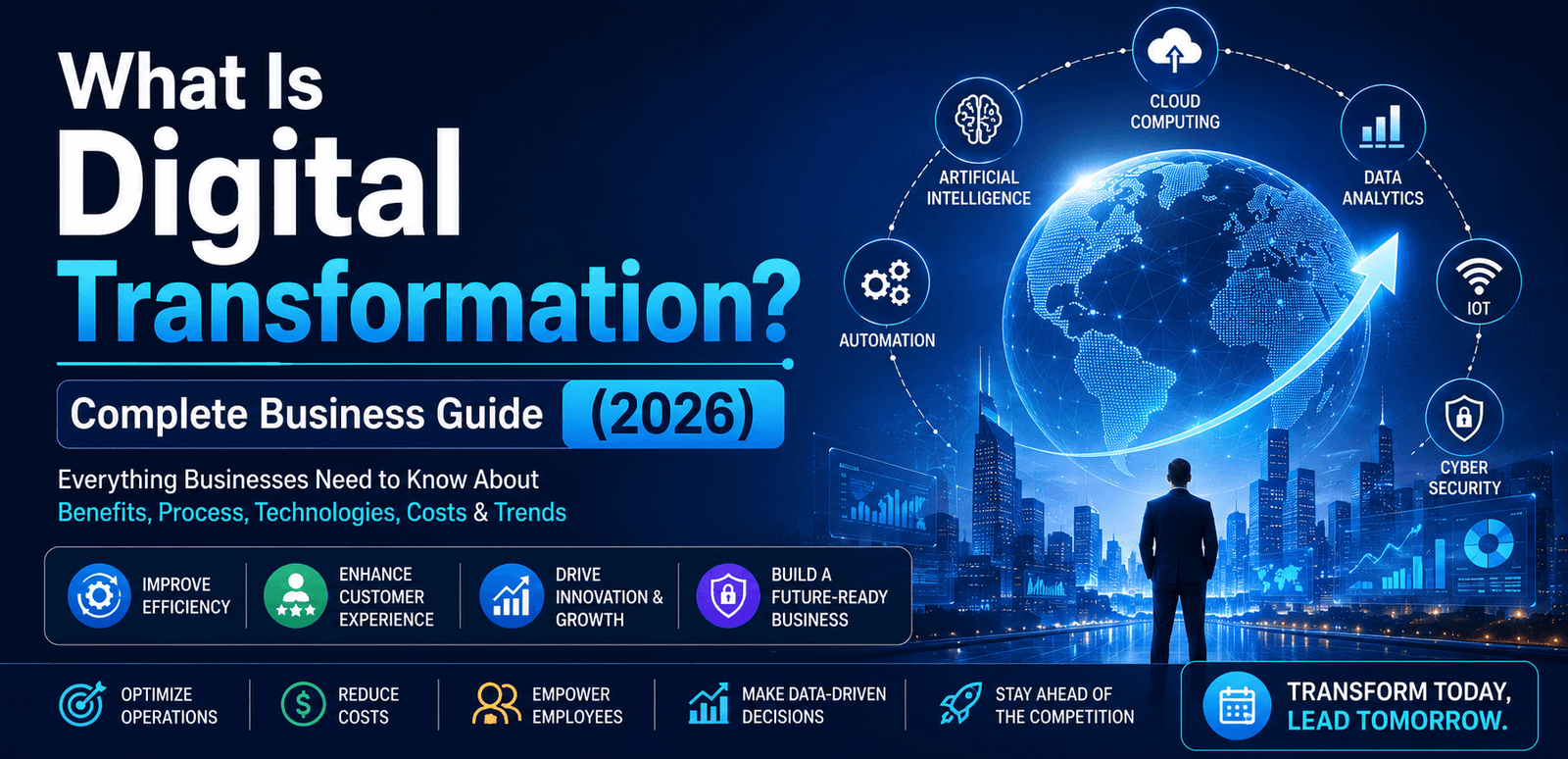
📌 Key Takeaways
- Digital transformation helps businesses improve efficiency, innovation, and customer experiences through technology.
- Technologies like AI, cloud computing, automation, and data analytics are driving digital transformation in 2026.
- A successful digital transformation strategy requires the right technology, processes, and organizational culture.
- Businesses across healthcare, finance, retail, education, and logistics are investing in digital transformation initiatives.
- Partnering with an experienced digital transformation company can accelerate growth and maximize ROI.
Introduction
In today’s rapidly evolving digital economy, businesses must continuously adapt to changing customer expectations, technological advancements, and market competition. Traditional business models and manual processes are no longer enough to maintain growth and efficiency. This is where digital transformation becomes essential.
Digital transformation is more than simply adopting new software or technology. It involves fundamentally changing how a business operates, delivers value to customers, and competes in the marketplace. Organizations across healthcare, finance, retail, education, manufacturing, logistics, and other industries are investing heavily in digital transformation initiatives to improve productivity, reduce costs, and drive innovation.
From artificial intelligence (AI) and cloud computing to automation and data analytics, modern technologies are enabling businesses to transform operations like never before. Companies that embrace digital transformation gain a significant competitive advantage by becoming more agile, customer-centric, and data-driven.
This comprehensive guide explores everything businesses need to know about digital transformation in 2026, including its benefits, technologies, implementation process, costs, trends, and strategies for success.
What Is Digital Transformation?
Digital transformation is the process of integrating digital technologies into every aspect of a business to improve operations, customer experiences, and overall business performance.
Rather than focusing solely on technology, digital transformation involves rethinking business models, workflows, organizational culture, and customer interactions. The objective is to create a more efficient, innovative, and adaptable organization.
Examples of Digital Transformation
- Developing mobile applications for customers
- Moving business infrastructure to the cloud
- Implementing AI-powered customer support
- Automating repetitive workflows
- Using data analytics for strategic decisions
- Creating digital customer experiences
- Modernizing legacy software systems
Successful digital transformation combines technology, people, and processes to achieve meaningful business outcomes.
Why Digital Transformation Matters?
The business landscape is becoming increasingly digital. Customers expect seamless online experiences, employees demand modern tools, and competitors are adopting innovative technologies.
Digital transformation helps organizations:
1. Improve Customer Experiences
Modern consumers expect personalized, fast, and convenient digital interactions.
2. Increase Operational Efficiency
Automation eliminates repetitive tasks and improves productivity.
3. Enable Data-Driven Decisions
Businesses can leverage real-time insights to make smarter decisions.
4. Accelerate Innovation
New technologies enable the creation of innovative products and services.
5. Stay Competitive
Organizations that fail to embrace digital transformation risk losing market share.
Key Components of Digital Transformation
A successful digital transformation strategy includes several key areas.
1. Technology Transformation
Adopting technologies such as:
- Artificial Intelligence (AI)
- Machine Learning
- Cloud Computing
- Internet of Things (IoT)
- Automation
- Big Data Analytics
2. Process Transformation
Modernizing workflows through:
- Business Process Automation
- Digital Documentation
- Workflow Optimization
- System Integration
3. Customer Transformation
Improving customer engagement through:
- Mobile Apps
- Customer Portals
- Omnichannel Experiences
- Personalized Services
4. Cultural Transformation
Organizations must foster:
- Innovation
- Agility
- Collaboration
- Continuous Learning
Without cultural transformation, technology investments often fail to deliver desired results.
Benefits of Digital Transformation
Digital transformation offers numerous benefits.
1. Improved Efficiency
Automated processes reduce manual work and operational bottlenecks.
2. Better Customer Experience
Digital tools enable personalized and seamless interactions.
3. Increased Revenue
New technologies create opportunities for business growth.
4. Enhanced Security
Modern systems provide stronger security measures.
5. Greater Scalability
Cloud-based infrastructure supports business expansion.
6. Faster Decision-Making
Real-time analytics improve strategic planning.
7. Competitive Advantage
Digitally mature organizations can adapt faster to market changes.
Digital Transformation vs Digitization vs Digitalization
Many businesses confuse these three terms.
| Term | Meaning |
|---|---|
| Digitization | Converting physical information into digital format |
| Digitalization | Using digital tools to improve existing processes |
| Digital Transformation | Completely reimagining business operations using technology |
Example
- Scanning paper documents → Digitization
- Using cloud storage → Digitalization
- Creating a fully digital workflow → Digital Transformation
Understanding these differences helps businesses build effective strategies.
Digital Transformation Framework
A structured framework increases the likelihood of successful transformation.
1. Vision and Leadership
Executives must define clear transformation goals.
2. Customer Focus
Customer needs should guide digital initiatives.
3. Technology Adoption
Select technologies aligned with business objectives.
4. Process Optimization
Identify and eliminate inefficiencies.
5. Data Strategy
Use analytics to drive business decisions.
6. Continuous Improvement
Digital transformation should be treated as an ongoing journey.
Digital Transformation Process
Step 1: Assess Current Operations
Evaluate existing systems, processes, and challenges.
Questions include:
- Which processes are inefficient?
- What technologies are outdated?
- Where are bottlenecks occurring?
Step 2: Define Objectives
Common goals include:
- Reducing costs
- Increasing efficiency
- Enhancing customer experiences
- Improving scalability
Step 3: Develop a Strategy
Create a roadmap covering:
- Technologies
- Budget
- Timeline
- Resources
Step 4: Implement Solutions
Deploy new technologies and systems.
Step 5: Employee Training
Ensure teams understand and adopt new tools.
Step 6: Monitor Performance
Measure success and continuously optimize.
Digital Transformation Roadmap
A roadmap helps organizations execute transformation initiatives systematically.
Phase 1: Assessment
Analyze current technology and business processes.
Phase 2: Planning
Define goals and prioritize initiatives.
Phase 3: Technology Selection
Choose platforms and tools that support long-term growth.
Phase 4: Deployment
Implement solutions in stages.
Phase 5: Optimization
Continuously improve systems and workflows.
Phase 6: Innovation
Leverage emerging technologies to stay ahead of competitors.
Technologies Driving Digital Transformation
1. Artificial Intelligence (AI)
AI helps automate processes and improve decision-making.
Examples:
- AI Chatbots
- Predictive Analytics
- Recommendation Engines
- Virtual Assistants
2. Cloud Computing
Cloud platforms provide:
- Scalability
- Flexibility
- Cost Savings
- Remote Accessibility
Popular cloud providers include AWS, Microsoft Azure, and Google Cloud.
3. Internet of Things (IoT)
Connected devices collect valuable operational data.
Industries benefiting from IoT include:
- Manufacturing
- Logistics
- Healthcare
- Retail
4. Big Data Analytics
Businesses use analytics to:
- Identify trends
- Understand customers
- Improve operations
- Forecast future outcomes
5. Automation
Automation improves productivity by eliminating repetitive tasks.
Examples include:
- Workflow Automation
- Robotic Process Automation (RPA)
- Customer Service Automation
AI and Digital Transformation
Artificial intelligence has become one of the most powerful drivers of digital transformation.
Organizations use AI to:
- Improve customer support
- Automate workflows
- Detect fraud
- Analyze customer behavior
- Personalize user experiences
- Predict market trends
AI enables businesses to operate more efficiently while improving customer satisfaction.
Cloud Computing and Digital Transformation
Cloud computing forms the foundation of many digital transformation initiatives.
Key Benefits
- Lower infrastructure costs
- Improved collaboration
- Faster deployment
- Greater flexibility
- Enhanced security
Cloud-native businesses can innovate and scale more rapidly than organizations relying on traditional infrastructure.
Digital Transformation Across Industries
1. Healthcare
Digital transformation supports:
- Telemedicine
- Electronic Health Records
- Remote Patient Monitoring
2. Finance
Financial institutions use digital technologies for:
- Digital Banking
- FinTech Solutions
- Fraud Detection
- Online Payments
3. Retail & eCommerce
Retailers benefit through:
- Personalized Shopping
- Inventory Management
- Mobile Commerce
4. Education
Educational organizations leverage:
- Learning Management Systems
- Virtual Classrooms
- Online Assessments
5. Manufacturing
Manufacturers implement:
- Smart Factories
- Predictive Maintenance
- Supply Chain Visibility
6. Logistics
Logistics companies use digital technologies for:
- Fleet Tracking
- Route Optimization
- Delivery Monitoring
Real-World Digital Transformation Examples
1. Netflix
Netflix transformed from a DVD rental company into a global streaming platform powered by cloud computing and analytics.
Lessons Learned
- Customer-first innovation
- Data-driven decisions
- Continuous adaptation
2. Amazon
Amazon leverages AI, automation, and cloud infrastructure to deliver exceptional customer experiences.
Lessons Learned
- Technology-driven growth
- Operational efficiency
- Personalization
3. Uber
Uber disrupted the transportation industry using mobile technology, GPS, and digital payments.
Lessons Learned
- Platform innovation
- Mobile-first experiences
- Real-time connectivity
4. Starbucks
Starbucks improved customer engagement through mobile ordering and loyalty programs.
Lessons Learned
- Customer convenience
- Data utilization
- Digital loyalty
Digital Transformation for Startups
Startups can achieve significant advantages through digital transformation.
Benefits
- Faster market entry
- Reduced operational costs
- Improved scalability
- Enhanced customer engagement
- Greater agility
Recommended Technologies
- Cloud Platforms
- SaaS Solutions
- AI Tools
- Mobile Applications
- Data Analytics
Startups that embrace digital transformation early often gain a competitive edge.
Digital Transformation for Enterprises
Large organizations often face complex transformation challenges.
1. Enterprise Priorities
- Legacy System Modernization
- Process Automation
- Cloud Migration
- Cybersecurity Enhancement
- Enterprise Data Management
Benefits
- Improved efficiency
- Better visibility
- Increased profitability
- Enhanced customer experiences
Enterprise transformation typically requires long-term strategic planning.
Common Digital Transformation Challenges
1. Resistance to Change
Employees may resist adopting new technologies.
2. Solution
Provide training and communicate benefits clearly.
3. Legacy Systems
Outdated systems can hinder innovation.
4. Solution
Modernize infrastructure gradually.
5. Budget Constraints
Transformation initiatives often require substantial investment.
6. Solution
Implement projects in phases.
7. Cybersecurity Risks
Digital expansion can introduce security challenges.
8. Solution
Adopt strong cybersecurity practices and regular audits.
Measuring Digital Transformation ROI
Measuring return on investment is essential.
1. Operational Metrics
- Reduced costs
- Increased productivity
- Faster workflows
2. Customer Metrics
- Customer satisfaction
- Retention rates
- Engagement levels
3. Revenue Metrics
- Sales growth
- Customer lifetime value
- New revenue streams
4. Innovation Metrics
- Product launch speed
- Market responsiveness
Tracking ROI ensures technology investments deliver measurable value.
Digital Transformation Services
Many organizations partner with digital transformation companies for expert guidance.
Common services include:
1. Digital Strategy Consulting
Developing transformation roadmaps.
2. Cloud Migration Services
Moving applications and infrastructure to the cloud.
3. AI Development
Implementing intelligent business solutions.
4. Custom Software Development
Building tailored digital platforms.
5. Mobile App Development
Creating customer-facing and internal applications.
6. Data Analytics Solutions
Unlocking actionable business insights.
7. Business Process Automation
Improving efficiency through automation.
Digital Transformation Cost
Costs vary significantly depending on business size and project scope.
| Project Type | Estimated Cost |
|---|---|
| Small Business Transformation | $10,000 – $50,000 |
| Mid-Sized Business Transformation | $50,000 – $250,000 |
| Enterprise Transformation | $250,000 – $1M+ |
| AI-Powered Transformation | $100,000 – $500,000+ |
Factors affecting costs include:
- Technology selection
- Integration complexity
- Infrastructure upgrades
- Employee training
- Security requirements
How to Choose a Digital Transformation Company?
Selecting the right partner is critical.
1. Industry Experience
Choose a company with proven expertise.
2. Technical Capabilities
Ensure expertise in:
- AI
- Cloud Computing
- Mobile Development
- Software Development
- Data Analytics
3. Portfolio
Review previous projects and case studies.
4. Scalability
The company should support future growth.
5. Support Services
Post-launch support is essential.
Also Read : Voice AI Integration: Complete Guide to Benefits, Use Cases, Cost & Implementation (2026)
Future Trends in Digital Transformation (2026)
Several trends are shaping the future.
1. Generative AI
AI-powered content creation and automation are becoming mainstream.
2. Hyperautomation
Organizations are automating increasingly complex workflows.
3. Cloud-Native Development
Cloud-first strategies continue to grow.
4. Digital Twins
Virtual models improve planning and operations.
5. Advanced Cybersecurity
Enhanced security solutions protect digital ecosystems.
6. Data-Driven Business Models
Organizations increasingly rely on analytics for strategic decisions.
Why Choose AppCrex for Digital Transformation Services?
AppCrex helps businesses successfully navigate digital transformation through innovative technology solutions.
Our Expertise Includes
- Custom Software Development
- Mobile App Development
- AI Development Services
- SaaS Development
- Cloud Integration
- Enterprise Software Solutions
- Digital Product Strategy
Why Businesses Choose AppCrex?
- Experienced Development Team
- Agile Methodology
- Scalable Solutions
- Transparent Communication
- Long-Term Support
We help organizations leverage technology to improve efficiency, innovation, and growth.
Frequently Asked Questions
Q. What is digital transformation?
Digital transformation is the integration of digital technologies into business operations to improve efficiency, innovation, and customer experiences.
Q. Why is digital transformation important?
It helps businesses remain competitive, improve productivity, and adapt to changing market demands.
Q. What technologies drive digital transformation?
AI, cloud computing, automation, IoT, data analytics, and enterprise software are major drivers.
Q. How much does digital transformation cost?
Costs vary widely, ranging from $10,000 for small projects to over $1 million for enterprise-wide initiatives.
Q. How long does digital transformation take?
Depending on scope, projects may take several months to multiple years.
Q. Which industries benefit from digital transformation?
Healthcare, finance, retail, education, logistics, manufacturing, and many other sectors benefit significantly.
Q. What are digital transformation services?
These include consulting, cloud migration, AI development, software development, automation, and analytics solutions.
Q. How do I choose a digital transformation company?
Look for industry expertise, technical capabilities, proven experience, and ongoing support services.
Conclusion
Digital transformation is reshaping how businesses operate, innovate, and compete in the modern economy. By leveraging technologies such as artificial intelligence, cloud computing, automation, and data analytics, organizations can improve efficiency, enhance customer experiences, and unlock new growth opportunities.
Whether you’re a startup looking to scale quickly or an enterprise modernizing legacy systems, digital transformation provides the foundation for long-term success. Businesses that embrace digital transformation today will be better positioned to thrive in 2026 and beyond. Partnering with an experienced technology company like AppCrex can help accelerate your digital transformation journey and maximize the value of your technology investments.