
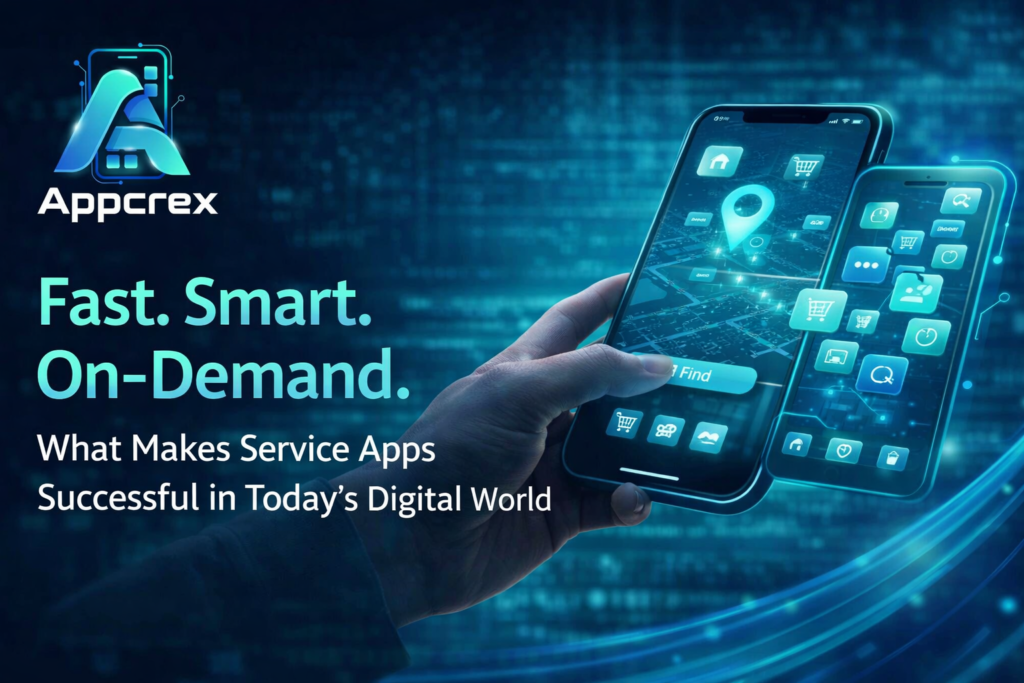
The way people access services has changed dramatically over the past decade. Today, customers expect instant solutions – whether booking a ride, ordering food, scheduling home services, or consulting professionals online. This shift has given rise to one of the fastest-growing digital business models: on-demand service applications.
From transportation and healthcare to food delivery and home maintenance, on-demand apps have transformed how businesses connect with customers. Convenience, speed, and accessibility are now the primary drivers of user decisions.
However, launching an on-demand app is no longer enough. The market has become highly competitive, and only applications that deliver exceptional user experiences, reliable performance, and smart technology integration achieve long-term success.
So what truly makes an on-demand service app successful today?
This blog explores the essential features, development strategies, and modern trends that help businesses build scalable and profitable on-demand platforms.
Understanding the On-Demand Economy
The on-demand economy revolves around providing services instantly through digital platforms. Customers no longer want to wait – they want solutions available at their fingertips.
Popular examples include:
- Ride-booking apps
- Food delivery platforms
- Grocery delivery services
- Fitness and wellness apps
- Home repair services
- Online consultation platforms
These apps bridge the gap between service providers and customers in real time.
The success of this model lies in one simple principle:
Convenience creates loyalty.
Businesses that simplify users’ lives gain consistent engagement and revenue growth.
Why On-Demand Apps Are Growing Rapidly
Several factors contribute to the rapid adoption of on-demand applications:
- Increased smartphone usage
- Faster internet connectivity
- Digital payment adoption
- Changing consumer behavior
- Demand for time-saving solutions
Modern consumers value efficiency more than ever. Apps that save time naturally become part of daily routines.
1. User-Centric Design: The Foundation of Success
A successful on-demand app begins with exceptional user experience.
Users should be able to complete tasks within seconds without confusion.
Key UX Principles:
- Simple onboarding process
- Clean interface design
- Minimal steps to book services
- Easy navigation
- Fast loading speed
If users struggle to understand how the app works, they leave immediately. Simplicity directly impacts retention rates.
2. Seamless Registration and Profile Management
First impressions matter.
Successful apps offer quick sign-up options such as:
- Phone number login
- Social media authentication
- One-click verification
Users should also manage profiles easily, including preferences, payment methods, and service history.
Convenience during onboarding increases long-term engagement.
3. Real-Time Tracking and Transparency
Real-time tracking has become a standard expectation.
Whether tracking a driver, delivery partner, or technician, users want visibility into service progress.
Benefits:
- Builds trust
- Reduces uncertainty
- Enhances customer satisfaction
Transparency improves user confidence and reduces support requests.
4. Smart Matching Algorithms
Efficient service allocation determines app performance.
Modern on-demand apps use intelligent algorithms to match users with nearby service providers based on:
- Location
- Availability
- Ratings
- Service type
This ensures faster service delivery and better operational efficiency.
5. Secure and Flexible Payment Integration
Payment experience significantly influences user satisfaction.
Successful apps support multiple payment options:
- Digital wallets
- Credit/debit cards
- UPI payments
- Cash options
Security measures like encrypted transactions and secure gateways build customer trust.
6. Ratings, Reviews, and Trust Systems
Trust drives the on-demand ecosystem.
Rating systems allow users to evaluate service quality and help businesses maintain standards.
Why Reviews Matter:
- Encourage accountability
- Improve service quality
- Build social proof
- Increase user confidence
Transparent feedback systems create a reliable platform environment.
7. Push Notifications and Smart Communication
Notifications keep users engaged and informed.
Effective apps use notifications for:
- Booking confirmations
- Service updates
- Promotions
- Personalized offers
However, successful apps avoid excessive notifications that annoy users.
Smart communication strengthens relationships with customers.
8. AI Integration for Personalization
Artificial Intelligence is redefining on-demand applications.
AI helps apps understand user behavior and deliver personalized experiences.
AI Applications Include:
- Service recommendations
- Demand prediction
- Dynamic pricing models
- Chatbots for customer support
Personalization improves engagement and increases repeat usage.
9. Scalable Backend Infrastructure
As user demand grows, apps must handle increasing traffic smoothly.
Scalable backend architecture ensures:
- Fast performance
- Minimal downtime
- Smooth transactions
- Reliable data management
Cloud-based infrastructure allows apps to expand without performance issues.
10. Service Provider Management System
On-demand apps must support both customers and service providers.
Provider dashboards allow:
- Job acceptance or rejection
- Earnings tracking
- Schedule management
- Performance analytics
Empowered service providers deliver better customer experiences.
11. Strong Security and Data Protection
Security is critical for modern applications.
Users share personal data, payment details, and location information.
Essential security features include:
- Data encryption
- Secure authentication
- Fraud prevention systems
- Privacy compliance
Trust directly influences app adoption.
12. Data Analytics for Continuous Improvement
Successful apps rely on analytics to understand user behavior.
Businesses track:
- Booking trends
- User retention
- Service performance
- Customer feedback
Data-driven insights help improve features and optimize operations.
13. Multi-Platform Accessibility
Users expect apps across devices.
Successful on-demand platforms offer:
- Android apps
- iOS apps
- Web dashboards
Cross-platform availability increases reach and accessibility.
Common Mistakes Businesses Should Avoid
Many on-demand apps fail due to:
- Overcomplicated interfaces
- Poor scalability planning
- Ignoring user feedback
- Weak security measures
- Lack of market research
Success depends on balancing technology with user needs.
Future Trends in On-Demand App Development
The future of on-demand services includes:
- AI-powered automation
- Voice-based interactions
- Hyper-personalization
- Predictive analytics
- Subscription-based services
Businesses adopting these innovations early gain competitive advantages.
How Businesses Can Build a Successful On-Demand App
To create a successful platform:
✔ Focus on solving real problems
✔ Prioritize user experience
✔ Invest in scalable technology
✔ Use AI for personalization
✔ Continuously improve using analytics
On-demand success is not about launching quickly – it is about evolving continuously.
Expert Insight
The most successful on-demand apps do not just deliver services; they create seamless experiences that become part of users’ everyday lives. Businesses that combine convenience with reliability build lasting customer relationships.
Conclusion
On-demand service apps have transformed modern business models by making services faster, smarter, and more accessible.
Success today depends on more than functionality. It requires user-focused design, intelligent technology integration, strong security, and scalable infrastructure.
Businesses that understand customer expectations and invest in innovation can build platforms that thrive in the competitive digital landscape.
The future belongs to apps that deliver value instantly while continuously improving user experiences.
FAQs
What is an on-demand service app?
An on-demand app connects customers with service providers instantly through a digital platform.
Why are on-demand apps popular?
They offer convenience, speed, and easy access to services anytime.
What features are essential for success?
Real-time tracking, secure payments, AI personalization, and user-friendly design.
How does AI improve on-demand apps?
AI enhances recommendations, automation, and customer support efficiency.
Is on-demand app development profitable?
Yes, when built with scalable architecture and strong user experience strategies.
Call to Action
Looking to build a powerful on-demand service application for your business?
Appcrex specializes in custom mobile app development, AI-powered solutions, and scalable digital platforms designed for modern businesses.
Contact Appcrex today and turn your service idea into a successful on-demand app.