
Introduction
Fleet management has become a critical component for businesses that rely on transportation, logistics, delivery, and field operations. As companies manage larger fleets and increasing customer expectations, traditional methods such as spreadsheets, manual scheduling, and paper-based records are no longer sufficient. Businesses now require intelligent digital solutions to monitor vehicles, optimize routes, improve driver safety, and reduce operational costs.
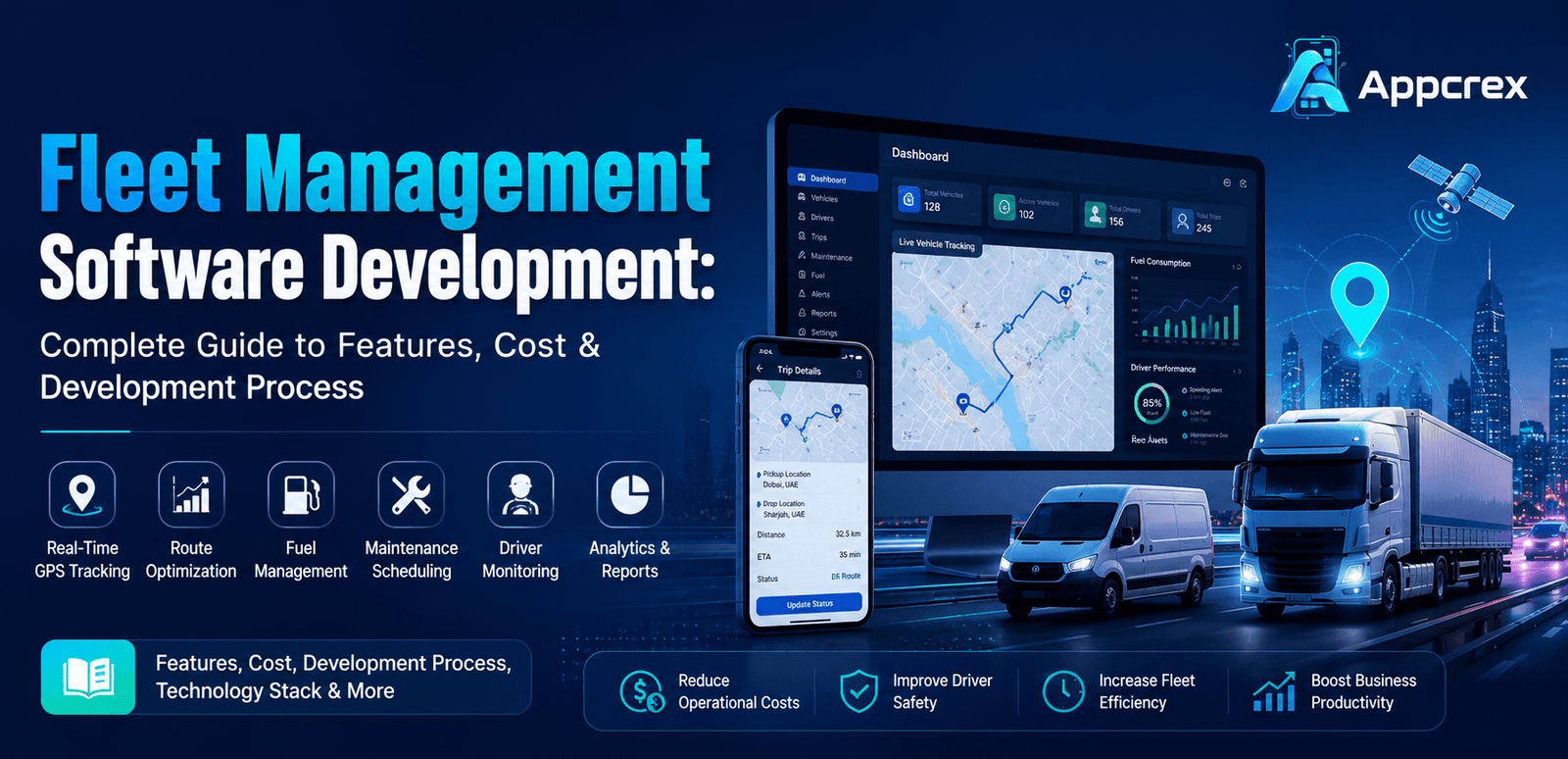
This growing demand has made fleet management software development a strategic investment for organizations looking to streamline operations and gain a competitive advantage. Modern fleet management software enables businesses to track vehicles in real time, monitor driver behavior, schedule preventive maintenance, manage fuel consumption, and generate detailed performance reports from a centralized dashboard.
Industries such as logistics, transportation, construction, healthcare, oil & gas, public transportation, car rental, and field services increasingly rely on fleet management systems to improve efficiency and ensure timely service delivery. The adoption of GPS tracking, Artificial Intelligence (AI), IoT sensors, cloud computing, and predictive analytics has further transformed how businesses manage their fleets.
The demand for fleet management software development continues to grow across the USA, UAE, Saudi Arabia, Qatar, and India, where digital transformation and smart mobility solutions are becoming essential for business growth.
Whether you operate a small delivery business or manage thousands of commercial vehicles, partnering with an experienced fleet management software development company helps you build a scalable, secure, and future-ready solution tailored to your operational needs.
In this comprehensive guide, we’ll explore everything you need to know about fleet management software development, including key features, business benefits, technology stack, development process, cost, AI integration, and emerging trends for 2026.
What is Fleet Management Software?
Fleet Management Software is a digital solution that helps businesses monitor, manage, and optimize their commercial vehicles from a centralized platform. It combines GPS tracking, vehicle diagnostics, maintenance scheduling, fuel management, driver monitoring, route optimization, and business analytics into one integrated system.
Instead of relying on manual processes, businesses can automate daily fleet operations, reduce costs, improve productivity, and enhance customer satisfaction.
A complete fleet management solution generally consists of three major components:
Driver Mobile App
The driver application allows drivers to:
- Receive trip assignments
- Access GPS navigation
- Follow optimized routes
- Update trip status
- Report vehicle issues
- Upload delivery confirmations
- View trip history
Fleet Manager Dashboard
Fleet managers can monitor and control operations through a centralized dashboard that includes:
- Live vehicle tracking
- Driver management
- Trip management
- Fuel monitoring
- Maintenance scheduling
- Fleet analytics
- Performance reports
Admin Panel
The admin panel provides complete control over the entire system, allowing businesses to:
- Manage vehicles
- Add or remove drivers
- Assign roles and permissions
- Configure notifications
- Generate reports
- Monitor business performance
- Manage system settings
A custom fleet management software development solution enables businesses to automate workflows, reduce operational expenses, improve vehicle utilization, and ensure compliance with safety regulations.
Also Read : Custom Software Development Company: Complete Guide to Services, Process, Cost & Benefits (2026)
Challenges in Traditional Fleet Management
Many businesses still manage their fleets using spreadsheets, phone calls, manual records, and disconnected software systems. As fleet size grows, these traditional methods become inefficient and increase operational risks.
Common Challenges Include
Limited Vehicle Visibility
Without real-time GPS tracking, businesses struggle to know the exact location of vehicles, making it difficult to respond quickly to delays or emergencies.
High Fuel Costs
Poor route planning, unnecessary idling, and inefficient vehicle usage significantly increase fuel expenses.
Manual Maintenance Scheduling
Tracking maintenance schedules manually often leads to missed service intervals, resulting in costly repairs and unexpected vehicle downtime.
Driver Safety Issues
Without monitoring systems, businesses have limited visibility into speeding, harsh braking, excessive idling, and other risky driving behaviors.
Inefficient Route Planning
Drivers may choose longer routes or get delayed due to traffic congestion, reducing productivity and increasing delivery times.
Limited Business Insights
Traditional systems provide little or no real-time reporting, making it difficult to analyze fleet performance, identify inefficiencies, or make data-driven decisions.
Modern fleet management software addresses these challenges by providing real-time visibility, automation, analytics, and intelligent decision-making tools.
Why Businesses Need Fleet Management Software?
As fleets expand and customer expectations increase, businesses require intelligent software to maintain operational efficiency and reduce costs.
Improve Fleet Visibility
Monitor every vehicle in real time using GPS tracking and live dashboards.
Reduce Fuel Expenses
AI-powered route optimization and fuel monitoring help minimize operational costs.
Increase Driver Productivity
Automated trip assignments and navigation tools enable drivers to complete more trips efficiently.
Enhance Customer Satisfaction
Real-time tracking and accurate ETAs improve delivery reliability and transparency.
Improve Vehicle Maintenance
Automated maintenance reminders help reduce unexpected breakdowns and extend vehicle lifespan.
Make Better Business Decisions
Comprehensive analytics and performance reports provide valuable insights into fleet operations, enabling managers to optimize resources and improve profitability.
Fleet Management Market Opportunities in USA, UAE, Saudi Arabia, Qatar & India
The global demand for fleet management software is growing rapidly as businesses adopt digital technologies to improve transportation efficiency, reduce operating costs, and enhance customer satisfaction. Organizations across the USA, UAE, Saudi Arabia, Qatar, and India are investing in smart fleet management solutions powered by AI, IoT, cloud computing, and GPS tracking.
USA
The United States has one of the world’s largest commercial transportation industries. Logistics companies, delivery providers, construction firms, and public transportation agencies are increasingly investing in fleet management software development to improve fleet visibility, optimize routes, monitor driver performance, and reduce fuel costs.
With the rise of eCommerce and same-day delivery services, businesses require intelligent fleet management systems that provide real-time tracking, predictive maintenance, and advanced analytics.
UAE (Dubai & Abu Dhabi)
The UAE is rapidly embracing smart mobility and digital transformation initiatives. Businesses operating in logistics, construction, oil & gas, and transportation sectors require modern fleet management platforms to efficiently manage commercial vehicles across multiple locations.
Fleet management software helps UAE businesses improve operational efficiency, reduce downtime, monitor vehicle utilization, and ensure timely service delivery.
Also Read : How Much Does It Cost to Build an AI-Powered App in Dubai? Complete Pricing Guide (2026)
Saudi Arabia
Saudi Arabia’s Vision 2030 initiative is accelerating investments in transportation, logistics, and smart infrastructure. Businesses are adopting advanced fleet management systems to improve fleet operations, enhance driver safety, and optimize maintenance schedules.
Demand is particularly strong in logistics, construction, public transportation, and industrial sectors.
Qatar
Qatar’s growing transportation and infrastructure projects have increased the demand for intelligent fleet management solutions. Businesses are using GPS-enabled fleet software to monitor vehicles, optimize routes, manage fuel consumption, and improve service quality.
Also Read : How Much Does It Cost to Develop a Mobile App in Qatar? Complete Pricing Guide (2026)
India
India’s expanding logistics and delivery ecosystem has created significant opportunities for fleet management software development. eCommerce companies, courier services, healthcare providers, field service organizations, and transportation companies rely on digital fleet solutions to improve efficiency, automate operations, and manage large vehicle fleets.
Industries Using Fleet Management Software
Fleet management solutions are no longer limited to transportation companies. Today, businesses across multiple industries depend on intelligent fleet software to streamline operations and reduce costs.
Logistics & Supply Chain
Track shipments, optimize delivery routes, and monitor commercial vehicles in real time.
Transportation Companies
Manage buses, trucks, taxis, and commercial vehicles from a centralized platform.
Construction
Monitor heavy machinery, construction vehicles, and field equipment across multiple project sites.
Oil & Gas
Track fuel tankers, industrial vehicles, and specialized equipment while ensuring regulatory compliance.
Healthcare
Hospitals and healthcare organizations use fleet management software to manage ambulances, medical transportation, and emergency response vehicles.
Also Read : Healthcare App Development Guide: Features, Cost & Process (2026)
Delivery Services
Food delivery, grocery delivery, pharmacy delivery, courier companies, and eCommerce businesses use fleet management systems to improve delivery efficiency.
Car Rental Businesses
Rental companies monitor vehicle availability, maintenance schedules, customer usage, and fleet performance.
Field Service Businesses
Companies offering home maintenance, utility services, HVAC, telecom, and repair services use fleet management software to efficiently dispatch technicians.
Types of Fleet Management Solutions
Different businesses require different fleet management capabilities depending on their operations. Below are some of the most commonly used fleet management solutions.
| Fleet Management Solution | Best For |
|---|---|
| Vehicle Tracking Software | Live GPS tracking and vehicle monitoring |
| Driver Management Software | Driver performance and safety monitoring |
| Fuel Management Software | Fuel usage tracking and cost optimization |
| Fleet Maintenance Software | Preventive maintenance and service scheduling |
| Route Optimization Software | Efficient trip planning and delivery management |
| Fleet Analytics Platform | Business intelligence and operational reporting |
Selecting the right solution depends on fleet size, business objectives, industry requirements, and long-term scalability goals.
Benefits of Fleet Management Software
Implementing a modern fleet management software solution offers several advantages for businesses of all sizes.
Improve Operational Efficiency
Automating fleet operations reduces manual work, streamlines workflows, and enables managers to monitor vehicles and drivers from a centralized dashboard.
Reduce Fuel Costs
Smart route optimization and driver behavior monitoring help minimize fuel consumption and lower operating expenses.
Enhance Driver Safety
Real-time monitoring of speeding, harsh braking, excessive idling, and other driving behaviors helps improve road safety and reduce accident risks.
Minimize Vehicle Downtime
Automated maintenance reminders ensure vehicles are serviced on time, preventing unexpected breakdowns and extending vehicle lifespan.
Increase Customer Satisfaction
Accurate ETAs, live tracking, and efficient deliveries improve customer trust and overall service quality.
Support Business Growth
Cloud-based fleet management platforms can easily scale as businesses expand their fleet, service areas, and customer base.
Also Read : Logistics App Development: Complete Guide to Features, Cost & Development Process
Essential Features of Fleet Management Software
A successful fleet management software development project should provide complete visibility into fleet operations while improving efficiency, reducing costs, and enhancing driver safety. A modern solution typically includes three core components:
- Driver Mobile App
- Fleet Manager Dashboard
- Admin Panel
Together, these modules help businesses automate fleet operations, monitor vehicles in real time, and make data-driven decisions.
Driver Mobile App Features
The driver application enables drivers to manage trips, receive assignments, and communicate with fleet managers efficiently.
1. Secure Login & Profile Management
Drivers can securely log in using their credentials and manage their personal information, licenses, and assigned vehicles.
2. Trip Assignment
Fleet managers can assign trips instantly, allowing drivers to view:
- Pickup & destination details
- Customer information
- Delivery instructions
- Scheduled timings
Integrated GPS navigation provides turn-by-turn directions, live traffic updates, and optimized routes. This helps drivers reach destinations faster, reduce fuel consumption, and improve on-time deliveries.
4. Route Optimization
The software automatically recommends the most efficient routes by considering traffic conditions, road closures, and delivery priorities, helping businesses reduce travel time and operational costs.
5. Real-Time Trip Updates
Drivers can update their trip status, such as:
- Trip Accepted
- En Route
- Arrived
- Delivery Completed
These updates keep fleet managers and customers informed throughout the journey.
6. Digital Proof of Delivery
Drivers can collect:
- Customer signatures
- Delivery photos
- OTP verification
This ensures secure and verified deliveries.
7. Vehicle Inspection Checklist
Drivers can complete pre-trip and post-trip inspections to report maintenance issues before they become major problems.
Fleet Manager Dashboard Features
The fleet manager dashboard provides complete control over daily fleet operations through a centralized interface.
1. Live Fleet Tracking
Managers can monitor every vehicle in real time, including:
- Current location
- Trip status
- Vehicle speed
- Idle time
- Route history
2. Driver Management
Track driver performance using key metrics such as:
- Driving behavior
- Working hours
- Trip completion rate
- Safety score
- Attendance
3. Vehicle Management
Manage the entire fleet by monitoring:
- Vehicle availability
- Registration details
- Insurance expiry
- Service history
- Vehicle utilization
4. Fuel Management
Monitor fuel consumption, detect excessive fuel usage, and generate reports to reduce fuel-related expenses.
5. Maintenance Scheduling
Automated reminders notify managers when vehicles require:
- Oil changes
- Tire replacement
- Brake inspection
- Engine servicing
- Regular maintenance
Preventive maintenance reduces unexpected breakdowns and extends vehicle life.
6. Reports & Analytics
Generate comprehensive reports on:
- Fleet performance
- Fuel expenses
- Driver productivity
- Vehicle utilization
- Operational costs
- Business growth
These insights support better decision-making and long-term planning.
Admin Panel Features
The admin panel allows businesses to configure and manage the entire fleet management ecosystem.
1. User & Role Management
Create and manage accounts for:
- Administrators
- Fleet Managers
- Drivers
- Dispatchers
Assign role-based access to improve security.
2. Vehicle Management
Add, edit, or remove vehicles while maintaining records for insurance, permits, maintenance, and ownership.
3. Dispatch Management
Assign drivers to trips based on:
- Vehicle availability
- Driver location
- Workload
- Route efficiency
4. Notification Management
Send automated notifications for:
- Trip assignments
- Maintenance reminders
- Driver alerts
- Vehicle inspections
- Emergency updates
5. Business Reports
Access dashboards that provide insights into:
- Revenue
- Fleet utilization
- Driver performance
- Fuel efficiency
- Maintenance costs
AI-Powered Features in Fleet Management Software
Artificial Intelligence is transforming fleet management by enabling businesses to automate operations, improve efficiency, and reduce operational risks.
Predictive Maintenance
AI analyzes vehicle data to predict maintenance needs before failures occur, helping businesses reduce downtime and repair costs.
AI Route Optimization
AI evaluates live traffic, weather conditions, and road closures to recommend the fastest and most fuel-efficient routes.
Driver Behavior Analysis
The system monitors driving patterns such as speeding, harsh braking, rapid acceleration, and excessive idling to improve driver safety.
Fuel Consumption Prediction
AI identifies fuel usage trends and suggests ways to optimize fuel efficiency across the fleet.
Intelligent Dispatching
AI automatically assigns the most suitable driver and vehicle based on location, availability, and delivery priority.
Predictive Analytics
Businesses can forecast demand, optimize fleet utilization, and make informed operational decisions using AI-driven insights.
Technology Stack for Fleet Management Software Development
Choosing the right technology stack ensures scalability, security, and long-term performance.
| Component | Recommended Technologies |
|---|---|
| Mobile App Development | Flutter, React Native, Swift, Kotlin |
| Frontend Development | React.js, Next.js |
| Backend Development | Node.js, Python, Java, .NET |
| Database | PostgreSQL, MongoDB, MySQL |
| Cloud Hosting | AWS, Google Cloud, Microsoft Azure |
| GPS & Maps | Google Maps API, Mapbox |
| IoT Integration | MQTT, BLE, Vehicle Telematics |
| Notifications | Firebase Cloud Messaging |
| Analytics | Power BI, Google Analytics |