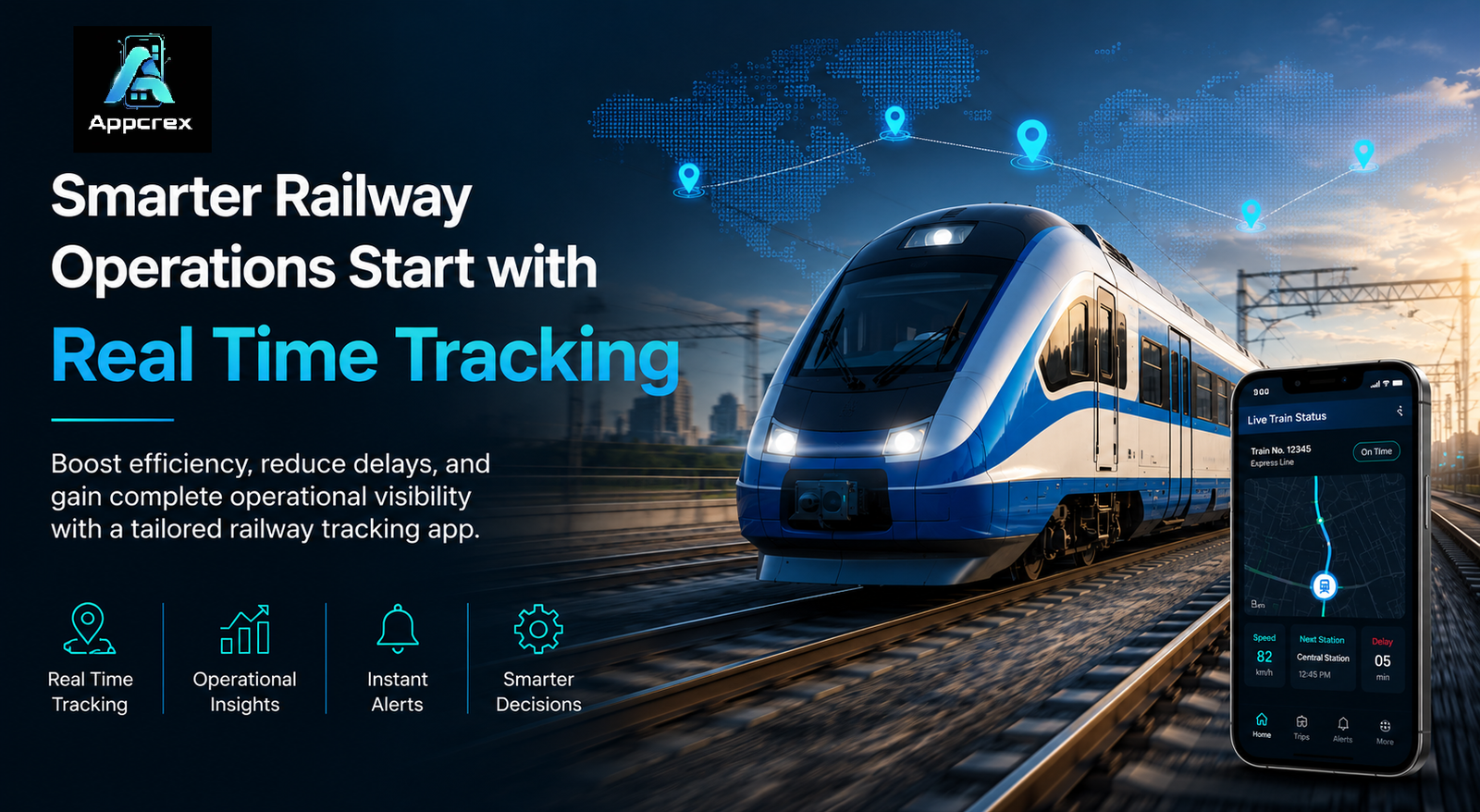
The railway industry is experiencing rapid digital transformation. With increasing passenger expectations, growing freight demands, and the need for operational efficiency, railway operators are turning to smart technology to improve performance. One of the most impactful innovations is the railway tracking app.
Real time tracking solutions have become essential for modern railway operations. From monitoring train locations to improving passenger communication and optimizing maintenance schedules, a tailored railway tracking app can significantly enhance operational efficiency.
In this article, we explore how a railway tracking app improves operations, the key features it should include, and why custom development is becoming the preferred choice for railway organizations.
Understanding Railway Tracking Apps
A railway tracking app is a digital solution designed to provide real time visibility into train movements, schedules, assets, and operational activities. These applications collect and process data from GPS systems, sensors, communication networks, and operational databases.
The information is then presented through intuitive dashboards and mobile interfaces, enabling operators, staff, and passengers to access accurate updates whenever needed.
Modern railway tracking applications go far beyond simple location tracking. They help organizations manage resources, improve safety, reduce delays, and make better operational decisions.
Why Real Time Visibility Matters
One of the biggest challenges in railway operations is maintaining visibility across a complex transportation network. Trains travel across multiple routes, stations, and operational zones, making it difficult to monitor activities manually.
A railway tracking app provides a centralized platform where operators can:
- View train locations in real time
- Monitor route performance
- Track delays instantly
- Analyze operational data
- Improve coordination between departments
This level of visibility allows railway organizations to respond quickly to issues before they impact service quality.
How Railway Tracking Apps Improve Operations
1. Reducing Train Delays
Train delays affect passenger satisfaction, operational costs, and overall efficiency.
A railway tracking app helps operators identify potential disruptions before they become major problems. Real time monitoring enables dispatch teams to:
- Detect route congestion
- Monitor schedule deviations
- Adjust train movements proactively
- Improve communication between control centers
Faster decision making often results in fewer delays and smoother operations.
2. Improving Fleet Management
Managing a large railway fleet requires accurate information about train locations, availability, and performance.
A custom railway tracking app provides insights into:
- Active train status
- Idle equipment
- Route assignments
- Fleet utilization rates
With better fleet visibility, organizations can optimize train deployment and reduce unnecessary downtime.
3. Enhancing Passenger Experience
Passengers expect accurate information about train schedules and arrival times.
Railway tracking applications improve customer experience by providing:
- Live train status updates
- Arrival and departure notifications
- Platform information
- Delay alerts
- Route updates
When passengers receive timely and accurate information, trust in railway services increases significantly.
4. Strengthening Safety Measures
Safety remains one of the highest priorities in railway operations.
A railway tracking system supports safety initiatives by allowing operators to monitor train movements continuously. If unusual activity is detected, teams can respond immediately.
Additional safety benefits include:
- Route monitoring
- Speed tracking
- Emergency alerts
- Incident reporting
- Real time communication
These capabilities help reduce risks and improve operational safety standards.
5. Optimizing Resource Allocation
Railway operations involve multiple resources, including staff, equipment, vehicles, and infrastructure.
A tracking app helps managers allocate resources more effectively by providing accurate operational data.
Benefits include:
- Better workforce planning
- Improved equipment utilization
- Reduced operational waste
- Increased productivity
Efficient resource allocation directly impacts profitability and service quality.
6. Supporting Predictive Maintenance
Unexpected equipment failures can cause costly service disruptions.
Modern railway tracking apps can integrate with maintenance systems to monitor equipment performance continuously.
Using operational data, organizations can:
- Detect early warning signs
- Schedule maintenance proactively
- Reduce equipment breakdowns
- Extend asset lifespan
Predictive maintenance minimizes downtime while improving overall reliability.
7. Improving Freight Operations
Freight transportation requires precise tracking and coordination.
A railway tracking app allows logistics teams to monitor cargo movement throughout the transportation process.
This leads to:
- Better shipment visibility
- Improved delivery accuracy
- Faster issue resolution
- Greater customer satisfaction
For freight operators, visibility often translates directly into competitive advantage.
8. Enabling Data Driven Decisions
Data is becoming one of the most valuable assets in transportation management.
Railway tracking apps collect large amounts of operational information that can be analyzed to improve performance.
Organizations can use this data to:
- Identify operational bottlenecks
- Measure route efficiency
- Evaluate fleet performance
- Forecast future demand
Data driven decision making helps railway companies remain competitive in a rapidly evolving market.
Essential Features of a Modern Railway Tracking App
To maximize operational benefits, a railway tracking application should include several important features.
- Real Time GPS Tracking: Accurate train location monitoring is the foundation of any railway tracking solution.
- Live Status Updates: Passengers and operators should receive instant updates regarding schedules, delays, and route changes.
- Route Monitoring: Track train movement across predefined routes and identify deviations quickly.
- Notifications and Alerts: Automatic alerts help teams respond faster to operational issues.
- Analytics Dashboard: A centralized dashboard provides insights into operational performance and efficiency metrics.
- Maintenance Tracking: Monitor equipment health and maintenance schedules from a single platform.
- Passenger Information System: Provide travelers with timely information through mobile applications and digital displays.
- Integration Capabilities: The app should integrate seamlessly with existing railway management systems, ticketing platforms, and operational software.
Why Choose Tailored Railway Tracking App Development?
While generic tracking solutions may offer basic functionality, they often fail to address the unique requirements of railway operations.
Custom railway tracking app development provides several advantages:
Customized Workflows
Every railway organization operates differently. A tailored solution aligns with existing processes and operational goals.
Better Scalability
Custom applications can grow alongside organizational needs without major limitations.
Enhanced Security
Railway operations involve sensitive operational and passenger data. Custom solutions provide stronger security controls.
Improved System Integration
Tailored apps can connect smoothly with existing infrastructure and software systems.
Greater Flexibility
Organizations can add features, modify workflows, and expand functionality as requirements evolve.
Emerging Trends Shaping Railway Tracking Solutions
Technology continues to transform the railway sector.
Some of the latest trends influencing railway tracking app development include:
Artificial Intelligence
AI powered systems help predict delays, optimize routes, and improve operational planning.
Internet of Things Integration
Connected sensors provide real time monitoring of trains, tracks, and infrastructure.
Cloud Based Platforms
Cloud technology enables scalable and accessible railway management systems.
Advanced Analytics
Modern analytics tools help organizations uncover valuable operational insights.
Mobile First Experiences
Operators and passengers increasingly rely on mobile applications for information and communication.
These trends are helping railway companies build smarter, more efficient transportation networks.
How Appcrex Can Help
Appcrex specializes in developing tailored railway tracking applications designed to meet the specific needs of railway operators, transportation companies, and logistics providers.
With a focus on innovation, scalability, security, and user experience, Appcrex develops custom solutions that help organizations:
- Improve operational visibility
- Reduce delays
- Enhance passenger satisfaction
- Optimize fleet management
- Support data driven decision making
Whether you need a comprehensive railway management platform or a specialized tracking application, Appcrex can create a solution aligned with your operational goals.
Frequently Asked Questions
What is a railway tracking app?
A railway tracking app is a software solution that provides real time visibility into train locations, schedules, operational performance, and railway assets.
How does a railway tracking app reduce delays?
The app enables operators to monitor train movements in real time, identify disruptions early, and make faster operational decisions.
Can railway tracking apps improve passenger satisfaction?
Yes. Passengers receive accurate schedule updates, delay notifications, and real time travel information, creating a better travel experience.
Why should railway companies choose custom app development?
Custom solutions are designed around specific operational requirements, providing better flexibility, scalability, integration, and long term value.
What technologies are commonly used in railway tracking apps?
Popular technologies include GPS tracking, cloud computing, AI, IoT sensors, analytics platforms, and mobile applications.
Conclusion
Railway tracking apps have become an essential tool for modern railway operations. By providing real time visibility, improving fleet management, supporting predictive maintenance, and enhancing passenger experiences, these solutions help organizations operate more efficiently and competitively.
As digital transformation continues to reshape transportation, investing in a tailored railway tracking application can deliver measurable improvements across every aspect of railway operations.
Ready to transform railway operations with a custom tracking solution? Discover how Appcrex can help you build a smarter, more efficient railway management system that drives better performance and long term growth.