Financial calculation apps have become an essential part of modern money management. From tax calculators and budgeting tools to investment estimators and loan calculators, users rely on these applications to make informed financial decisions. As artificial intelligence becomes more integrated into financial technology, users expect smarter, faster, and more personalized experiences.
However, with convenience comes responsibility. Financial calculation apps often process sensitive information such as income details, tax records, investment data, banking information, and personal identifiers. Any security breach can lead to financial losses, reputational damage, and loss of user trust.
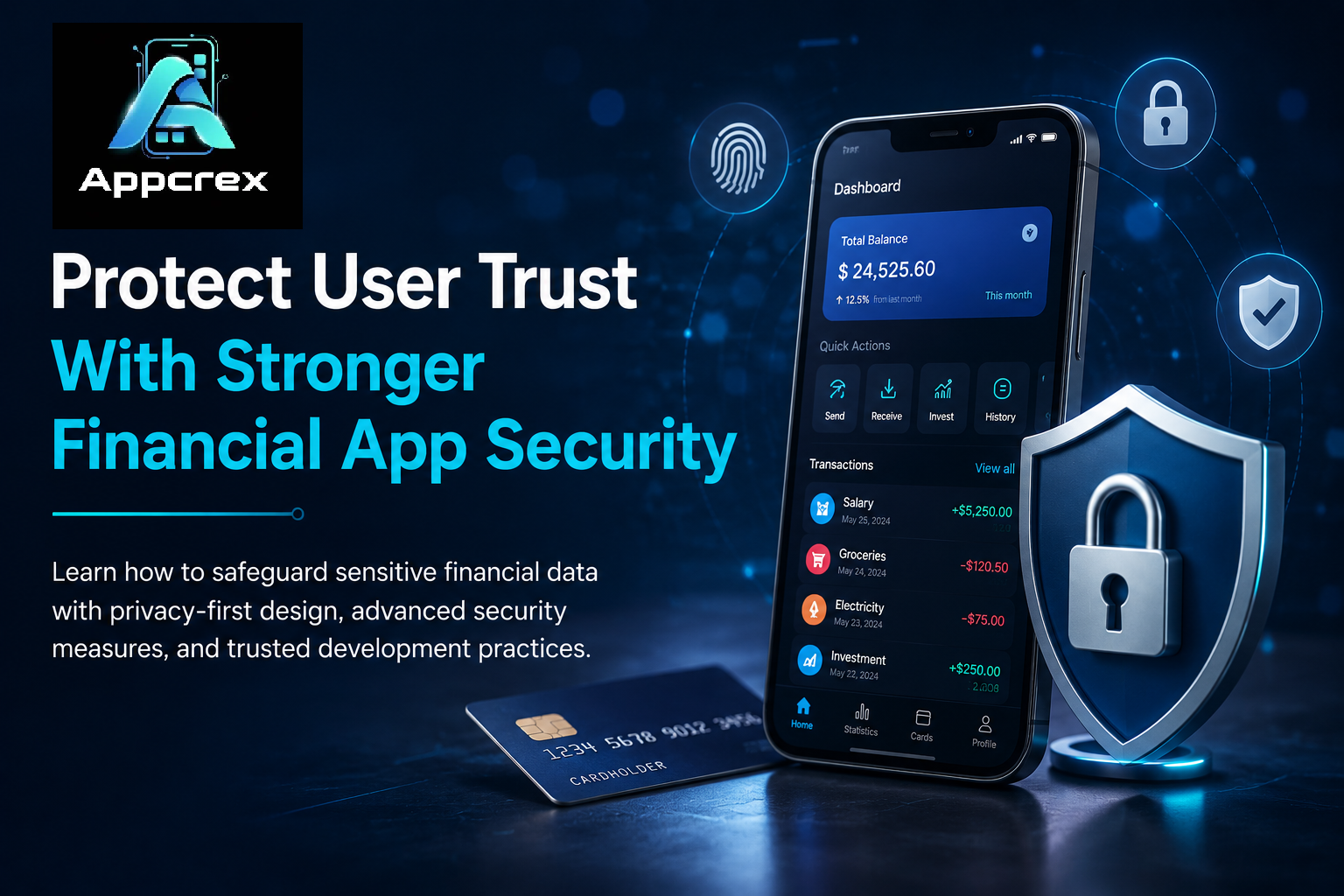
For businesses planning to build a tax calculator or financial calculation app, protecting user data should be a top priority from the very beginning. At Appcrex, we understand that security is not simply a feature. It is the foundation upon which successful financial applications are built.
This guide explores the best practices for ensuring data privacy and security in financial calculation apps while maintaining a smooth user experience.
Why Data Privacy Matters in Financial Calculation Apps
Financial data is among the most sensitive information users can share. Unlike social media profiles or shopping preferences, financial information can directly impact a person’s livelihood and identity.
Users trust financial apps with details such as:
- Annual income
- Tax information
- Business expenses
- Investment portfolios
- Retirement planning data
- Loan information
- Personal identification details
If this information is compromised, users may face identity theft, financial fraud, or unauthorized access to their accounts.
A secure financial application demonstrates professionalism, reliability, and commitment to user protection.
Understanding the Risks Facing Financial Apps
Before implementing security measures, it is important to understand common threats.
- Data Breaches: Hackers continuously target financial platforms because of the valuable information they store. Poor security practices can expose user records and confidential financial data.
- Unauthorized Access: Weak authentication systems may allow unauthorized individuals to access user accounts and financial records.
- Malware Attacks: Malicious software can infiltrate applications and steal sensitive information without users even realizing it.
- Insecure APIs: Application Programming Interfaces allow apps to communicate with servers and third party services. Poorly secured APIs can become entry points for cybercriminals.
- Insider Threats: Employees or contractors with excessive system access can unintentionally or deliberately compromise sensitive information.
Understanding these risks helps developers create stronger security frameworks.
Implement End to End Data Encryption
Encryption is one of the most effective methods for protecting user information.
When data is encrypted, it becomes unreadable to unauthorized individuals. Even if hackers gain access to the information, they cannot understand it without the proper decryption keys.
Financial apps should use encryption for:
- Data stored on servers
- Data stored on user devices
- Data transferred between servers and applications
- Backup files and archives
Strong encryption standards significantly reduce the chances of sensitive information being exposed.
Use Multi Factor Authentication
Passwords alone are no longer sufficient.
Multi Factor Authentication adds an additional layer of security by requiring users to verify their identity through multiple methods.
Common authentication methods include:
- One time verification codes
- Authentication apps
- Biometric verification
- Device recognition
This approach greatly reduces the risk of unauthorized account access.
Minimize Data Collection
One of the simplest ways to improve privacy is to collect only the information necessary for app functionality.
Ask yourself:
- Does the app truly need this information?
- Can calculations be performed without storing personal data?
- Is long term data retention necessary?
The less sensitive information stored, the lower the risk associated with potential breaches.
Users also appreciate applications that respect their privacy by avoiding unnecessary data collection.
Adopt Secure Coding Practices
Security begins during development.
Developers should follow secure coding standards to eliminate vulnerabilities before deployment.
Best practices include:
- Regular code reviews
- Vulnerability testing
- Input validation
- Secure session management
- Protection against injection attacks
- Proper error handling
Secure coding significantly reduces opportunities for attackers to exploit weaknesses.
Conduct Regular Security Audits
Cybersecurity is not a one time task.
Threats evolve continuously, making regular audits essential.
Security audits help identify:
- Software vulnerabilities
- Misconfigured systems
- Outdated security protocols
- Compliance issues
Periodic penetration testing can simulate real world attacks and reveal hidden weaknesses before malicious actors discover them.
Ensure Secure Cloud Infrastructure
Many financial applications rely on cloud platforms for storage and scalability.
Cloud security should include:
- Strong access controls
- Encryption of stored data
- Secure backup systems
- Continuous monitoring
- Disaster recovery planning
Choosing trusted cloud providers and configuring services correctly can dramatically improve security.
Establish Role Based Access Controls
Not every employee should have access to every piece of information.
Role Based Access Control ensures users and staff only access the data necessary for their specific responsibilities.
Benefits include:
- Reduced insider threats
- Better compliance management
- Improved operational security
- Easier monitoring of user activity
Limiting access reduces the impact of compromised accounts.
Maintain Transparent Privacy Policies
Users want to know exactly how their data is handled.
A clear privacy policy should explain:
- What information is collected
- Why it is collected
- How it is stored
- Who can access it
- How long it is retained
- User rights regarding their information
Transparency builds trust and encourages long term user loyalty.
Monitor and Detect Suspicious Activity
Modern financial applications should include real time monitoring systems.
Monitoring tools can identify:
- Unusual login attempts
- Rapid account activity
- Suspicious transaction patterns
- Potential account takeovers
Early detection enables quick responses before significant damage occurs.
Secure Third Party Integrations
Financial apps often integrate with external services such as:
- Payment gateways
- Tax databases
- Banking APIs
- Accounting platforms
Each integration introduces potential security risks.
Before connecting third party services:
- Verify their security standards
- Review compliance certifications
- Monitor API activity
- Limit data sharing
Strong vendor management helps maintain overall application security.
Educate Users About Security
User awareness is an important layer of protection.
Financial apps should provide educational resources covering:
- Strong password creation
- Phishing prevention
- Device security
- Safe internet practices
- Account monitoring
Informed users are less likely to become victims of cybercrime.
Create an Incident Response Plan
Even with robust security measures, incidents can occur.
A well prepared incident response plan helps organizations respond quickly and effectively.
The plan should include:
- Threat identification procedures
- Containment strategies
- User notification processes
- Recovery protocols
- Post incident analysis
Prepared organizations can minimize disruption and restore trust faster.
The Role of AI in Financial App Security
Artificial intelligence is transforming both financial services and cybersecurity.
AI can help financial apps by:
- Detecting unusual account behavior
- Identifying fraud patterns
- Monitoring network activity
- Automating threat responses
- Improving authentication systems
While AI introduces powerful opportunities, developers must ensure AI systems also respect privacy and comply with data protection requirements.
Balancing innovation with security is essential for sustainable growth.
Why Businesses Choose Appcrex for Financial App Development
Building a secure financial calculation app requires more than attractive design and accurate formulas. It requires a comprehensive approach to privacy, compliance, infrastructure, and risk management.
Appcrex specializes in developing secure financial solutions that prioritize user trust while delivering exceptional performance. Whether you are creating a tax calculator, investment planning tool, budgeting platform, or custom financial application, security should remain a core component throughout the development lifecycle.
By integrating advanced protection measures from the start, businesses can create applications that users confidently rely upon for their most important financial decisions.
Conclusion
Data privacy and security are fundamental requirements for every financial calculation app. Users expect their personal and financial information to remain protected at all times.
Organizations that prioritize encryption, secure authentication, responsible data collection, continuous monitoring, and transparent privacy practices position themselves for long term success. As digital finance continues to evolve, trust will remain one of the most valuable assets any financial application can earn.
Investing in robust security today not only protects users but also strengthens brand reputation, increases user retention, and supports sustainable business growth.
Frequently Asked Questions
How to make your own calculator app?
Creating your own calculator app involves several steps, including defining the purpose of the app, designing the user interface, developing calculation algorithms, implementing security measures, testing functionality, and deploying the application. For financial calculators, additional focus should be placed on data protection, encryption, and compliance. Professional development partners such as Appcrex can help businesses build secure and scalable calculator applications.
Is app development tax deductible?
In many jurisdictions, app development expenses may qualify as business expenses and could be tax deductible depending on the nature of the project and local tax regulations. Businesses should consult qualified tax professionals or accountants to determine eligibility based on their specific circumstances.
How do you mathematically calculate taxes?
Tax calculations generally involve applying specific tax rates to taxable income after considering deductions, exemptions, and credits. The exact formula varies depending on the tax system, income level, and applicable regulations. Financial calculation apps automate these computations to improve accuracy and save time for users.
What is the software for tax calculation?
Tax calculation software includes specialized applications that automate tax estimations, filing assistance, compliance checks, and financial reporting. Examples range from personal tax calculators to enterprise level accounting and tax management platforms. Businesses often develop custom tax calculator apps to meet unique market requirements and user needs.
Ready to Build a Secure Financial Calculation App?
Discover how Appcrex can help you create a reliable, user friendly, and highly secure financial calculator solution that users trust with their most valuable financial data. Start your project today and stay ahead in the rapidly evolving digital finance landscape.