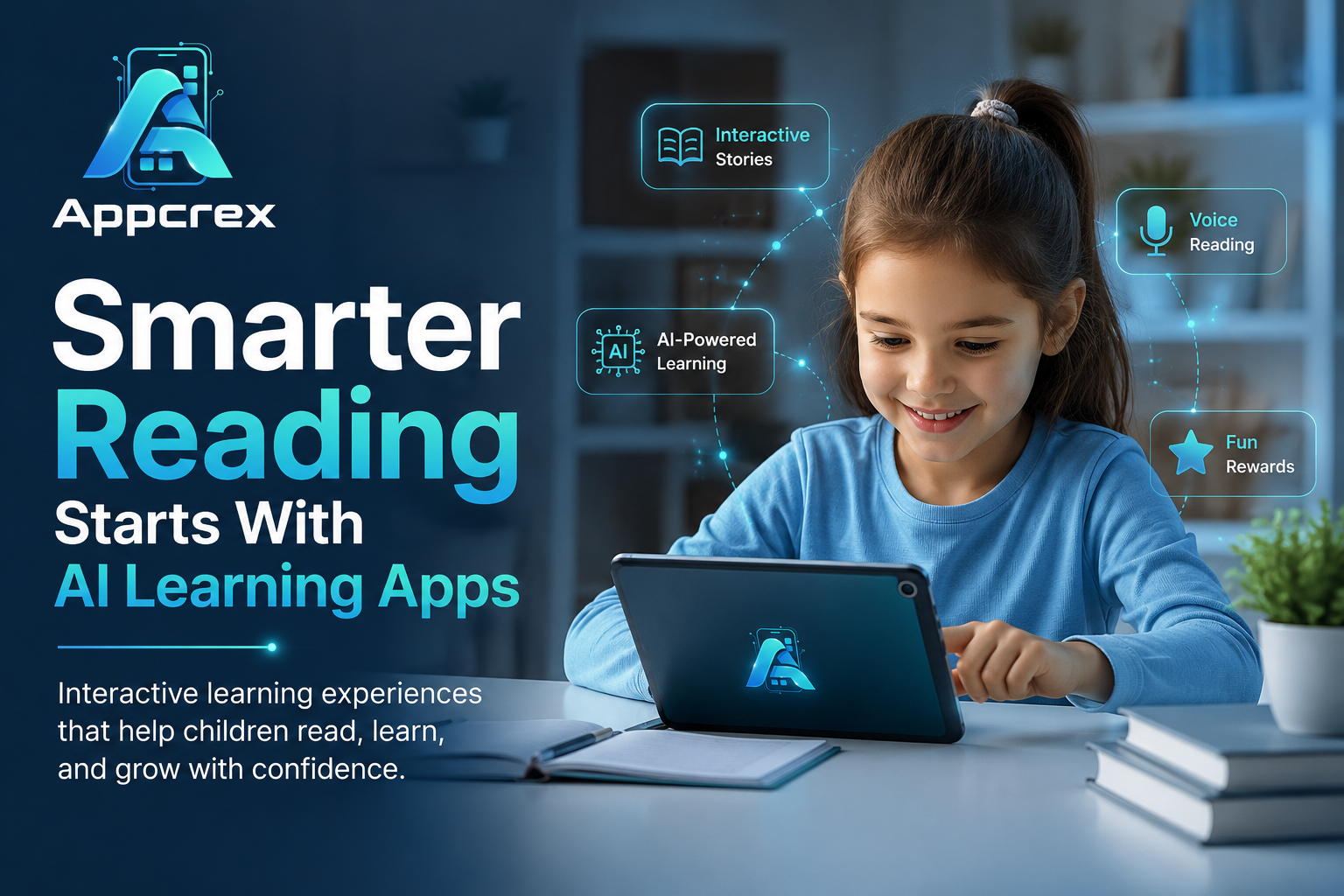
Reading is one of the most important skills a child can develop during early learning. It shapes communication, imagination, critical thinking, and academic growth. Today, parents and educators are increasingly turning toward interactive digital learning experiences to support children in building stronger reading habits. With the rise of AI powered educational technology, learning apps are becoming more personalized, engaging, and effective than ever before.
Modern children are naturally drawn to smartphones and tablets. Instead of treating screen time as a distraction, educational platforms are transforming it into a productive learning experience. This shift has created a growing demand for smart educational solutions designed specifically for young learners.
At Appcrex, innovative kids learning app development focuses on creating interactive experiences that improve reading abilities while keeping children motivated and entertained.
Why Reading Skills Matter in Early Childhood
Reading is not just about recognizing words on a page. It involves understanding language, pronunciation, vocabulary, comprehension, memory, and communication. Strong reading skills help children:
- Build confidence in communication
- Improve academic performance
- Expand vocabulary naturally
- Strengthen concentration
- Develop imagination and creativity
- Enhance emotional intelligence through storytelling
Children who struggle with reading often face challenges in other subjects as well. This is why early support and consistent practice are essential.
How AI Powered Learning Apps Are Changing Reading Education
Traditional reading methods still play an important role, but educational apps add an entirely new layer of engagement. AI powered learning apps can adapt lessons based on a child’s pace, learning style, strengths, and weaknesses.
Instead of using a one size fits all approach, these apps create personalized reading journeys for every learner.
Personalized Reading Experiences
One of the biggest advantages of AI based learning apps is personalization. The app can analyze how a child interacts with words, sounds, and stories, then adjust the difficulty level automatically.
For example, if a child struggles with pronunciation or sentence formation, the app can provide additional exercises focused on those areas.
This adaptive learning experience helps children progress without feeling overwhelmed or bored.
Interactive Storytelling Keeps Children Engaged
Children learn better when they are emotionally connected to the content. Interactive storytelling transforms reading into an exciting activity rather than a classroom task.
Features such as animated characters, voice narration, touch interaction, and mini games encourage children to stay engaged for longer periods.
When children enjoy the learning process, they naturally spend more time reading.
Voice Recognition Improves Pronunciation
Many advanced learning apps now include voice recognition technology. Children can read aloud while the app listens and provides instant feedback on pronunciation and fluency.
This creates a safe environment where children can practice speaking confidently without fear of embarrassment.
Voice guided reading also helps improve:
- Phonics understanding
- Word recognition
- Speech clarity
- Listening skills
Gamification Makes Reading Fun
One reason children lose interest in reading is repetition. Gamification solves this problem by turning educational activities into rewarding experiences.
Modern reading apps use:
- Achievement badges
- Reward points
- Reading challenges
- Progress tracking
- Interactive quizzes
These elements motivate children to continue learning while creating a sense of accomplishment.
Instead of forcing children to read, gamified apps encourage curiosity and self motivation.
Visual Learning Enhances Word Recognition
Children respond strongly to visual learning. Bright illustrations, animations, and interactive graphics help them connect words with meanings more effectively.
For example, when a child taps on an image of an apple and hears the pronunciation, multiple senses work together during learning. This improves memory retention and comprehension.
Visual learning is especially helpful for younger children and early readers.
Reading Apps Support Different Learning Styles
Every child learns differently. Some children understand better through visuals, while others prefer listening or hands on activities.
AI powered learning apps can combine multiple learning approaches, including:
- Audio storytelling
- Interactive visuals
- Reading exercises
- Educational games
- Voice based learning
This flexibility helps children stay comfortable and confident throughout the learning journey.
Building Vocabulary Through Everyday Learning
One of the hidden benefits of reading apps is natural vocabulary expansion. Children are exposed to new words regularly through stories, conversations, and quizzes.
Many apps also include contextual learning where children understand words based on situations rather than memorization.
This improves long term language development and communication skills.
Real Time Progress Tracking for Parents
Parents often wonder whether their children are actually improving while using educational apps. AI powered systems solve this issue through detailed progress tracking.
Parents can monitor:
- Reading speed
- Vocabulary growth
- Pronunciation accuracy
- Story completion rates
- Learning consistency
This data helps parents understand where additional support may be needed.
It also creates better communication between parents, teachers, and developers.
Safe Learning Environment for Children
Safety is one of the biggest concerns for parents when children use digital platforms.
Professionally developed kids learning apps focus heavily on:
- Child safe content
- Ad free experiences
- Secure parental controls
- Limited external access
- Privacy protection
A safe and distraction free environment allows children to focus completely on learning.
How Reading Apps Help Reluctant Readers
Some children naturally avoid books because they find reading difficult or uninteresting. Interactive learning apps can help overcome this challenge.
Features like animations, rewards, and interactive storytelling make reading feel more like entertainment.
Children who resist traditional learning methods often respond positively to digital engagement.
As confidence grows, their interest in books and independent reading also improves.
The Role of AI in Future Reading Education
Artificial intelligence is making educational experiences smarter and more responsive.
Future focused reading apps may include:
- Emotion based learning analysis
- Real time comprehension support
- Personalized story generation
- Smart reading assistants
- Predictive learning recommendations
These innovations will continue transforming how children interact with educational content.
Businesses investing in kids learning app development today are preparing for a future where personalized education becomes the standard.
Why Businesses Are Investing in Kids Learning App Development
The demand for educational technology continues to grow rapidly because parents are actively seeking better learning tools for their children.
Educational apps offer benefits for both learners and businesses:
- High User Engagement: Children return regularly to apps that combine learning with entertainment.
- Long Term Customer Retention: Parents often continue subscriptions when they see measurable improvement in their child’s reading skills.
- Expanding Global Market: Digital education platforms can reach users worldwide without geographical limitations.
- Continuous Innovation Opportunities: AI and interactive technologies create endless possibilities for new features and learning experiences.
Companies like Appcrex help businesses build scalable, engaging, and future ready educational platforms tailored for modern learners.
Essential Features Every Reading App Should Include
A successful reading app should combine educational value with user engagement. Important features include:
Interactive Storybooks: Stories with animations and sound effects increase engagement and comprehension.
- AI Based Personalization: Adaptive lessons create customized learning paths.
- Voice Assisted Reading: Speech technology improves pronunciation and fluency.
- Gamified Rewards: Badges and achievements motivate continuous learning.
- Offline Learning Access: Children can continue learning even without internet connectivity.
- Parent Dashboard: Progress reports help parents monitor development.
- Child Friendly Interface: Simple navigation ensures ease of use for young learners.
- Challenges in Developing Kids Learning Apps: While educational apps offer many advantages, development also comes with challenges.
- Maintaining Engagement: Children lose interest quickly if the app feels repetitive.
- Balancing Fun and Education: Too much entertainment may reduce educational effectiveness.
- Data Privacy and Security: Children’s data must be handled carefully and responsibly.
- Age Appropriate Design: Different age groups require different learning experiences.
Professional development teams understand how to overcome these challenges through research driven design and child centered development strategies.
Tips for Parents Choosing a Reading App
Not all educational apps deliver the same quality. Parents should consider the following factors before selecting an app:
- Age appropriate content
- Interactive learning features
- Ad free environment
- Reading progress tracking
- Positive user reviews
- Personalized learning support
- Safe privacy settings
The best apps create a balance between education, creativity, and entertainment.
Final Thoughts
AI powered learning apps are redefining how children develop reading skills. By combining personalization, gamification, interactive storytelling, and smart learning technology, these platforms make reading more engaging and effective than traditional methods alone.
Children no longer need to view reading as a difficult task. With the right educational experience, they can build confidence, improve comprehension, and develop a lifelong love for learning.
As digital education continues evolving, businesses that invest in innovative kids learning app development will play a major role in shaping the future of child education.
Frequently Asked Questions
How do learning apps improve children’s reading skills?
Learning apps improve reading skills through interactive storytelling, pronunciation practice, vocabulary exercises, and personalized learning experiences.
Are AI powered reading apps safe for children?
Yes, professionally developed educational apps include parental controls, privacy protection, and child safe learning environments.
What age is best for reading apps?
Reading apps can benefit children from preschool age through elementary school, depending on the app’s content and difficulty level.
Can reading apps replace traditional books?
Reading apps should support traditional reading methods rather than completely replace physical books.
Why is gamification important in educational apps?
Gamification keeps children motivated by making learning fun through rewards, achievements, and interactive challenges.
What features should a kids reading app include?
Important features include AI personalization, voice recognition, interactive stories, progress tracking, and parental controls.
Ready to build an engaging kids learning app that parents trust and children love? Discover how Appcrex can help you create smart, interactive, and future ready educational solutions that stand out in the digital learning market.